Equal Justice Initiative has released a short preview of the upcoming film Cruel and Unusual: Sentencing 13- and 14-Year-Old Children to Die in Prison.
Monthly Archives: August 2008
Katrina Pain Index: New Orleans Three Years Later
By Bill Quigley
t r u t h o u t
Katrina hit New Orleans and the Gulf Coast three years ago this week. The president promised to do whatever it took to rebuild. But the nation is trying to fight wars in several countries and is dealing with economic crisis. The attention of the president wandered away. As a result, this is what New Orleans looks like today.
0. Number of renters in Louisiana who have received financial assistance from the $10 billion federal post-Katrina rebuilding program Road Home Community Development Block Grant – compared to 116,708 homeowners.
0. Number of apartments currently being built to replace the 963 public housing apartments formerly occupied and now demolished at the St. Bernard Housing Development.
0. Amount of data available to evaluate performance of publicly financed, privately run charter schools in New Orleans in 2005-2006 and 2006-2007 school years.
.008. Percentage of rental homes that were supposed to be repaired and occupied by August 2008 which were actually completed and occupied – a total of 82 finished out of 10,000 projected.
1. Rank of New Orleans among US cities in percentage of housing vacant or ruined.
1. Rank of New Orleans among US cities in murders per capita for 2006 and 2007.
4. Number of the 13 City of New Orleans Planning Districts that are at the same risk of flooding as they were before Katrina.
10. Number of apartments being rehabbed so far to replace the 896 apartments formerly occupied and now demolished at the Lafitte Housing Development.
11. Percent of families who have returned to live in Lower Ninth Ward.
Women’s Equality Day
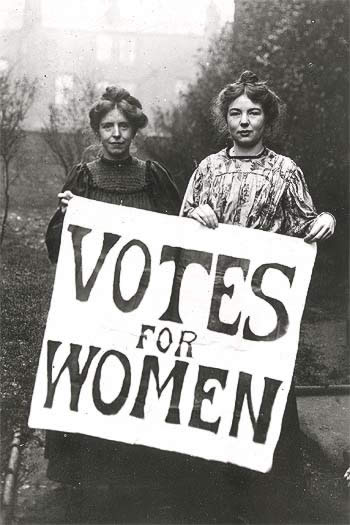
Today marks the anniversary of women’s securing the right to vote, in 1920, after 72 years of struggle.
We’ve come a long way. But we have a long way to go. Consider:
• Women lack equal pay, making $.77 for every dollar men earn.
• The US has no guaranteed medical leave for childbirth. (168 countries do.)
• The US is near the bottom of the list in our public support for quality child care for children of working parents.
• Access to affordable birth control is under attack.
• Reproductive rights are threatened.
• Women make up 16 percent of representatives in Congress.
Funnies
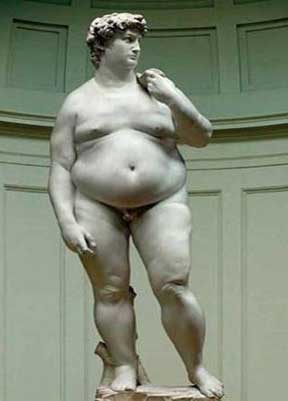
After a short stay in America, Michelangelo’s David returned to Europe.
Who’s more elitist?
By Jamison Foser
Media Matters
Coverage of candidates’ ability to relate to voters ignores their policy positions
With Barack Obama and John McCain each trying portray the other as an out-of-touch, wealthy elitist, there’s one thing missing from media coverage of the skirmish: an assessment of what the two candidates’ policy positions say about how well they understand and care about the needs of average Americans.
The latest imbroglio was sparked by John McCain’s admission on Wednesday that he does not know how many houses he owns. That statement came on the heels of McCain’s initial refusal last weekend to define “rich,” after which he indicated a yearly salary of $5 million is the threshold for being rich, a comment he then suggested was a joke. But McCain never did define the term, even though he has in the past based his opposition to tax cuts he now supports on the fact that they disproportionately benefit the wealthy.
The Obama campaign quickly responded with an ad pointing out that McCain didn’t know how many homes he owns, and answering the question for the Arizona senator: seven homes worth a total of $13 million, according to the Obama campaign.
McCain’s camp responded angrily, with spokesperson Brian Rogers defending McCain: “This is a guy who lived in one house for five and a half years — in prison” and saying Obama’s house is “a frickin’ mansion.” Apparently forgetting that just a few days earlier, their candidate suggested that you aren’t rich unless you make $5 million a year, McCain’s campaign also mocked Obama for making $4 million last year.
Naturally, the news media rushed to cover the fight. Chris Cillizza of The Washington Post explained the importance:
In politics, there is nothing worse than appearing out of touch.
From time immemorial, a candidate who is effectively portrayed as forgetting about the “little” people, of having “gone Washington,” of living higher on the hog than voters, loses.
Class remains a powerful motivator for many voters in the country. Politicians are forever trying to cast their candidacies as closely rooted in the communities from which they sprung — a purposeful attempt to ensure that voters know that the candidate “understands the problems of people like you.” Put simply: The worst thing you can call a politician is an elitist.
Making Money on a New Cold War
By Morgan Strong
Consortium News
The Russia-Georgia clash has generated heated anti-Moscow rhetoric from John McCain and U.S. neoconservatives about a new Cold War, a prospect that most people might see in a negative light but which many military contractors surely view as a financial plus.
One unstated reality about revived tensions between Washington and Moscow is that it will mean a bonanza in military spending – billions of additional dollars for anti-missile weapons systems, larger armies, construction of new bases in Eastern Europe, etc.
Indeed, the spending on Cold War II could dwarf what military contractors are now making on the “war on terror” – and the prospect of spending on both conflicts simultaneously should make arms industry executives drool.
Others who stand to profit grandly from a new East-West showdown include tough-talking politicians and their friends in Washington think tanks – like Heritage, AEI and CSIS – that have long fattened up on contributions from the defense industry and related corporations.
There would be losers, too, like taxpayers who would see more of their dollars go to “national security” and less to domestic needs, from repairs to the crumbling infrastructure to the costs of health care, education, the environment and Social Security.
But, in many ways, the exploitation of Cold War fears – to divert money away from domestic needs to the coffers of what Dwight Eisenhower dubbed “the military-industrial complex” – is nothing new.
Arguably, the original Cold War ended under Eisenhower’s former Vice President, Richard Nixon, who as President returned from Moscow in 1972 carrying a strategic agreement that he had reached with what was already a rapidly decaying Soviet Union.
“In Moscow, we witnessed the beginning of the end of that era which began in 1945,” Nixon said. “With this step, we have enhanced the security of both nations. We have begun to reduce the level of fear, by reducing the causes of fear, our two peoples, and for all the peoples of the world.”
Nixon unveiled a new era of realpolitik cooperation between Washington and Moscow that he called “détente.”
However, while reducing fears and lowering tensions might be good news for many people, it wasn’t welcomed by the corporations that profited from the fears and the tensions, nor by the intellectual hired guns who had built lucrative careers in politics, media and academia by exaggerating those fears and exacerbating those tensions.
Greenville activist featured in new book
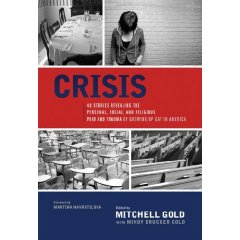
Sean’s Last Wish founder Elke Kennedy is featured in the soon to be released book CRISIS, 40 Stories Revealing the Personal, Social, and Religious Pain and Trauma of Growing Up Gay in America. It is edited by Mitchell Gold, founder of Faith in America, with Mindy Drucker.
CRISIS is an expose of the fear, isolation, depression, and even suicidal feelings young gay people face from the time they realize they are gay until they have a healthy coming out. For many gay adults, the traumatic teenage years are buried in memory as a painful time to be left behind and forgotten. But, those who bravely recalled and contributed their stories to CRISIS describe experiences that are unfortunately universal for gay youth.
Well-known successful members of the gay community, such as Bishop Gene Robinson, actor Richard Chamberlain, ambassador Jim Hormel and US Reps Tammy Baldwin and Barney Frank, share what it was like to live a lie every day, without support from family, friends, church, or school-and how they triumphed over the challenges. And a number of young people detail personal experiences that make clear the same challenges unfortunately continue today.
CRISIS is designed to make parents, clergy, teachers, politicians, and the media aware of the ongoing crisis young gay people experience in our culture today and understand how to stop it.
In addition to being an inspiring and helpful personal resource, it is an excellent gift for that someone you know whose heart and mind you’d like to transform from hostility to love and from rejection to acceptance.
CRISIS will be published in mid-September. Pre-orders are available now at Amazon.com and CrisisBook.org.
“I Believe” license plates up for debate
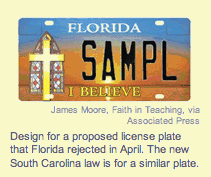
On Sunday, Aug. 10, at 7pm the Unitarian Universalist Fellowship in Columbia will hold a panel discussion about the proposed South Carolina “I Believe” license plates, which has resulted in a lawsuit. (See earlier post for background on the controversy.)
The panel will include Kevin Hall, an attorney with Nelson Mullins, the law firm that will be defending the Dept. of Motor Vehicles in the lawsuit. He will join the Rev. Michael Frisina, pastor of Calvary Chapel, and one of his parishioners, Carl Sohm, in defending the constitutionality of the plate. Speaking in opposition to the plate will be two of the plaintiffs in the lawsuit: the Rev. Dr. Tom Summers, a retired United Methodist minister, and the Rev. Dr. Monty Knight, pastor of the First Christian Church of Charleston and president of the Charleston AU chapter.
The UU Fellowship is at 2701 Heyward St., corner of Heyward and Woodrow in Shandon.
Network offers free training to maximize voter registration with state-of-the-art tools
By Becci Robbins
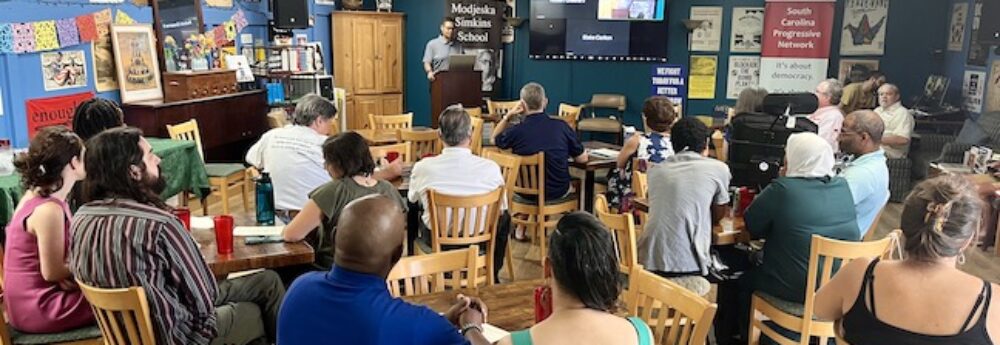
The SC Progressive Network is gearing up its Missing Voter Project to find, engage and register South Carolinians who aren’t voting. In the 2004 presidential year election, slightly less than half of the voting-age population turned out, putting South Carolina 42nd in voter participation. In 2006, for mid-term elections, slightly more than a third showed up at the polls (35 percent).

“There is nothing more important to a healthy democracy than an engaged citizenry,” said Network Director Brett Bursey. “Americans should be alarmed at how the monied interests in this country have hijacked the electoral process. Ordinary citizens are getting the short end of the stick by not participating in elections.”
The US ranks 138th in the world in voter turn out, falling between Armenia and Nigeria, according to a 2002 study by the International Institute for Democracy and Electoral Assistance, based in Stockholm.
“While we are busy trying to export democracy around the world, ironically, too many of us are not practicing it here,” said Rev. Dr. Bennie Colclough, who serves as the Network’s Cochair. “This could have something to do with the fact that we are the only wealthy nation that doesn’t provide education and health care to its citizens as part of their democratic social contract.”
The Missing Voter Project is designed to take voter registration beyond traditional party building or drumming up support for a specific campaign or candidate. The MVP is an effort to engage new voters in a larger movement for social change based on citizen empowerment.
“I can’t tell someone that registering and voting is going to improve their life,” Bursey said.” The system itself is broken. Due to the creation of ‘safe’ districts for incumbent legislators, we have the least competitive legislative races in the nation, with most seats being uncontested. And the sad reality is that 98 percent of the candidates who spend the most money are the ones who win. That’s not an election, it’s an auction.”
The Missing Voter Project is a civic engagement program with a special emphasis on minority youth. Since 2004, the MVP has provided street maps identifying unregistered and infrequent voters in minority precincts throughout rural South Carolina, and has registered more than 6,000 voters. About half of South Carolina’s black population is registered, and about half of those registered turn out to vote. The service has been offered statewide to other nonprofits to enhance their voter registration work.
The Missing Voter Project is built on the idea that registering and voting is simply the first step to building power at the grassroots level. The intention is to create a movement of voters with enough power to help set political priorities that meet their needs rather than the needs of politicians and corporate interests.
“Most folks in this state are not voting because they don’t believe it will make a difference,” Bursey said. “But imagine how we could change life in South Carolina if we didn’t leave running the government to those with access to wealth. It’s a long-term effort we are proposing, but people are hungry for change. We want to offer them a way to make it happen.”
The Network is organizing free, nonpartisan voter registration training sessions throughout the state to show groups and individuals how to use high-tech maps to maximize their registration efforts. The two-hour training sessions are 7-9pm in the following cities:
Winnsboro: Aug. 9, Glover’s Memorial Chapel, 423 N. Congress St. (Network will partner with Sigma Theta, Fairfield Co. NAACP, SC Voter Education Project)
Charleston: Aug. 14, Morris Brown Church, 13 Morris St. (Network will partner with Charleston NAACP, SC Voter Education Project)
Columbia: Aug. 19, St. John’s Baptist, corner of Farrow and Beltline: (Network will partner with Columbia NAACP, Delta Sigma Theta Sorority, SC Voter Education Project)
Greenville: Aug. 21: Mt. Pleasant Community Center, 715 S Fairfield Rd: (Network will partner with Greenville NAACP, League of Women Voters, SC Voter Education Project)
 |
| Subscribe to Missing Voter Project |
| Visit this group |
State loses evidence for DNA testing
Alabama death row inmate’s fate hangs in the balance
Equal Justice Initiative
The State of Alabama has revealed that it lost DNA evidence that could exonerate death row inmate Tommy Arthur. Convicted for the 1982 murder-for-hire of Troy Wicker, Mr. Arthur has for years asked the state to test DNA evidence he says would prove his innocence. The state has refused to conduct the tests.
This week, just days before Mr. Arthur’s execution date, Bobby Ray Gilbert, a convicted killer serving life without parole, signed a sworn statement in which he confessed to the crime. After Mr. Arthur’s lawyers filed the confession in court, the Alabama Supreme Court stayed his execution, which was scheduled to take place today.
Judy Wicker, an admitted conspirator in the murder of her husband, said in an affidavit that Mr. Arthur, not Gilbert, committed the crime. She also accused Mr. Arthur’s daughter of trying to bribe her to clear her father. Mr. Arthur’s daughter, Sherrie Stone, denied the allegation.
DNA testing of the evidence might have exonerated Mr. Arthur or eliminated the need for a stay of execution. The State’s claim that it has now lost the DNA evidence raises more troubling questions about the propriety of executing Mr. Arthur.