Make Absentee Voting Easier for All

By Sam Oliker-Friedland 

I need to confess a shameful secret; a sin of omission from last year that I’ve regretted ever since. I didn’t vote.

By most measures, I am a politically engaged college student. I read the news and political blogs every day. Since I was in high school, I’ve organized voter registration drives to help other students vote, and can sit for hours discussing policy and politics with friends and family. But on April 1, 2008, when Wisconsin chose its swing Supreme Court Justice, I was not a part of that decision.

It’s not that I didn’t care — I probably had a stronger opinion about those two candidates than I’ve had in most elections. I wasn’t distracted by an important trip, nor was I refusing to participate in a broken election system. I was away at school. Between term papers and the less academic portion of the college experience, I forgot to send in an application to get my absentee ballot.

I wasn’t alone. I did an informal survey of acquaintances after the 2006 elections to find out who didn’t vote. If they didn’t vote, I wanted to know why. Not a single person told me “I didn’t care.” Not a single person said “I don’t see how the election affects me.” These are the great myths of young people who don’t vote, and its perpetrators will often point out with a concerned frown that voters aged 18 to 25 tend to have a lower turnout rates. However, one further statistic points us toward the real story: Among registered voters, 18- to 25-year-olds turn out at basically the same rate as other age groups.

Unfortunately, the American election system contains hurdles which are particularly serious for young, mobile voters. Not only must we navigate complicated ID requirements to register to vote for the first time, but many of us must also apply for an absentee ballot. If you are from Michigan, Tennessee, or Louisiana, you may be out of luck. If you register to vote by mail in those states, you are required to vote in person for your first election. This is grossly unfair not only to new 18-year-old freshmen in college, but to displaced victims of the recent Gulf Coast hurricanes as well.

For those of us who can vote by absentee ballot, just figuring out how to get one can be a challenge. The request process varies state to state, and often even county to county. We need to figure out whether to contact our state elections board, our county clerk, or our municipal registrar. In some states, we can simply send our election official an email; however, in some, we must send an original form by mail. Oddly, North Carolina requires a signed, handwritten note requesting a ballot.

Particularly frustratingly are Kentucky, South Carolina, and some counties in Illinois, which require that a voter call to have an absentee ballot request form sent, wait for the form to arrive, fill it out, send it back, wait for the ballot to arrive, and send the ballot in time to arrive on Election Day.

Elections in the United States are arcane and a clear nationwide snapshot of any aspect of election administration probably requires different information from each of our country’s thousands of voting jurisdictions. The challenge is assembling that information in a way that is easily accessible to voters, especially new voters who may be less familiar with the process.

Luckily, the Internet gives us simple and powerful tools for managing and accessing large amounts of data. Those of us who have grown up with technology expect and demand information in a few clicks. We don’t like clicking through unwieldy websites, or needing to visit multiple sites.

Providing easy-to-follow guidance through a complicated process should be a first step. That is why some friends and I founded www.govoteabsentee.org. It is an online resource that takes those who must vote absentee step-by-step through the voting process for their county or municipality, providing forms, procedures, contact information, and easy-to-follow instructions.

We must work to change the process to make it easy and fair. The more transparent these mechanisms of democracy are the more voices will be heard on Election Day. As with any election, there will be a significant number of new voters. A lot of them will be 18. We need to ensure that they and all registered voters can vote easily — and if necessary — vote absentee.

Oliker-Friedland is a senior at Brown University and the co-founder of www.govoteabsentee.org.
Protecting the Vote

By Laura Flanders

This article is part of “Election Protection Investigation Week, a project of The Media Consortium which will culminate with Live – From Main Street Columbus – a virtual town hall exploring how the issues of voting rights and election security affect every day Americans. This is a one-of-a-kind, week-long media collaboration that kicks off today. For more information, click here.

••••••••••••••

Voter registration deadlines are just over a week away in many states. Polls open in just over a month. In an election that could well be decided by new voters, voter registration efforts are in overdrive. But signing people up might be the easy part: after that, there’s voting. As the last two elections have shown, just showing up at the polls isn’t a guarantee of a smooth ride to the ballot box.

In 2000 and 2004, all across the country, thousands of voters were removed from the rolls, without their knowledge, in official purges of voter lists. On Election Day in 2004, boxes of registrations remained unprocessed in at least two cities we know about – Cleveland and Toledo, Ohio. On the radio that election night, I received calls from Columbus voters who had stood for hours in line because of a shortage of voting machines in the inner city, even as, in nearby wealthy suburbs, voters were able to cast their votes in a matter of minutes. As one caller put it, “Jim Crow isn’t dead.”

Election protection and voting rights should be central to any conversation about the ’08 vote. But a lot of tough questions are getting lost in horse-race coverage. And many voters are wondering – again – if their vote will be counted.

In contrast to most advanced democracies, the right to vote isn’t conveyed automatically with citizenship or coming of age in the United States. Voters have to prove themselves and there are no end to the challenges, from felon disenfranchisement laws to monolingual ballots and a myriad of ever-changing rules which differ from election to election and district to district. Come voting day, voters rely on minimally-trained poll-workers overseeing a myriad of voting systems. Disturbing doubts remain about the security of electronic voting and the privately-owned technology many districts rely on to tally votes.

Fed up with waiting for officials or Parties to do the work, this year, as never before, citizens’ groups, and voting rights organizations are taking early action to protect the vote. A few months back, national voting rights groups charged officials in Kansas, Michigan and Louisiana of illegally purging voter lists. Voters whose homes are in foreclosure are also concerned that their status might be used at the precinct to challenge their right to vote. The states with the highest foreclosure rates, Ohio, Michigan, Florida and Colorado, are also swing states where the election could hinge on tiny margins. Meanwhile, in Michigan, the ACLU has just filed a federal lawsuit against state electoral officials over statewide voter purge programs they claim would “disenfranchise hundreds of thousands of Michigan voters” – many of them college students.

Thanks to independent reporting and activist organizing, the Department of Veterans Affairs was recently forced to reverse its policy that would have stopped voter registration drives at hundreds of VA hospitals serving injured and homeless vets.

While the media focus on the candidates, voting rights advocates are focusing on the future of our democracy. It’s falling to nonprofit outfits like the Advancement Project to distribute state-specific “know the facts” palm cards to poll workers in many states. And organizers are fanning out. Twenty-three states allow early voting. Ohio has a “golden week” – Sept. 30 to Oct. 6 – in which people can register and vote all in the same day. The organizers recommend voting early. Avoid the lines and the worst of the chaos.

Will citizen activism decide an election? It just might.

Laura Flanders is host of GRITtv and Live From Main Street.

Funnies

On some slim chance you’ve missed this SNL clip, here it is. Tina Fey does Sarah Palin better than Palin herself. Uncanny.

Students and ex-offenders unclear about voting

The State picked up part of the SC Progressive Network‘s recent press release on the confusion over ex-offenders’ voting rights. It’s tacked onto the end of this piece about student voting.

*********************

Student voters face barriers –
Geography, rules complicate process for college youth

By Wayne Washington

They have provided much of the passion in this presidential race. They have put up signs, answered phones, swamped campaign Internet sites and sworn to be there for their candidate on Election Day.

But past elections show college students can be an unreliable voting group. Part of the reason is confusion about whether they can vote in the county where they attend school. Or, others say, it’s the hassle of having to cast an absentee ballot.

“The enthusiasm of the campaign runs into the reality of voting by absentee ballot or even remembering to vote,” said Blease Graham, a political science professor at the University of South Carolina. “There are a lot of potential barriers.”

College students, of course, are not all residents of the place where they attend classes. Typically, large colleges enroll students from across the country.

Elections, however, are local functions, administered by local officials. Different localities have different rules, further complicating things for students.

Chris Whitmire, public information officer for the S.C. State Election Commission, said students have three choices when it comes to how they vote.

If they already are registered to vote in another place, they can contact election officials there to request an absentee ballot.

In addition to voting by absentee ballot, students can return to their hometowns to vote. However, students do have a third option — changing their place of residence so they can vote in the county where they attend college.

But that can be a little tricky, Whitmire said. “You have to know the address of your dorm,” Whitmire said. “They can’t use a post office box. They have to put you in the right district.”

Students who want to change their place of residence and vote in South Carolina have until Saturday to do so. There is no required length of residency.

Whitmire said information on the state Election Commission’s Web site could answer other questions students might have about registering and voting.

OTHERS CONFUSED TOO

Students aren’t the only ones who may be confused about their voting rights. Many with criminal records, especially those who have been incarcerated, often wrongly think they forever forfeit their right to vote.

Felons and those who have broken the state’s elections laws are not eligible to vote until they complete the terms of their legal punishment.

The state Election Commission recently sent county officials a memo outlining how such voters can cast ballots. First, they have to re-register with county voting officials by submitting a registration application. County officials then determine whether the potential voter meets eligibility requirements.

Local election boards can ask for proof that the voter’s legal punishment has been completed, though that proof is not required by law.

In a recent study, the S.C. chapter of the American Civil Liberties Union found 36 S.C. counties require proof that legal punishment has been completed.

“If additional proof is not required by law, the state Election Commission should be advising the counties not to require proof that an offender has completed a sentence,” said Brett Bursey, director of the S.C. Progressive Network, a social and economic advocacy group. “This added requirement burdens the 18,000 citizens a year who have paid their debt to society, and may result in them not voting.”

State Election Commission Complicates Voting Procedures for Ex-offenders

Voting Rights Remain Unclear for SC Citizens Who Have Served Their Sentences

In light of a recent study that revealed confusion among county election directors regarding procedures for ex-offenders’ voting rights, the State Election Commission (SEC) yesterday sent a memorandum to the 46 county election directors advising them that they “may ask the voter for proof of completion of their sentence, but this is not required by law.”

This discretionary additional requirement may depress the vote among ex-offenders, said Brett Bursey, director of the SC Progressive Network. “If additional proof is not required by law, the State Election Commission should be advising the counties not to require proof that an offender has completed a sentence. This added requirement burdens the 18,000 citizens a year who have paid their debt to society, and may result in them not voting.”

South Carolina’s voter registration form includes a “Voter Declaration” that the registrant must sign, and face criminal penalties for falsely taking the oath. No additional proof is required to prove their US citizenship or mental competency. Ten counties accept the oath as proof that the registrant is not serving a criminal sentence.

On Sept. 17, the SC Progressive Network and the SC ACLU held a press conference to release the results of a study that found county election directors around the state had different methods of dealing with ex-offenders who wanted to register to vote. The study concluded that, since there were no laws regulating the procedure, all counties should simply allow ex-offenders to register by signing the registration form.

“We daily encounter citizens who tell us they can’t vote because they are ex-offenders.” Bursey said. “Unfortunately, the citizens don’t know the laws, the county election boards don’t know the laws, and the State Election Commission is unwilling to define the laws.”

While the SEC has recognized that there is no law requiring ex-offenders to provide proof of completion of sentence to register, its officials claim they are unable to direct the independent county election boards not to do so.

When asked if they will issue a press release advising ex-offenders of their right to register, an SEC spokesperson said, “That’s not our job.”

Sept. 24 SC Election Commission memorandum:

Any person who is convicted of a felony or an offense against the election laws is not qualified to register or to vote, unless the disqualification has been removed by service of the sentence, unless sooner pardoned.  Service of sentence includes completion of any prison/jail time, probation, parole, and payment of restitution.

Federal and state courts provide the SEC with lists of persons convicted of felonies or crimes against the election laws. Those persons are removed from the state’s list of active, registered voters. The SEC notifies each voter whose name is deleted from the list. Voters have 20 days from the date the notice is mailed to appeal. Appeals must be made to the SEC.

Once a person who was convicted of a felony or offense against the election laws serves their sentence; they may register or re-register.

The following process should be followed for voters who are re-registering after being made inactive due to a conviction.

• The voter must re-register with the county voter registration board by submitting a voter registration application.
• The board makes the final determination of whether the voter meets the qualifications to register.
• The board may ask the voter for proof of completion of their sentence, but this is not required by law.
• The voter is either added as a new voter or reinstated to the voter registration system
• If the board determines a voter should be reinstated to active status, the board must notify the SEC in writing. Once notification is received, the SEC will reinstate the voter.

Thank you,

Chris Whitmire
Public Information Officer

South Carolina State Election Commission 
Post Office Box 5987
Columbia, S.C. 29250
Tel: 803.734.9070
Fax: 803.734.9366

Pride ’08

Gay rights activists marched in downtown Columbia on Sept. 20, then joined thousands at Finlay Park to celebrate South Carolina’s annual Pride Festival. SC Progressive Network member groups with booths on the park grounds were: AFFA, Garden of Grace United Church of Christ, SC Equality, SC GLPM, PFLAG, SC Gay and Lesbian Business Guild and Sean’s Last Wish. The Progressive Network’s Missing Voter Project continued its voter registration drive, and brought in new individual members to our coalition.

It was a day of fun fellowship and solidarity. Congratulations to all the organizers for a successful Pride Week!

For Pride photos, click here. (Thanks to Jim Blanton, Ed McClain and Sarah Gibb for contributing snapshots.)

Ex-felons’ voting rights fool officials

Survey finds almost half are unclear on certain aspects of the law

By Gina Smith

The State

S.C. election officials lack knowledge of some voting rules for people with criminal records, according to a new survey. Wednesday, representatives from the ACLU and the S.C. Progressive Network released a survey of election officials in each of South Carolina’s 46 counties.

On questions like whether people with misdemeanor convictions and people with out-of-state felony convictions may vote, an average of 48 percent of officials got it wrong. On basic eligibility questions, like whether residents with felony records could vote, officials fared much better, with about 5 percent getting the answer wrong.

“The history in South Carolina is preventing people from voting, and we’re still living that history,” said Brett Bursey, director of the S.C. Progressive Network. Several people the Network attempted to register to vote recently thought they couldn’t vote because of past incarcerations.

“The people on the streets don’t understand (the rules), and if they go to their election commission, they’re going to get this kind of wrong information,” Bursey said.

The two organizations hope the survey will result in more training for election officials. They also want the state to notify people when they regain their right to vote.

The State Election Commission, which oversees the 46 county election commissions, is questioning the survey’s methodology.

“I don’t know what to think about the survey,” said Chris Whitmire, commission spokesman. “I don’t know how it was conducted and who they talked to at the (election commission) offices, how were the questions asked and if there was any bias in the questions.” Whitmire also noted some of the questions were misleading.

Under South Carolina law, those convicted of felonies are prohibited from voting until they complete their sentences, including parole and probation. Those convicted of violating any election law – felonies or misdemeanors – are also prohibited from voting until their sentences have been served. Then, the right to vote is restored.

If convicted of any other misdemeanor, the person loses the right to vote while incarcerated.

All employees of the state’s election commissions must complete a state certification program, Whitmire said. An additional class is required annually.

Survey questions were asked of whoever answered the phone at the election commissions, to simulate the experience of regular callers, said Rachel Bloom of the ACLU.

Whitmire said the election commission may send a letter to the county commissions, reiterating voting rules to workers.

Results mixed in voting rights study

State restores rights when sentences finished

By Jim Davenport

Associated Press

Sept. 18

COLUMBIA — An American Civil Liberties Union survey released Wednesday finds South Carolina election officials generally know that ex-felons can vote when they’ve completed their sentences. But the survey also shows that those officials don’t do so well when they are responding to more specific questions that affect 1,500 people completing prison, jail or probation time every month.

The civil rights organization has conducted similar surveys in 20 states, said Rachel Bloom, who oversees the group’s ex-felon voting programs. “The news isn’t all bad in South Carolina,” Bloom said.

The surveys were conducted in the state’s 46 counties with college students phoning and telling an election official they were conducting a survey on felon voting.

The results showed correct answers from 40 counties when asked about whether people could register to vote if they had completed parole, probation or incarceration time for a felony convictions. However, just over half got it right when asked about voting after being convicted in another state or for a federal offense.

South Carolina Election Commission spokesman Chris Whitmire said that some of the questions appeared to be confusing and that he wasn’t sure about the methodology used. “It’s hard for me to put a value on what their percentages are,” Whitmire said.

Still, he said, “county voter registration officials can do better jobs. We all can do better at what we do.”

The ACLU and South Carolina Progressive Network say the survey’s results show local election officials need to have a better understanding of the law. “The history of voter registration in the United States is a history of preventing people from voting and we’re still living that history,” said Brett Bursey. the Progressive Network’s executive director.

The groups called for better training of election officials and law changes that would restore voting rights immediately after someone leaves prison or jail. They also want to add the state Corrections Department and Parole and Probation to a list of agencies responsible for registering voters.

Whitmire said there are regular training sessions for county election officials and the Election Commission doesn’t oppose allowing those two agencies to join others as so-called “motor-voter” agencies.

A handful of state agencies register voters now, including the state Department of Motor Vehicles, Department of Social Service, Department of Health and Environmental Control and others that serve people with disabilities, such as the state Commission for the Blind.

Bursey also said the state quickly notifies felons after they’re convicted that they’ve lost voting rights, but does little afterward to tell them when they can vote.

Whitmire said letters mailed in the future to notify felons they’ve lost voting rights will tell convicts they can re-register once they’ve completed their sentences.ACLU: SC officials know when ex-felons may vote.

The Politics of Teenage Pregnancy

By Joan Lamunyon Sanford
Executive Director, NM Religious Coalition for Reproductive Choice

Much has been said about 17-year-old Bristol Palin’s pregnancy and the so-called “right” decision she made to choose parenting over abortion. But we should remember that what is the right decision for Bristol may not be the right decision for all young women with an unplanned pregnancy.

Bristol is fortunate to have loving parents who support her decision, and all of our youth deserve the same. Loving parents who will support them in whatever decision they make. Sadly, this is not always true.

The decision about how to resolve an unplanned pregnancy, whether through abortion, adoption or parenting is a deeply personal decision for a young woman. Most talk to their parents or other trusted adults, including their clergy. Many seek prayerful guidance from their own religious or spiritual traditions. The notion that their religious tradition would insist that they continue their pregnancy is inaccurate. The mainline Protestant and Jewish denominations that are members of the Religious Coalition for Reproductive Choice support a woman in making what ever is the best decision for her, including abortion, according to her faith and her life circumstances.

Bristol is also fortunate that she has access to affordable pre-natal care, and that her family has the resources to make sure she has the support she needs to finish high school. Again, not all of our youth have these options, especially in primarily rural states like Alaska or New Mexico.

The Palin family has requested privacy for themselves and Bristol during this difficult time, something we all should have, even though Governor Palin has chosen to put her family and their values under a spotlight. Bristol and her future husband should be treated respectfully, but we as a nation now have the opportunity to learn more about an issue that most of us and most candidates would rather not face, our country’s high teen pregnancy rate, the highest for all industrialized nations.

So before you make your decision about any candidate, state or federal, ask them if they support medically accurate, comprehensive sexuality education for our youth. We have a moral obligation to provide our youth with the best and most accurate information so that if they become sexually active, they can make an informed decision to protect themselves from unplanned pregnancy, HIV and other sexually transmitted diseases.

Punitive, mandatory parental notification or consent laws do not reduce abortion and teen pregnancy; they only drive youth without loving, supportive parents to desperate measures when they are facing an unplanned pregnancy. Young women who do not inform their parents may have very sound reasons. Often they fear physical abuse or abandonment, or their pregnancy may be the result of incest. Compassion demands that we not subject them to more trauma.

We should all work to provide our youth and their families with all of the resources they need to make their best decisions regarding sex and sexuality, in keeping with their own faith and values.

Sanford is the executive director of NM Religious Coalition for Reproductive Choice

Postville hearings: justice lost in translation?

By Dr. Erik Camayd-Freixas

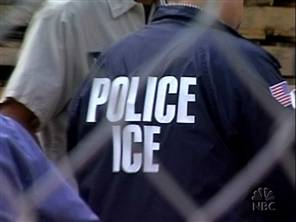
I was one of 16 interpreters who served both weeks of the Postville [ICE raid] hearings. Unlike judges, prosecutors, or attorneys, I was present at every step of the process. It is my duty as an impartial expert witness and officer of the court to ensure that the court is not misled, and to bring to its attention any impediments to due process.

I have done so in the best interest of the Federal Court I am proud to serve, and with the conviction that if our honorable judges had known how this judicial experiment would turn out, they would have never allowed it.

ice.jpg

During these two weeks in May I observed these flaws:

• Detainees’ quarters were not certified.

• The court failed to maintain physical and operational independence from ICE prosecution, and a level playing field for the defense.

• There was inadequate access to counsel.

• No meaningful presumption of innocence.

• Defendants appeared not to understand their rights and charges.

• Bail hearings and other due process rights were denied.

• The charge of identity theft, used to force a plea, lacked foundation and was never tested for probable cause.

• Defendants did not know what a Social Security Number was, and were not guilty of “intent” crimes.

• Guilty pleas were obtained under duress.

• Judges had no sentencing discretion, pursuant to a binding plea agreement.

• Sole providers, whose families are in jeopardy, now endure a cruel and unusual psychological punishment, the foreseeable effect of prison time on common parents.

Abridgement of process produced wholesale injustice at the other end:

• Parents, begging to be deported: put in jail at public expense.

• Proud working mothers: branded like cattle with the scarlet letter of an ankle monitor, dehumanized, and reduced to begging at the doors of the church, as they were released on “humanitarian grounds.”

• The town of Postville devastated; and the kinship ties our noble people are quick to forge with all newcomers, painfully severed.

• Families and friends separated.

I saw the Bill of Rights denied and democratic values threatened by the breakdown of checks and balances. And it all appeared to be within the framework of the law, pursuant to a broken immigration system.

Postville lays bare a grave distortion in the legal structure of government.

Post 9/11, ICE was granted power to wage the war on terror. But since 2006, it has diverted resources, even from disaster relief, to an escalating and unauthorized war on immigration.
The fact is our laws have not kept up with the growth in enforcement. Congress failed to pass immigration reform and ICE has filled the legal void by enacting its own version of it.
Now, we have a serious contradiction: the growth of authoritarian rule inside a democratic government. This entity can simultaneously wield immigration and criminal codes, plus issue administrative rules; leaving no room for constitutional guarantees. It co-opts other branches of government: Social Security, U.S. Attorney, Federal Court…and uses appropriations to recruit local police for immigration enforcement: setting neighbor against neighbor, and dangerously dividing the nation.

With the help of local sheriffs, Postville repeats itself daily, while the harshness of border enforcement is reenacted in the American Heartland, with great collateral damage to our citizens and communities. It is a rush, to raid as much as possible, before Congress regains the vision and courage of the Founding Fathers to restore the law of the land. Part of immigration reform is redefining ICE jurisdiction over immigration and criminal matters, without impairing the agency’s ability to defend us from terrorist threats.

Our national unity requires not just comprehensive, but compassionate immigration reform, to befit the dignity of this great country, built upon the shoulders of immigrants, by their children.

Camayd-Freixas is a professor of modern languages at Florida International University. This article was provided by The American Forum, a nonprofit, nonpartisan, educational organization that provides the media with the views of state experts on major public concerns in order to stimulate informed discussion.