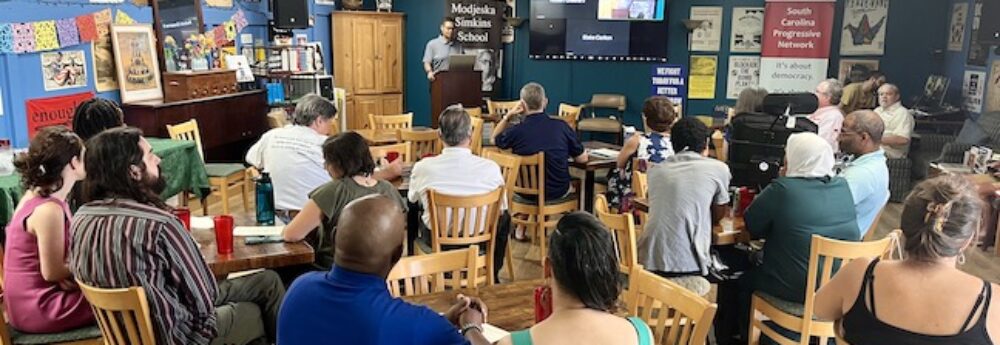
Young people need good jobs now

By Liz Shuler and Donna Dewitt

As the new year rolls in, a four-letter word is on everyone’s lips: jobs.

With the unemployment rate at red-alert levels, the White House held a jobs summit, the president gave a major address and Congress is preparing legislation to create jobs. But not many are looking at the particular problems facing young workers. Not only have they been hurt disproportionately by the economic crisis, they could very well be the first generation in recent history to be worse off than their parents. Joblessness among young workers is even higher than the national average. They need jobs — good jobs — and they need them now.

In a recent survey done by the AFL-CIO and our community affiliate Working America, young workers spoke out about their dilemma. “Things are definitely harder for me today than they were for my parents at my age,” 31-year-old Laura told us. “Back then, you could graduate high school, get a job at the local grocery store and still be able to buy a house and even put a little away for retirement. It’s just not that way anymore.”

Today, young people are coming out of college tens of thousands of dollars in debt and unable to find jobs — certainly not the kind of jobs they thought they’d find. “Sometimes we wonder if it was really worth it to get an education for the price we’ve paid,” Jessica, also 31, reported.

More than half of the 18- to 34-year-olds we talked to earn less than $30,000 a year. Only 31 percent make enough money to cover their bills and put some aside. And benefits? Young people say the situation is just as bad. Thirty-one percent are uninsured, up from 24 percent 10 years ago. Less than half have retirement plans at work.

Many young people are worried they won’t be able to start their adult lives and pursue their dreams of having families of their own. And they’re right to be worried: One in three 18- to 34-year-olds lives at home with their parents.

Without immediate action to create jobs, living standards for young workers — and even their children — may be stunted permanently. History teaches us that deep economic troughs like the one we’re in can scar young people for their entire careers as their earnings may never recover and their children may earn even less.

Yes, we need longer term economic restructuring. But we have a jobs crisis right now — for young people and all of us. And Congress and the president must jump-start jobs immediately.

Our states and communities are starving for aid to keep teachers and firefighters (many of them young workers) on the payroll. Let’s get that aid to them now. Schools are crumbling and higher education costs are out of control. Without significant new federal investments, the state and local budget catastrophe and infrastructure collapse will strangle long-term solutions for young workers. Are we really ready to write them off as a lost generation?

When people need jobs so badly, it’s the right time to invest in the clean, green technologies of the future, and in the distressed communities, putting jobless people to work tutoring children, cleaning up abandoned buildings, or providing child care, to name a few.

And let’s move some of the leftover bank bailout funds from Wall Street to Main Street, so community banks can lend money to small businesses for the purposes of job creation.

Efforts like these can keep and create at least 2 million jobs in the next year. As I travel across the country, young people tell me they are ready to join the fight.

In the same survey, thirty-five percent say they voted for the first time in 2008, and nearly three-quarters say they keep tabs on government and public affairs, even when there’s not an election going on. Job creation, health care and education are their top economic priorities. And — by a 22-point margin — young workers favor expanding public investment over reducing the budget deficit.

Young workers are not just calling for action to create jobs and fix the economy — they’re depending on it. Their economic future — America’s economic future — is at stake.

Shuler is the secretary treasurer of the AFL-CIO. Dewitt is the president of the SC AFL-CIO and Co-chair of the
SC Progressive Network. This column appeared in The Sun News.
Wrong Way on Afghanistan

By Eleanor LeCain

In March 2003, I traveled to Afghanistan to facilitate a leadership training for a group of Afghan women who were hoping to help lead their country away from the abyss that had been Taliban rule.

Afghans I met — men and women — were grateful that the U.S. had knocked the Taliban out of power. They wanted to get an education and a job, but there were few schools and jobs available.

That was the moment when we might have been able to fund education and economic development to win over the hearts and minds of the Afghan people, and help build a central government capable of running the country. The U.S. had clarity of purpose and a sense of national unity for its mission.

After all, Al Qaeda had launched the 9/11 attacks from Afghanistan, complete with terrorist training camps. Nearly the whole world supported our efforts to uproot Al Qaeda and to build a new and representative government in Afghanistan.

But the U.S. did not provide the support needed to help Afghanistan recover and rebuild. Afghans were puzzled why even then the U.S. was supporting cruel regional warlords, undermining the power of the central government we claimed to support.

Just days after I left Afghanistan, the U.S. invasion of Iraq began. President Bush shifted attention, military force, and funds to Iraq. U.S. efforts in Afghanistan languished. President Obama wants to recapture the historic moment that was lost in 2003.

But that moment has passed. An escalation of military force nearly seven years later cannot bring it back. Here’s why an escalation won’t work:

1)  The central government is too weak. People refer to President Karzai as the Mayor of Kabul because the only area he really controls is the capital. Afghanistan lacks even the basic elements of a functioning central government: it does not deliver services nationally like health care or education; it does not provide a national bank and finance system; it does not administer justice. Afghanistan is really a collection of regions, some ruled by warlords. So there will be no real central government to take over military operations in 18 months. That approach may work in Iraq, but it will not work in Afghanistan which is completely different. Iraq had a strong central government before the U.S. invaded; Afghanistan did not.

2)  The country is too corrupt. Corruption runs rampant from top to bottom. Funds intended to support military and development efforts are siphoned off by swindlers. Stealing isn’t a crime so much as a way of life. The police who should be protecting citizens are part of the problem: many of them shake people down for protection payoffs. In fact, protection payoffs are a large source of revenue for the Taliban.

3)  The country has become a big heroin den. Growing and trading opium is the country’s largest income source. Even people who don’t like opium feel it’s their best path to financial survival. So on top of political and religious feuds is a vast network of narcotics dealers.

4)  Local support for the US has dramatically diminished. The current war has dragged on for eight years. U.S. and Coalition forces have driven Al Qaeda from Afghanistan and have limited Taliban efforts to return to power. In those eight years, lots of Afghan civilians have been killed and injured. Bombs that have destroyed Taliban fighting units have also inflicted “collateral damage,” killing civilians. The neighbors and relatives of those dead civilians aren’t likely to welcome new troops as their liberators. Many Afghans now see the U.S. as part of the problem, an occupying force.

In addition to the likely ineffectiveness of escalation is the certainty of its expense. At a cost of about $1 million per soldier, 30,000 more troops will cost us about $30 billion a year. This is on top of the $1 trillion we have already spent in Iraq and Afghanistan. The U.S. government is already in debt by over $12 trillion. Every dollar we spend is borrowed money. So we’re going to borrow more money to send more troops, thereby making us even more vulnerable to our creditors. Being heavily indebted to other countries is itself a threat to our national security.

There is another way forward. The U.S. first invaded Afghanistan to dismantle the terrorist training camps and their Taliban supporters. Mission accomplished. We can declare victory and set a new, clearly defined objective: prevent the resurgence of terrorist training camps. This objective can be met by the presence of a much smaller multilateral force. Also, more support for educating girls and women would lift families and communities while helping to reduce terrorism.

LeCain is a Washington, DC-based speaker and writer, the president and CEO of NewWayUSA, and a former Massachusetts Assistant Secretary of State. This piece was provided by the American Forum, a nonprofit, nonpartisan, educational organization that provides the media with the views of state experts on major public concerns in order to stimulate informed discussion.

Support up for public campaign financing

‘Hustle for money’ compromises officials, group says, and more N.C. voters see that.

By Jim Morrill
The Charlotte Observer

When the N.C. Voters for Clean Elections began a decade ago, only a few reformers championed the idea of publicly financing state political campaigns.

Since then, North Carolina has adopted public financing for the campaigns of appellate court judges, three Council of State offices and local officials in one town.

“Little by little, we’re demonstrating that publicly financed election processes are not only possible but work better for candidates and voters alike,” said Chase Foster, director of the reform coalition.

Last week, more than 50 people gathered at a downtown Raleigh cafe to celebrate the coalition’s 10th anniversary. Among them were legislators and at least two statewide elected officials.

Ten years ago, North Carolina still had a reputation for clean politics. Since then, voters have seen a former state House speaker, a congressman, an agriculture secretary and two legislators imprisoned for corruption. This fall, a special state prosecutor began to investigate a former governor.

All that helps fuel hopes for more changes. Advocates of publicly financed campaigns point to polls they say show growing public support.

An Elon University poll last month showed 87 percent of North Carolinians think campaign contributions influence elected state officials. And a statewide survey by Public Policy Polling in November found 65 percent say they’d support giving “a limited amount of public funds” to candidates.

“More people recognize that we’ve got to address the heart of the problem, and that’s the hustle for money that’s going on in big campaigns,” said Bob Hall, director of Democracy North Carolina, a watchdog group. “That is translating into support for public financing of campaigns.”

Public-finance advocates say the escalating costs of campaigning has forced candidates to rely heavily on political action committees and other special interests. They say 90 percent of campaign money in North Carolina comes from less than 1 percent of the population.

There are several proposals for further public financing in the General Assembly, and at least one in Congress.

All but a handful of the 120 co-sponsors of the federal Fair Elections Now Act are Democrats; one of the few Republicans behind it is Rep. Walter Jones, of Eastern N.C.’s 3rd district. Virtually all the sponsors of the state legislation are Democrats.

“It’s absurd,” state Republican Sen. Bob Rucho of Matthews said of public financing. “As far as I’m concerned, there’s still freedom of speech. You should be able to put the money you want to in a campaign and say what you want to say. The taxpayers shouldn’t be burdened with this cost.”

North Carolina’s judicial public financing program is funded by voluntary tax check-offs and by $50 fees on lawyer licenses. While some N.C. elections have been funded with tax money, that could change.

Plans to expand public financing in Council of State races would be funded entirely by assessments on those doing business with the particular agency or are regulated by it.

To qualify for public funding, candidates typically have to raise a number of small contributions and agree to spending limits.

Rep. Rick Glazier, D-Cumberland, said recent headlines about politicians in trouble adds momentum to the push for public financing.

“People are looking for ways this doesn’t spiral so far out of control,” he said, “that we lose the capacity of the public to really be the key factor in democracy.”

SC Blue Cross Blue Shield’s #1 Job: protecting profits

By Brett Bursey
Director, SC Progressive Network

Rep. Tim Scott (R Charleston) has introduced legislation that calls for a state constitutional amendment to protect your right to be screwed by the health insurance industry.

“Must Article I of the Constitution of this State, relating to the declaration of rights, be amended so as to add a new section preserving the freedom of South Carolinians with respect to the providing of health care services, by prohibiting any law, regulation, or rule to compel an individual, employer, or health care provider to participate in a health care system, by allowing individuals and employers to pay directly for lawful health care services without penalties or fines for these direct payments, by providing that the purchase or sale of health insurance in private health care systems must not be prohibited by law, regulation, or rule, by providing those incentives in which the rights provided by this section do not apply, and to provide appropriate definitions?”

A “Yes” vote on this question would prohibit South Carolinians from participating in a “public option” national health care system that requires individuals to participate. While the chances for the US to join the rest of the civilized world in considering health care a right, corporate defenders like Scott aren’t taking chances.

The bill, written by the right-wing American Legislative Exchange Council (ALEC), with the assistance of Blue Cross Blue Shield, would make any federal mandate for participation in a national health plan against the law in SC.

The BCBS initiative to “protect your health care rights” has been introduced in 12 states. (See Think Progress for more information.)

Part of the reason the BCBS Association has claimed that it opposes the reform bill in its current form is because of what it perceives as a weak individual mandate. But the BCBS Association-supported ALEC campaign depicts the very notion of an individual mandate as “anti-freedom.” So either way the US Senate acts, BCBS will be able to trash the bill and try to kill reform.

The health industry has contributed $1.7 million to SC politicians since 2008, and BCBS accounted for $503,000 of the total.

Other legislative initiatives for 2010

S1011: Sen. Mike Rose (R-Charleston): Provides that a person with a special restricted driver’s license may drive unaccompanied between his home and his place of worship. As Sen. Rose can’t regulate religious preference, I guess this bill would allow those who worship beer to drive to their local bar to pray for eternal happy hour.

S902: Sen. Glenn McConnell (R-Charleston): This bill would repeal the state income tax and sales tax and replace them with a really big sales tax on the consumption of all goods and services excluding business to business sales. This regressive tax system would put the burden of maintaining the roads to the rich folks gated communities on the back of working people.

S1002: Sen. Mike Rose (R-Charleston): Constitutional amendment to permit the enactment of laws and Constitutional amendments by initiative petition. While the ballot initiative process in many states allow the citizens more direct control over their government (pro-gay, anti-gay and marijuana bills come to mind), there is a fear that SC might vote to bring back the Confederacy.

S947: Sen. Larry Grooms (R Berkeley): Amends the Constitution to provide procedures for recalling and removing from public office persons holding public offices of the state or its political subdivisions in the executive and legislative branches of state or local governments. This “Appalachian Trail” bill is intended to prevent disappearing governors. It may be the only way to get rid of politicians like Grooms, who bills himself as the “Tea Party Guy.” He is running for governor with the pledge to “take our nation and state back” from those who disbelieve in the primacy of white guys with guns.

S916: Sen. Phil Leventis (D-Sumter): A rare good bill that would include persons in a dating relationship – EVEN SAME SEX COUPLES – in the definition of a household hold member and to define “dating relationship” in the Protection From Domestic Abuse Act.

Atheists in office: Déjà vu all over again

This piece, written by SC Progressive Network member Herb Silverman, ran in The Washington Post.
By Herb Silverman
Founder and President of the Secular Coalition for America and Secular Humanists of the Lowcountry

I’m reminded of my South Carolina experience when I hear that some folks in Asheville, NC, want to remove Cecil Bothwell from City Council. What he and I have in common is not just that we are atheists, but that we are open about it. The constitutions of both North and South Carolina bar atheists from holding public office.

I first heard about the South Carolina exclusion in 1990. I’m no constitutional scholar, but I knew that Article 6 of our U.S. Constitution explicitly states that there may be no religious tests for public office. The U.S. Supreme Court ruled in 1961 that this provision also applies to the states. So I assumed this was just an anachronism, and could easily be changed. I was wrong. I wound up to running for public office, first as a gubernatorial candidate and then as a notary public, in order to challenge this unconstitutional provision. It took eight years and a unanimous verdict of the South Carolina Supreme Court to state the obvious, that no religious test for public office may be applied, not even in South Carolina.

Our state wasted about $100,000 trying to keep me from becoming a notary public. None of the political leaders in South Carolina, and certainly not the lawyers advising them, believed they would prevail legally if I continued to pursue my case. Yet, those same politicians showed that they would rather waste time and money on a lost cause than risk the wrath and lose the votes of the state’s well-organized religious right. But South Carolina is known as a state that fights lost causes. Et tu, North Carolina?

Atheists are now eligible to run for any office in South Carolina, which means the provision against atheists is unenforceable. However, the South Carolina Constitution can only be amended by a referendum in which the majority of voters approve the change. This is not likely to happen anytime soon. It took a referendum in 1998 for South Carolina to remove its anti-miscegenation laws from the State Constitution. Even then, 38% of South Carolinians voted against allowing blacks and whites to marry, though the U.S. Supreme Court ruled in 1967 that states could no longer prevent interracial marriage.

I noticed in recent newspaper articles that both Bothwell and I were called “avowed” atheists, though neither of us had taken vows. I once had a discussion with a public editor about why the local paper always put an adjective before “atheist,” but did not apply one to people of religious faiths. I was told it was unnecessary for those who belonged to communities of worship, but the newspaper had only the word of one person who says he or she is an atheist. I asked which is more likely, that a religious person in this country would pretend to be an atheist or that an atheist would pretend to be religious? The paper conceded I had a point, but it continues to “avow” me. Even worse, I’ve been introduced on radio as a “so-called atheist” or an “admitted atheist.” I wonder what the reaction would be were someone introduced as a “so-called Jew” or an “admitted Southern Baptist.”

What Bothwell and I also have in common is that some people judge us more by our beliefs than by our behavior. H.K. Edgerton, a North Carolina voter, is threatening a lawsuit to remove Bothwell from office. Here is one of his reasons: “I have problems with people who don’t believe in God.” Edgerton continued, “I’m not saying that Cecil Bothwell is not a good man.” This reminds me of the time in 2003 I was invited to give an invocation at a Charleston, South Carolina, City Council meeting. As I got up to speak, half the council members walked out because they knew I was an atheist. Those who stayed to listen said my invocation was fine.

One councilman justified the walkout by quoting from Psalm 14: “The fool says in his heart, ‘There is no God.’ They are corrupt, their deeds are vile; there is not one who does good.” He then told me it was not personal. In other words, his religious beliefs compelled him to ignore or demonize an entire class of people he was elected to represent. Frankly, I would rather it had been personal.

That walkout vividly showed that we are still engaged in one of the last civil rights struggles in which blatant discrimination is viewed as acceptable behavior. Of course, bigotry exists everywhere, but it is especially lamentable when government officials defend public acts of intolerance at government functions. What would have been the reaction had city council members walked out because a Jew, a Muslim, or a Buddhist was giving an invocation?

Prior to 1990, I was apathetic about my atheism, feeling I had better things to do than talk about the nonexistence of gods. When I began to view atheism as a civil right issue, I helped found the Secular Coalition for America, whose mission is to increase the visibility of, and respect for, nontheistic viewpoints. The Secular Coalition held a contest for people to nominate the person they believed was the highest-ranking elected leader with no god beliefs. As a result, Rep. Pete Stark (D-Calif.) became the first in the history of Congress to publicly acknowledge he doesn’t believe in God. Does anyone think there aren’t scores more who feel the political need to remain in their atheist and agnostic closets? It is my hope that one day politicians like Cecil Bothwell and others will be judged on the content of their character and the issues they find important, rather than on their professed religious beliefs. That would be my idea of true religious freedom.

All 100 senators should agree START is vital first step

By Susan Shaer

Executive Director of Women’s Action for New Directions

A flu pandemic is nasty, brutish, and a global danger. All U.S. Senators and other leaders agree, and leap to keep everyone safe and healthy.

Another nasty, brutish and global danger, which additionally is outrageously expensive and out of synch with today’s defense needs, is the continued maintenance of our huge stockpiles of nuclear weapons. All our senators should agree on this.

However, since there are threats and plotters, the U.S. needs to have a strong and effective defense.

In his speech at the Nobel Peace Prize ceremony, President Obama acknowledged these threats; and he also reiterated his call for a world free of nuclear weapons. As he has noted, they pose too much risk to all of us, as humans sharing a single planet. The longer nuclear weapons lurk, and grow, the graver the danger that they could fall into the wrong hands.

So how do we proceed toward the goal of liberating the world from the threat that nuclear weapons pose? The answer is simple: Step by step. The road to disarmament is, necessarily and rightly, long, and will take time and patience, and many steps that guarantee our safety and prevent any cracks in our security.

One of the first steps is to take stock of the existing nuclear arsenals – and then reduce the number. The reality is that it is possible, and it’s in the works. President Obama and President Medvedev committed to this goal months ago; and will soon sign onto a new START agreement (Strategic Arms Reduction Treaty) that pledges and ensures the U.S. and Russia will chip away at their huge stockpiles.

The fact is that the U.S. and Russia still hold onto around 95 percent of the world’s roughly 23,000 nuclear weapons. When the Cold War was drawing to a close, both countries acknowledged the urgent need to reduce these stockpiles, and signed onto START I. It was the largest and most complex arms control treaty in history.

Since that treaty expired on Dec. 5 of this year, the U.S. and Russia have been working to fashion a new treaty acceptable to both. A critical piece is a reliable system to provide an accurate assessment of the size and location of each country’s nuclear forces. The new treaty will reduce the strategic deployed arsenals of each country by about one quarter (to a ceiling of 1,675 within seven years).

After the treaty is finalized, it heads to the U.S. Senate for consideration– first in committee hearings, and then on the floor. There will be ample time for debate. There are many reasons for the Senate to ratify this treaty, and to do so with deliberate speed.

We have more than enough nuclear weapons to provide a strong defense; and to destroy life on the planet. We need to begin the long process of dismantling some of the thousands before they slip into the wrong hands.

Maintaining these many thousands is enormously, and wastefully, expensive.

We have better information than ever about Russia’s situation, and so are assured they are acting in accordance with the treaty. We should cultivate a positive relationship with Russia, particularly today.

The world is waiting for its leaders to choose a sane path to help keep from destroying the planet.

At least 67 Senators must vote to ratify START. This is a considerable number. And yet, really, it should have the support of all 100. START is in the interests of the U.S., it makes us safer, and ideally, it helps to build momentum toward the ultimate goal of a safer world without nuclear weapons.

This piece was provided by the American Forum, a nonprofit, nonpartisan, educational organization which provides the media with the views of state experts on major public concerns in order to stimulate informed discussion.

SC has more than nuclear power option

By Susan Corbett
Chair, SC Chapter, Sierra Club

During the recent 2010 gubernatorial debate, it seemed apparent the candidates have decided the energy future of South Carolina: nukes, nukes and more nukes.

Virtually every candidate spouted nuclear power as a “clean, green, homegrown” energy source that will be the solution to climate change and our energy needs. This characterization of nuclear as clean and homegrown is one of the biggest hoaxes perpetrated by the nuclear industry since the demise of their first round of economic boondoggles. (64 reactors left unfinished in the 80’s, in various stages of construction).

I cannot for the life of me understand how these candidates perceive nuclear as “homegrown’. Uranium is not mined in South Carolina, and most U.S. uranium is very low grade, making it uneconomical.  High grade uranium comes from foreign sources, and in fact most of the uranium we use presently comes from: Russia. Strike One – another foreign fuel source.

But how about the manufacturing and construction of nuclear reactors, that’s homegrown, right?

Wrong. At the recent Public Service Commission hearing where SCE&G asked for the first of what we believe will be many deadline extensions, it was revealed that virtually all major components of nuclear power plants are purchased in foreign countries like Korea, Japan and Italy.

In fact, the United States doesn’t even have forges large enough to make the reactor vessels, steam generators and other large parts needed for reactors. We are totally dependent on these foreign companies and the one or two manufacturers, like the plant at Doosan, Korea, for our big reactor parts.  We must get in line and wait our turn to get these key components, and pay whatever fee these companies charge, with all the money going out of the U.S.   Strike Two: all major parts produced outside the U.S. by foreign companies.

Two weeks ago, the usually permissive Nuclear Regulatory Commission rejected a modified version of the AP1000 reactor, designed by Westinghouse Electric Co., citing concerns about structural integrity.

This new design includes a mega-ton water containment system that sits perched on top of the shield building, using gravity to allow water to flow down around the reactor as a cooling system. The NRC review questioned the design of the shield building as suspect in withstanding earthquakes, tornadoes, air plane strikes or even high winds.

In other words, the major building that contains the reactor and ultimately shields us, the citizens, from the release of deadly radiation in the case of an accident, could itself fail. Although SCE&G assured the PSC these details would all get worked out, one must wonder about other design flaws, in an untested, unproven prototype reactor, which will operate in our backyard. Oh, and Westinghouse?   It’s owned by Toshiba, a Japanese corporation. Strike Three: a foreign-owned corporation with untested, unproven reactor design with serious safety questions.

Here’s my idea of a homegrown energy source: Up in Greenville, we have a U.S. corporation, G.E., producing wind turbines. They are using American-made parts and American workers. We could take these turbines down to the coast, and using our excellent port facilities at Charleston, and our excellent port facility workers, construct large wind farms off our coast to tap into the 2-4 Gigawatts ( that’s a HUGE amount) of offshore wind we know is available. We could use free American fuel to power all our coastal cities and then some, and never send a dollar out of state. Then we could help build wind farms up and down the Atlantic coast using our own homegrown technology and expertise.

Couple offshore wind with solar and rigorous energy efficiency programs that also put S.C. citizens to work, and we have a roadmap to true homegrown energy independence for South Carolina.

The privatized war in Afghanistan

From Facing South

Institute for Southern Studies

(Click on the number to go to the original source.)

  • Additional number of American troops President Obama plans to deploy to Afghanistan: 30,000
  • Total number of U.S. troops that will be there after the deployment: 98,000
  • Number of private contractors working for the U.S. in Afghanistan as of September 2009: 104,101
  • Percent by which that number grew between June and September: 40
  • Percent of the Defense Department’s workforce in Afghanistan accounted for by contractors: 57
  • Number of conflicts in U.S. history involving a higher percentage of contractors: 0
  • Percent of the U.S. presence on the ground during the Vietnam War accounted for by contractors: 13
  • Percent of the Defense Department’s 2008 budget devoted to contracts and grants: 82
  • Estimated value of Defense Department contracts in Afghanistan awarded to Texas-based Fluor and Virginia’s DynCorp: $7.5 billion
  • Amount Fluor’s PAC contributed to federal candidates in 2008: $305,499
  • Amount DynCorp’s PAC contributed to federal candidates in 2008: $51,999
  • Date on which a financial analyst announced that Fluor and DynCorp  stood to benefit from deployment of additional troops to Afghanistan: 12/2/2009
  • Amount by which Fluor’s share prices rose in that afternoon’s trading: 33 cents
  • Amount by which DynCorp’s share prices rose: 30 cents
  • Month in which DynCorp disclosed in a regulatory filing that it had made payments to expedite visas and licenses, potentially violating the U.S. Foreign Corrupt Practices Act: 11/2009
  • The estimated total for these illegal payments: $300,000
  • Date on which an investigation was announced on behalf of DynCorp investors over possible securities law violations by the company: 12/3/2009
  • Value of a U.S. contract with DynCorp to train Iraqi police that federal auditors said was so mismanaged they were unable to determine how the money was spent: $1.2 billion
  • Year in which the U.S. Commission on Wartime Contracting is scheduled to release a comprehensive study of contracting in war zones: 2011

Leaked memo offers A-Z strategies on obstructing health care reform

Will SC Sen. Jim DeMint embrace or denounce tactics that snub South Carolina’s 707,00 uninsured?

Yesterday, Sen. Judd Gregg circulated a “how-to” guide to all his Republican colleagues that outlines how Republicans can obstruct and hold-up needed health care reforms in the Senate.  Judd’s memo details all the archaic procedural tools that Senate Republicans can use in their single-minded attempt to hold-up and attempt to kill health care reform.

Up to this point DeMint has given no indication he is at all interested in supporting health care reforms that would help South Carolinians.  Will DeMint embrace the obstructionist tactics put forth by Gregg or will he do the right thing and denounce these purely political tactics?

“Jim DeMint has a choice to make: he can side with partisan leaders in Washington and use parliamentary maneuvers to block health care reform, or he can show some courage and stand up for South Carolinians,” said Democratic Senatorial Campaign Communications Director Eric Schultz.

“Gregg’s memo confirms that Jim DeMint and his Republicans colleagues are using every trick in the book to derail commonsense health care reform.  Will Jim Demint continue to go along with these obstructionist tactics or will he muster the independence to stand up to his party and do what is right for South Carolinians?”

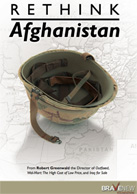
Don’t miss “Rethink Afghanistan”

dvdcovernew2-1

Join us on Sunday, Dec. 6, at 2:30pm for a free screening of Rethink Afghanistan, an 80-minute documentary about the US role in Afghanistan. The screening will be held at the Nickelodeon Theater, 937 Main St., in downtown Columbia. A discussion will follow, led by Dr. Stephen Sheehi of the Department of Arabic Culture at the University of South Carolina. Free and open to the public. For details about the film, see the web site. Sponsored by the SC Progressive Network and Carolina Peace.