As we prepare for the spring session of the Modjeska Simkins School, we wanted to offer the testimonials of former students so that it might inspire others to sign up for this year’s course. Classes meet Mondays evenings March 2 – June 22 online and in-person at six sites in South Carolina. See modjeskaschool.com for details.
At last year’s graduation, students shared what the experience meant to them. Here is what a few of them had to say.
George Orwell reportedly said, “In a time of deceit, telling the truth is a revolutionary act.”
As we approach the 250th anniversary of America’s founding by revolutionaries, we need more truth, not less. Our school is dedicated to doing just that.
The Modjeska Simkins School is in its 11th year of teaching a people’s history of South Carolina and practical skills for effective citizenship to students of all ages and backgrounds. Orientation for the spring session is Feb. 28, with hybrid classes meeting Monday nights between March 2 and June 22.
This year, students have more options than ever. They can attend on Zoom in the comfort of their own home, in-person at the SC Progressive Network’s building in Columbia, or at one of five satellite sites, where they will participate with a group via live satellite broadcast.
We understand that this intensive master class is a commitment that not everyone can make. If you can’t attend but want to ensure that the school continues to provide this unique experience to students across the Palmetto State, here are three ways you can help.
Print out the flyer to post at work, in your favorite coffee shop, your place of worship, or anywhere people congregate.
Find us on Facebook and Instagram, and help us widen our social media reach.
Make a tax-deductible donation to help us provide stipends for guest teachers and scholarship assistance for students. You can do so online or you can mail a check to: Modjeska Simkins School, PO Box 8325, Columbia SC, 29202.
Thank you for your commitment to teaching truth in perilous times. Your support truly makes a difference.
For details about the school, see modjeskaschool.com. If you have questions or concerns, please call our office at 803-808-3384 or email info@modjeskaschool.com.
The Modjeska Simkins School is now accepting applications for its spring semester, which runs from March 2 through June 22. Classes meet Monday evenings in Columbia, on Zoom, and via live broadcast at five satellite sites.
Expanding on last year’s success with our partners in Sumter and Penn Center, this year we’ve added remote sites in Lancaster, Orangeburg, and Pendleton. This in-person-option lets more students have the collaborative experience that is central to the program.
“These satellite sites broaden access to the school and help build community outside of our Columbia base,” said Brett Bursey, executive director of the SC Progressive Network, which launched the school in 2015. “You deepen the experience by sharing the experience,” he said. “The course covers challenging subjects, and it is good to have people to help process the material.”
Network staff member James Felder facilitated operations at the Sumter site last semester. “People in Sumter have heard from graduates, and are anxiously awaiting the spring semester,” he said. “People who have been through the program are our best messengers.”
Dr. Robert Greene II, a tenured professor at Claflin University and president of the national African American Intellectual History Society, has served as the Modjeska School’s lead instructor since 2019. “This year’s session of the Modjeska Simkins School comes at a time of both great peril and great promise for our state and our nation,” he said. “Learning the true history of South Carolina’s past can be inspiring and up-lifting.”
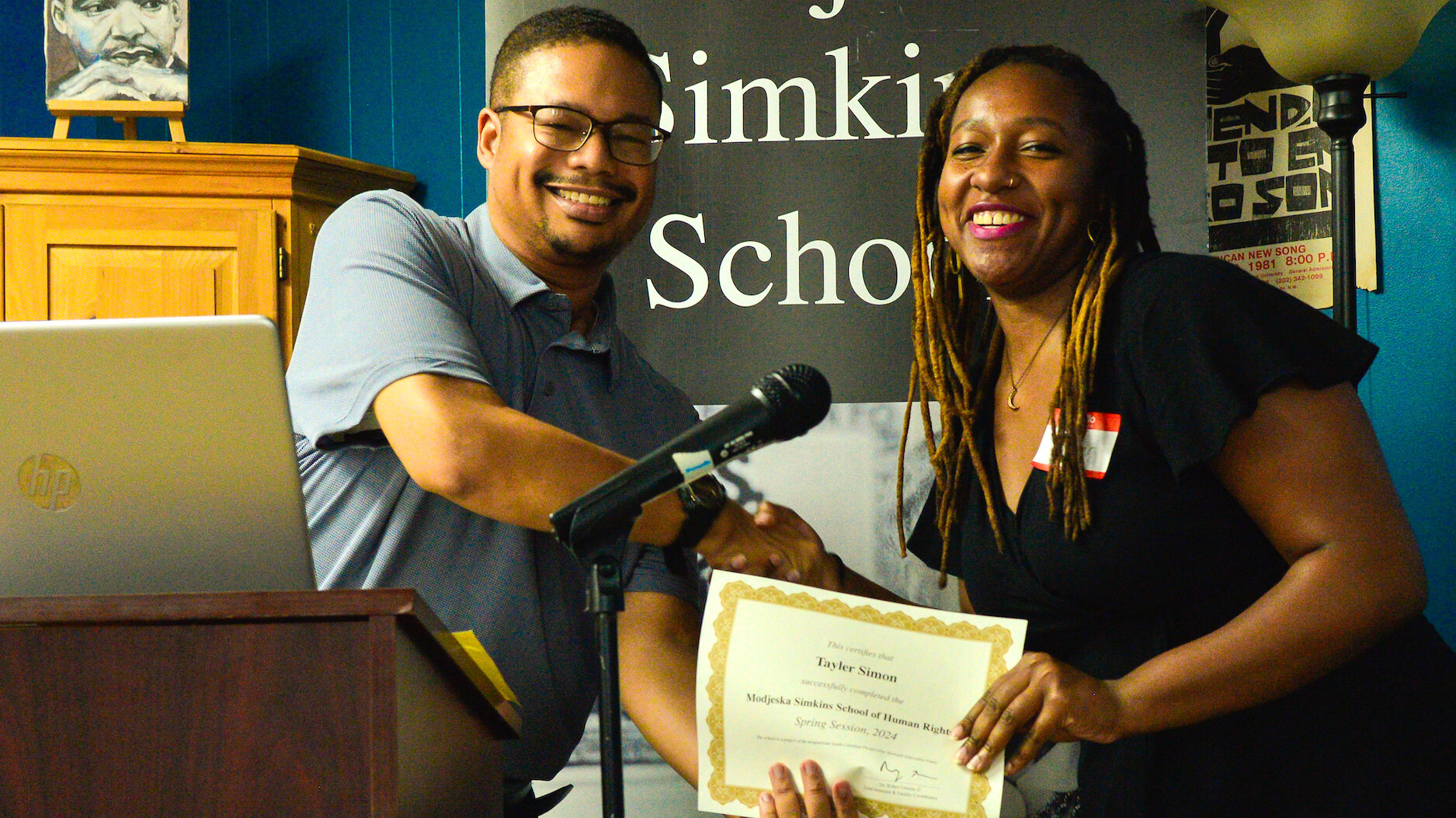
Dr. Robert Greene II and Tayler Simon
The curriculum reflects the Network’s nonpartisan strategy, focused intentionally and specifically on South Carolina, which continues to play an over-sized role in our nation’s politics.
This unique and ever-evolving master class is led by guest presenters who are some of the state and nation’s leading writers, historians, professors, and activists. It is a curriculum unlike any in South Carolina. While we welcome students of all backgrounds and ages (our youngest was 14) the course is not for everyone. It covers mature, difficult topics, and requires hours of outside study each week.
If you love history, want to be a more effective grass roots activist, are a retired person wanting to connect with others in your community, or are a transplant who wants to know more about your adopted home state, this course is for you.
The school also offers Deep Dives throughout the semester, Sunday afternoon programs held in Columbia and broadcast on Zoom. They are free and open to the public. To receive notices of the programs, sign up for the Network’s email list or bookmark GROW’s calendar.
For details about the school, see modjeskaschool.com. There you will find a list of instructors, the spring class schedule, and an application.
Full tuition is $500. Payment plans and scholarship assistance is available.
Questions? Call 803-808-3384 or email info@modjeskaschool.com.
Not going to lie; it’s been a rough year. Butif 2025 taught us anything, it’s the importance of connection and community. We offer this short review to remind you that we can thrive even in darkness.
Modjeska Simkins School lead instructor Dr. Robert Greene II
In January, we gathered at the Big Apple in Columbia to mark the 10th year of the Modjeska Simkins School. The gala was a chance to celebrate this important milestone and recommit ourselves to the work of remembering who we are, where we’ve been, and the power of ordinary people to make change.
In March, the Modjeska Simkins School began its spring session, and for the first time offered students the option of participating at satellite sites in Sumter and at historic Penn Center in St. Helena. It was so successful that we are expanding on that model in 2026, adding partner sites in Lancaster, Orangeburg, and Pendleton. We are excited about broadening access to communities outside of Columbia, and working with them after classes end.
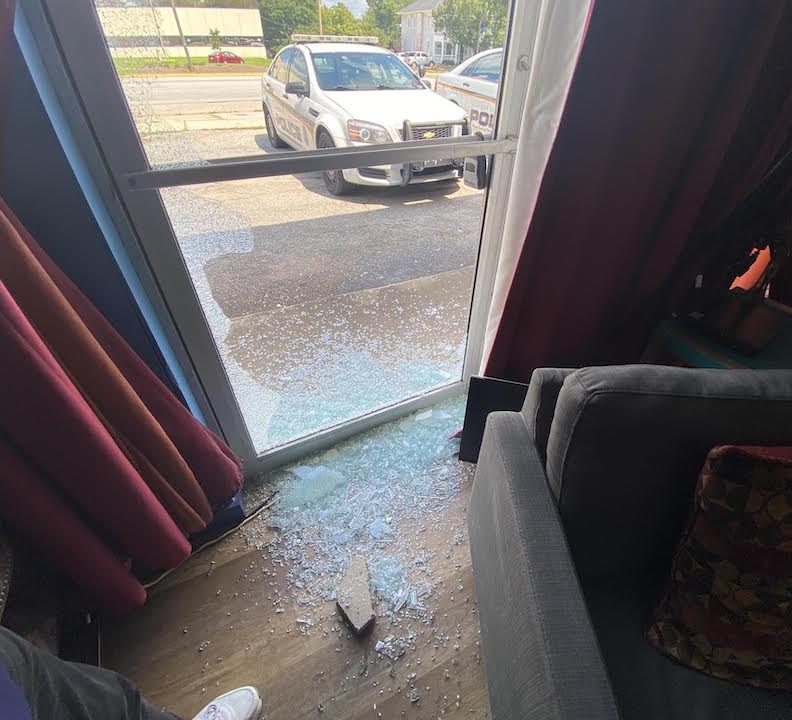
In April, GROW, our HQ, was vandalized for the second time, leaving considerable damage. Our friends rallied to cover the cost of repairs and to upgrade our security system. In 2026, we will make the building even more secure by remodeling the parking area to include barriers. We were moved by the support.
In May, we took a field trip to Orangeburg for a special program on Briggs v Elliott’s role in the landmark Brown v. Board case. The trip included a tour of the SC Civil Rights Museum’s new building, still under construction. Cecil Williams has done a beautiful job overseeing the creation of a first-class facility that will serve generations.
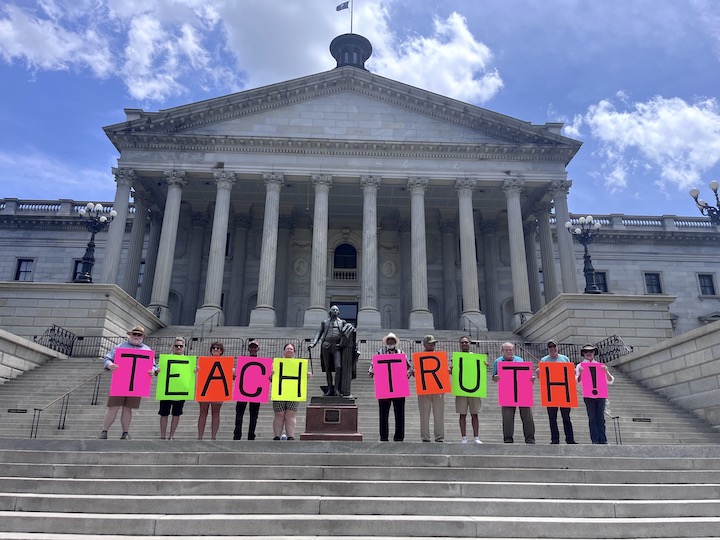
On June 10, friends and alumni of the Modjeska Simkins School marked the Zinn Education Project’s Teach Truth Day with a speak-out at the SC State House. See video clip.
July 31, on what would have been his 100th birthday, we joined friends and family of James E. Campbell at the Avery Research Center in Charleston to mark his extraordinary life with a day of teachings, discussions, and remembrances. Campbell was a longtime member of the SC Progressive Network, and was among the first to receive the organization’s Thunder and Lightning Award, in 1998. He served as a mentor to many and an inspiration to all who had the pleasure to work with him.
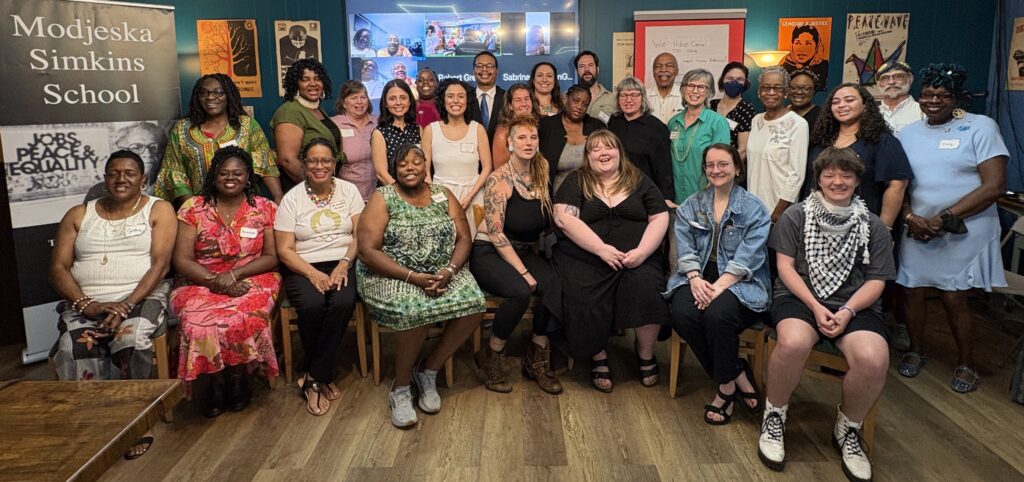
On June 28, the Modjeska Simkins School graduated 63 students, the largest class yet.
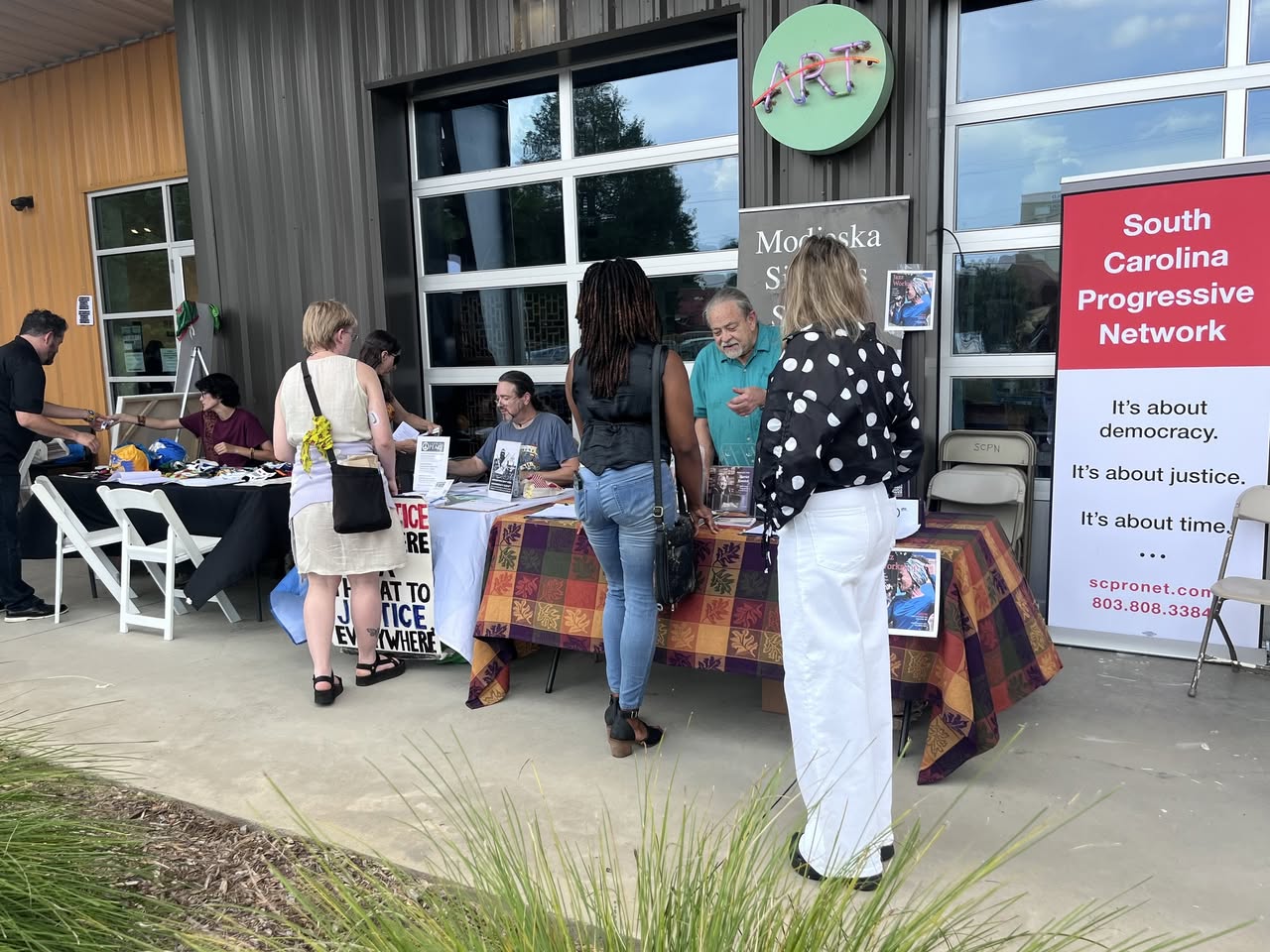
In July, we tabled at the Degenerate Arts Activist Fair at Stormwater Studios in Columbia, a four-day event organized by Jasper Project. Our friends at Jasper included an essay about GROWin their fall magazine, and have invited us to participate in their second Activist Fair, which kicks off Jan. 20.
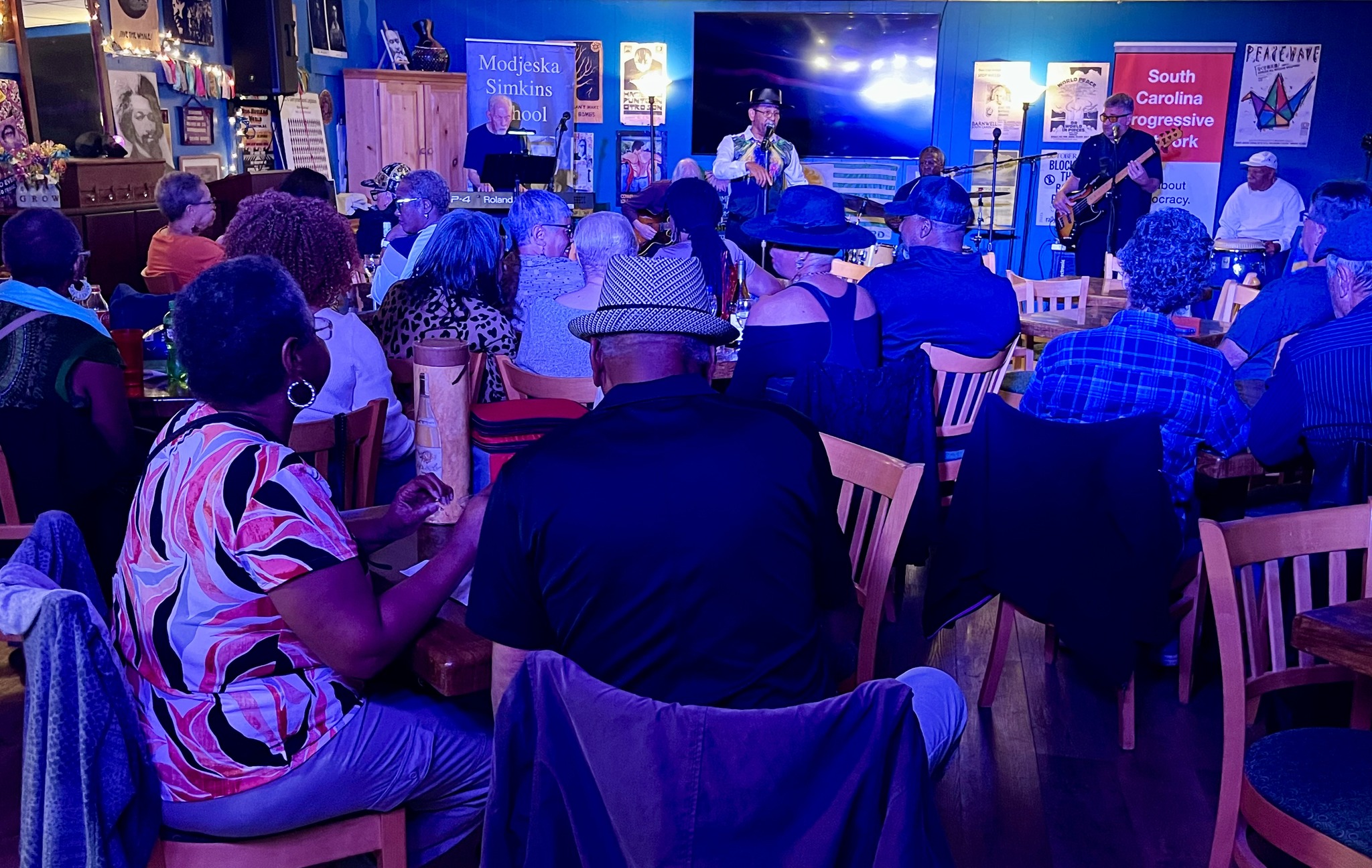
In August, we added blues to the menu at GROW, building on the popularity of the jazz workshops we’ve been hosting since 2023. Led by world-class bluesman Cesar, the blues workshops have brought a whole new vibe to the corner of Elmwood and Marion. Now, every Thursday between 8 and 10 folks can come out to hear some of Columbia’s finest musicians. It’s free — for now. We may move to a GROW membership model in the coming year.
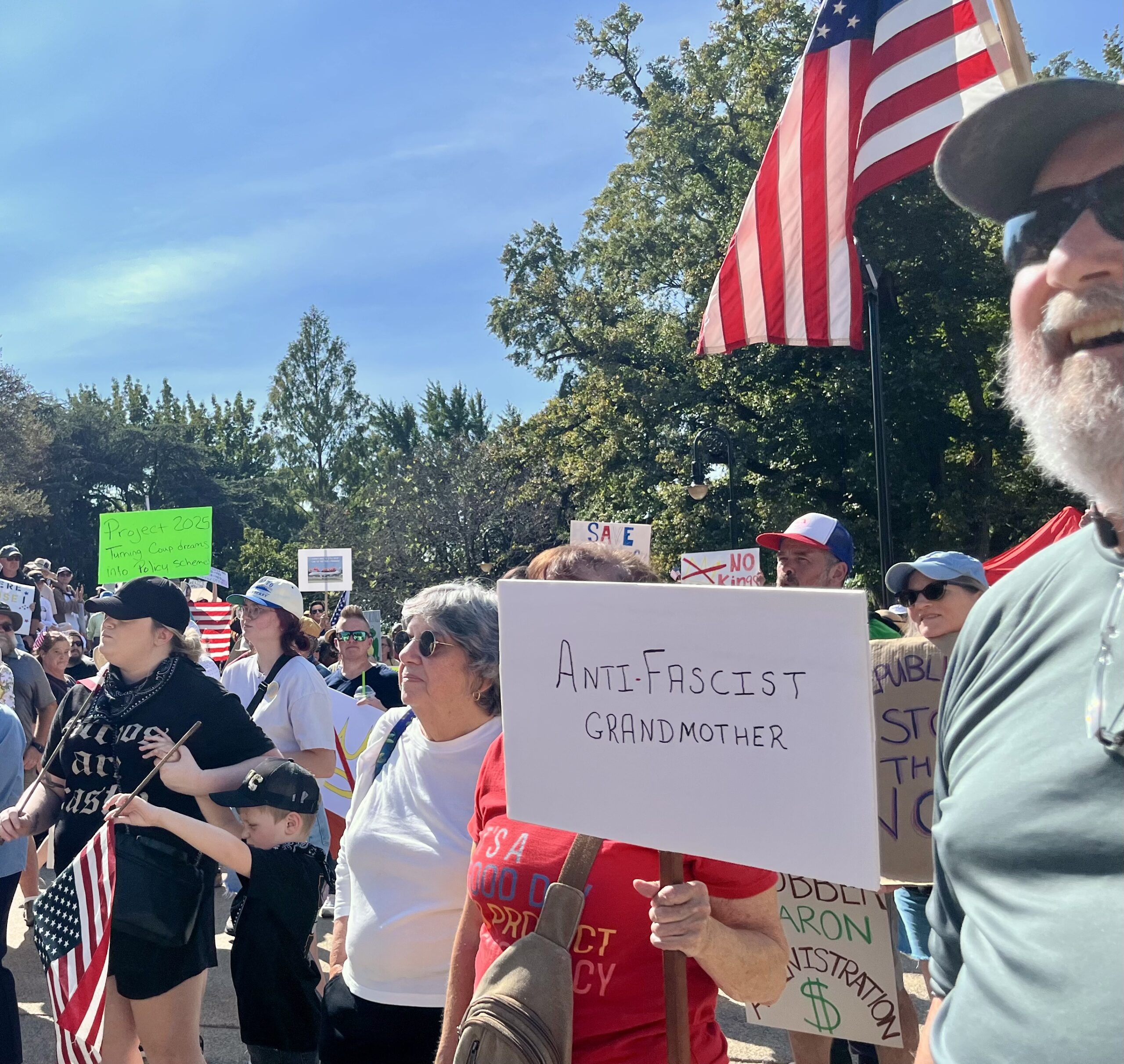
In October, many of our members and allies took part in the No Kings rallies across the state, joining some 7 million Americans in telling the administration we resist and condemn authoritarian rule. Several of our members were invited to speak at earlier rallies in Columbia and in Greenville.
In November, the Modjeska Simkins School was invited to participate in the SC Council of Social Studies conference in Greenville, where Dr. Robert Greene IImade a presentation on the challenge of teaching history in these times. We recruited more than a dozen teachers at the symposium to participate free of charge in the 2026 session of the school. It is our way of investing in education.
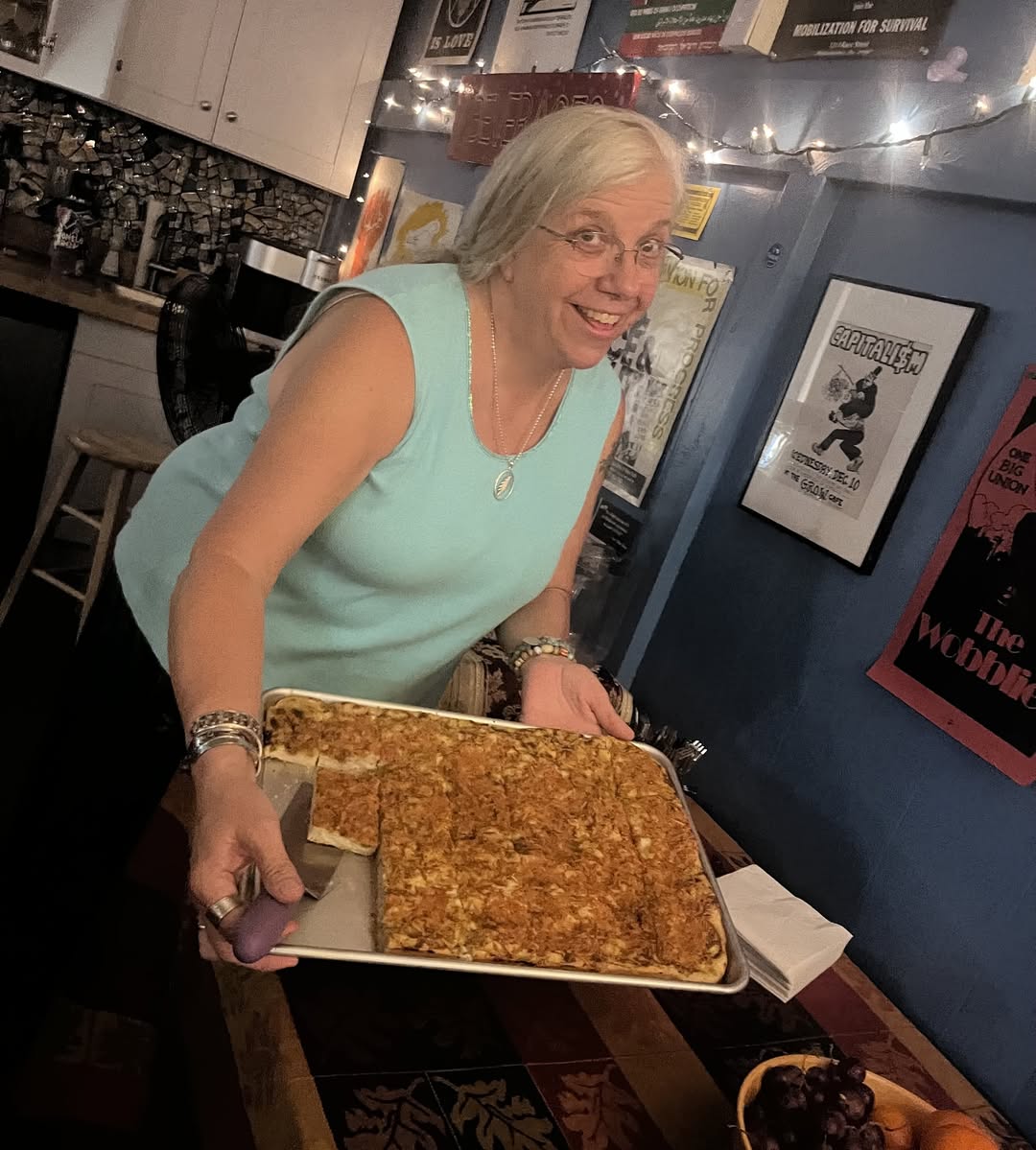
The Wednesday before Thanksgiving, GROW held its first Friendsgiving, a casual gathering to mark our country’s tastiest and most complicated holiday. It was great fun, and may become a new tradition.
Armand Derfner (left) and Vernon Burton
Over the spring semester, the school held a number of Deep Dives, Sunday programs on Zoom and at GROW that are open to students and the public. We welcomed such luminaries as nationally renowned civil rights attorney Armand Derfner and historian Dr. Vernon Burton, and authors Fergus Bordewich, Carolyn Click, and Dr. Justene Hill Edwards. We screened the 2014 film Scarred Justice, about the 1968 Orangeburg Massacre, and the labor documentary Uprising of ’34, about the killings of striking workers at Honea Path, SC.
We maintained our quarterly commitment to Columbia’s Adopt-A-Street program by cleaning Marion Street between Elmwood and Taylor. Our thanks to the volunteers who help us keep our promises and make our neighborhood more beautiful.
We said goodbye to Gabbi Zurlo, who left just shy of a year on the job. We appreciate her time with us, and wish her well. We welcomed Nilanka Seneviratne to our board and Leisa Marie Greer to the GROW team. She used to sell ads for our newspaper POINT at the original GROW, so it’s a full-circle moment to have her return as our most talented volunteer.
Finally, some gratitude. We are indebted to all the musicians who bring GROW to life every Thursday, and grateful for the people who come to see them. It’s Columbia’s best-kept secret, but word is slowly spreading.
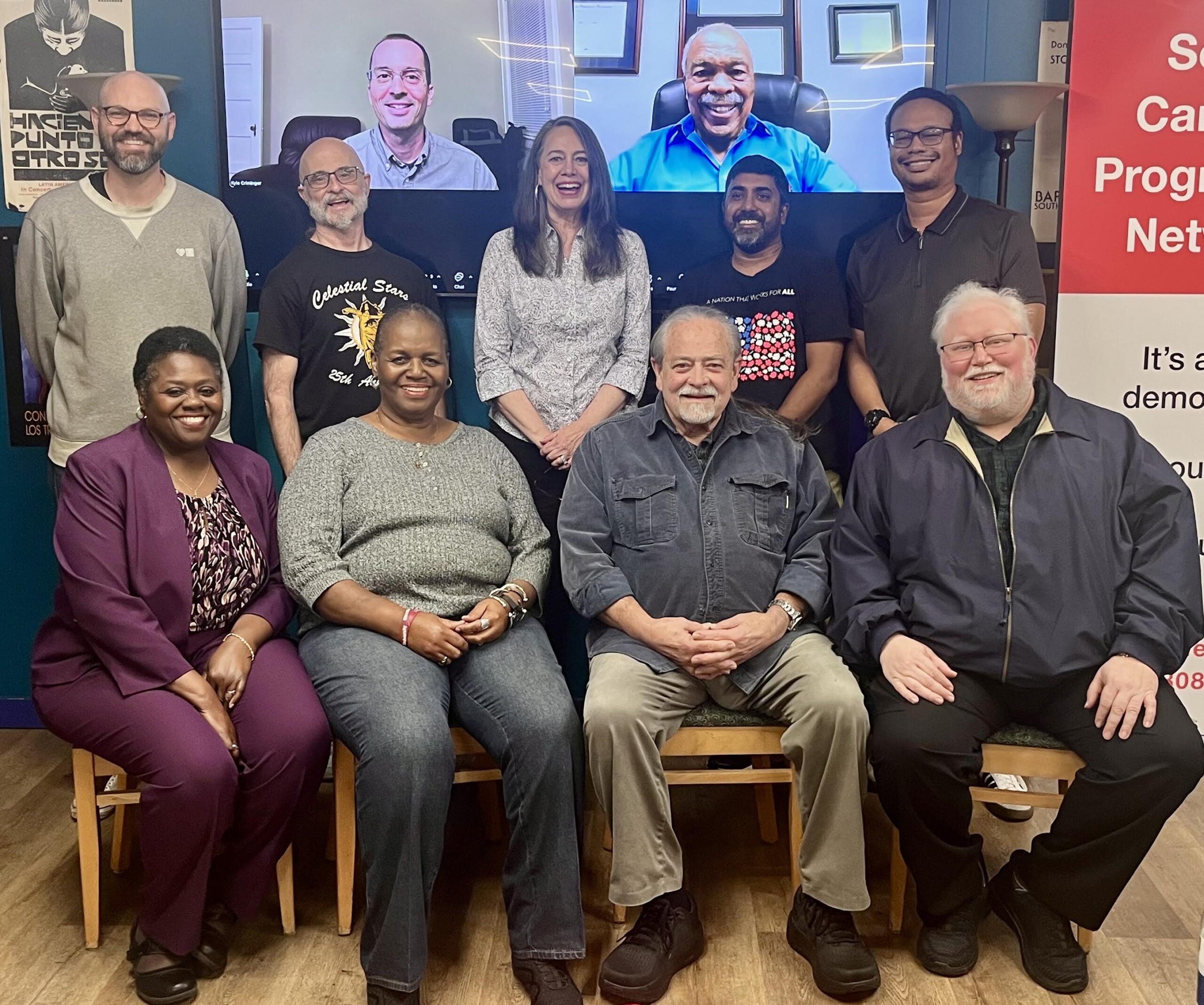
We thank the members of our hard-working board, who keep our books sound and our organization on track — all with good cheer. In photo, they are: (on Zoom) Kyle Criminger, James Felder, (standing) Chris Gardner, James Carpenter, Shannon Sylvester, Nilanka Seneviratne, Dr. Robert Greene II, (seated) Bernadette Hampton, Carol Singletary, Brett Bursey, and Cecil Cahoon.
And we thank the groups that meet at GROW to network and map plans, doing movement building at the grass roots. If you belong to a nonprofit whose values align with ours, keep us in mind as a potential gathering spot. Call 803-808-3384 or email network@scpronet.com for details.
After moving our offices into Modjeska Simkins’ historic home in 2009, the SC Progressive Network began throwing a party on her birthday, a tradition we’ve maintained every year since.
So we regret that this year we will not be toasting her memory with a glass of her favorite port — at least not as a group. We encourage you to do so on your own.
Pour yourself a glass of port, or your favorite beverage, and take a little time to remember her remarkable life and legacy.
We’ve put together some links for you to enjoy and share.
• • •
Here’s a clipof last year’s party at GROW, our HQ in Columbia.
Videoof last year’s Modjeska Simkins School class, which includes comments by Dr. Robert Greene II and the SC ETV documentary Making a Way Out of No Way.
Oral History Interviewof Modjeska Simkins by Jacquelyn Hall, July 28, 1976. You can read a transcript or hear an audio recording. If you’ve never heard Ms. Simkins’ voice, you owe it to yourself to take a listen.
Network Executive Director Brett Bursey talks about his mentor in this video, recorded 11 years ago.
“We want to recognize Keith’s generous spirit with this scholarship,” said Network Executive Director Brett Bursey. “We can think of no better way to honor his memory.”
Keith Grey, Sr., (left) and his good friend Alan Sattler at GROW in Columbia.
Keith wasn’t just a graduate of the school, he was one of its most enthusiastic supporters. He was a dedicated student and, after graduating, audited several semesters from his home in Lancaster. He regularly held court in the after-class Zoom conversations, when students stay on the line for a some virtual community building.
Community was important to Keith, who was active in local, state, and national organizations. He served as Chair of the Lancaster County Democratic Party from 2016 to 2022, and ran twice for the House, in 2020 and 2022. He had a deep commitment to growing a better South Carolina.
You can read more about his life in this obituary.
We extend our condolences to his family, friends, colleagues, and allies.
A celebration of life will be held on Friday, Dec. 12, at 3pm at Lancaster Funeral Home.
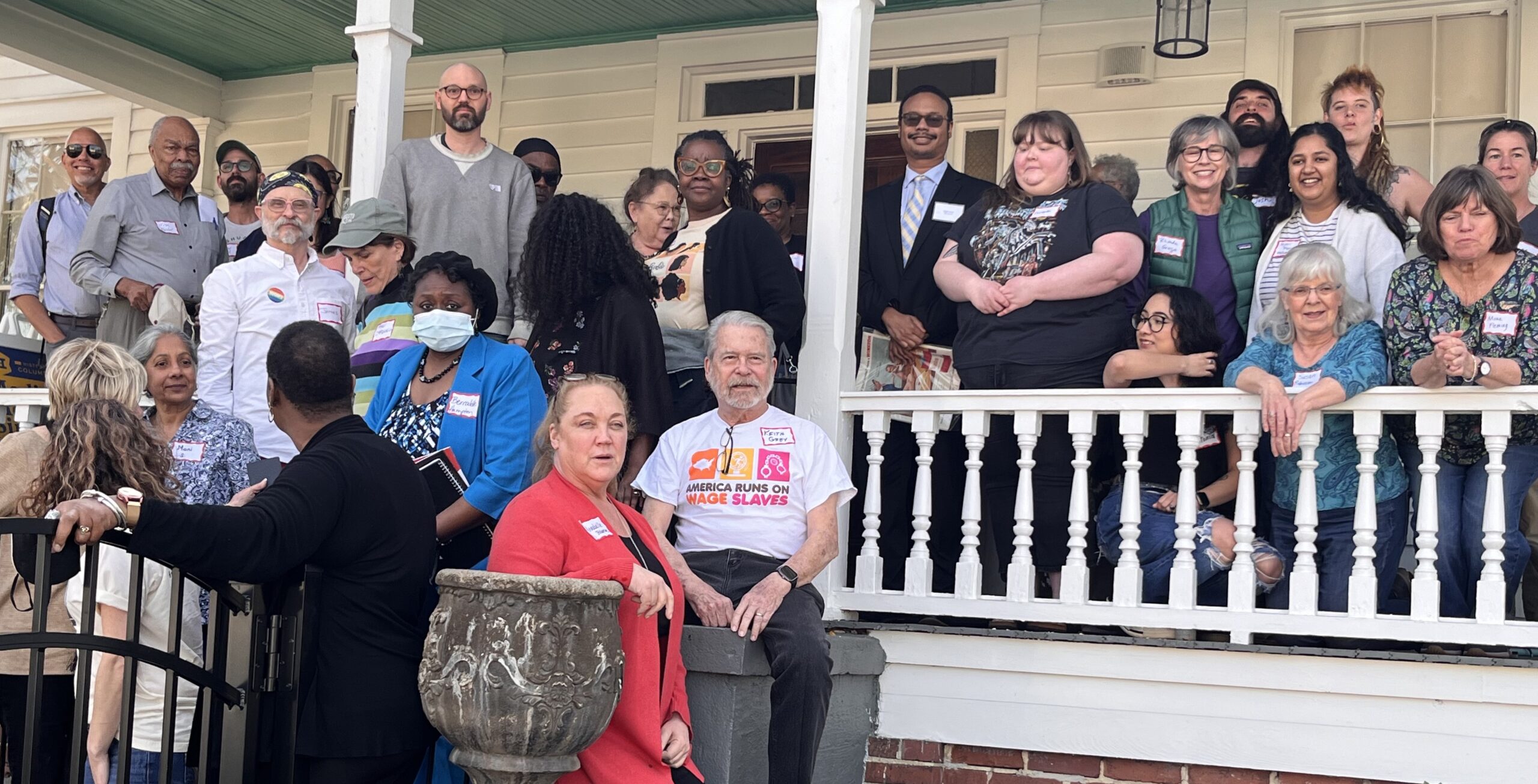
Keith (seated) during Modjeska Simkins School graduation photo session on the porch of Ms. Simkins’ home.
At the SC Council of Social Studies Conference in Greenville Nov. 13–14, Dr. Robert Greene II presented on behalf of Claflin University, the HBCU in Orangeburg where he teaches history, and the Modjeska Simkins School, where he has served as lead instructor since 2019.
We were honored to be included in the program, which attracted educators from around the state.
Big thanks to our crew for working our table during the conference: SC Progressive Network staffer James Felder and Modjeska School grads Cecil and Irene Rigby.
The SC Progressive Network is pleased to announce that Nilanka Seneviratne has accepted our invitation to join the organization’s board of directors.
“Nilanka was a stand-out at the Modjeska School and was well-respected by his peers,” said Network Executive Director Brett Bursey. “I know he will be an asset to our board, as he brings a global perspective, fresh ideas, and valuable skills to the table.”
Nilanka has a Master’s in Public Administration from the George Washington University (with a concentration in budgeting and analysis), and Bachelor’s Degrees in Psychology and International Studies.
He is Director of Operations and Systems at The Horizons Project, which works to connect US social justice, peace building, and democracy communities. He serves as President of the Board for Street Meat Bicycle Club, and is the Social Committee Chair for Earlewood Community Citizens Organization.
He is also a one-day Jeopardy! Champion and avid Learned League Llama. His hobbies? “Music, hiking, riding bikes, reading, beer, and trivia. Especially the combination of the last two.”
As the child of Sri Lankan immigrants who periodically returns to the island, Nilanka said he has “borne witness to the horrific outcomes of a polarized society riven by ethnic violence and a breakdown in the rule of law.”
Nilanka first became aware of GROW when he attended shows at the old building while in high school. In 2005, he joined the SC Progressive Network shortly before moving to DC for grad school.
After he returned to Columbia, he started attending the regular lunches at the new GROW. There, he learned about the Modjeska School, which he completed in 2024.
“Attending the Modjeska School was one of the most transformative experiences of my life,” he said. “I learned about our state’s outsized connections to major historical events, the deep history of those organizing for change in South Carolina, and I made friends and comrades who I work with locally.”
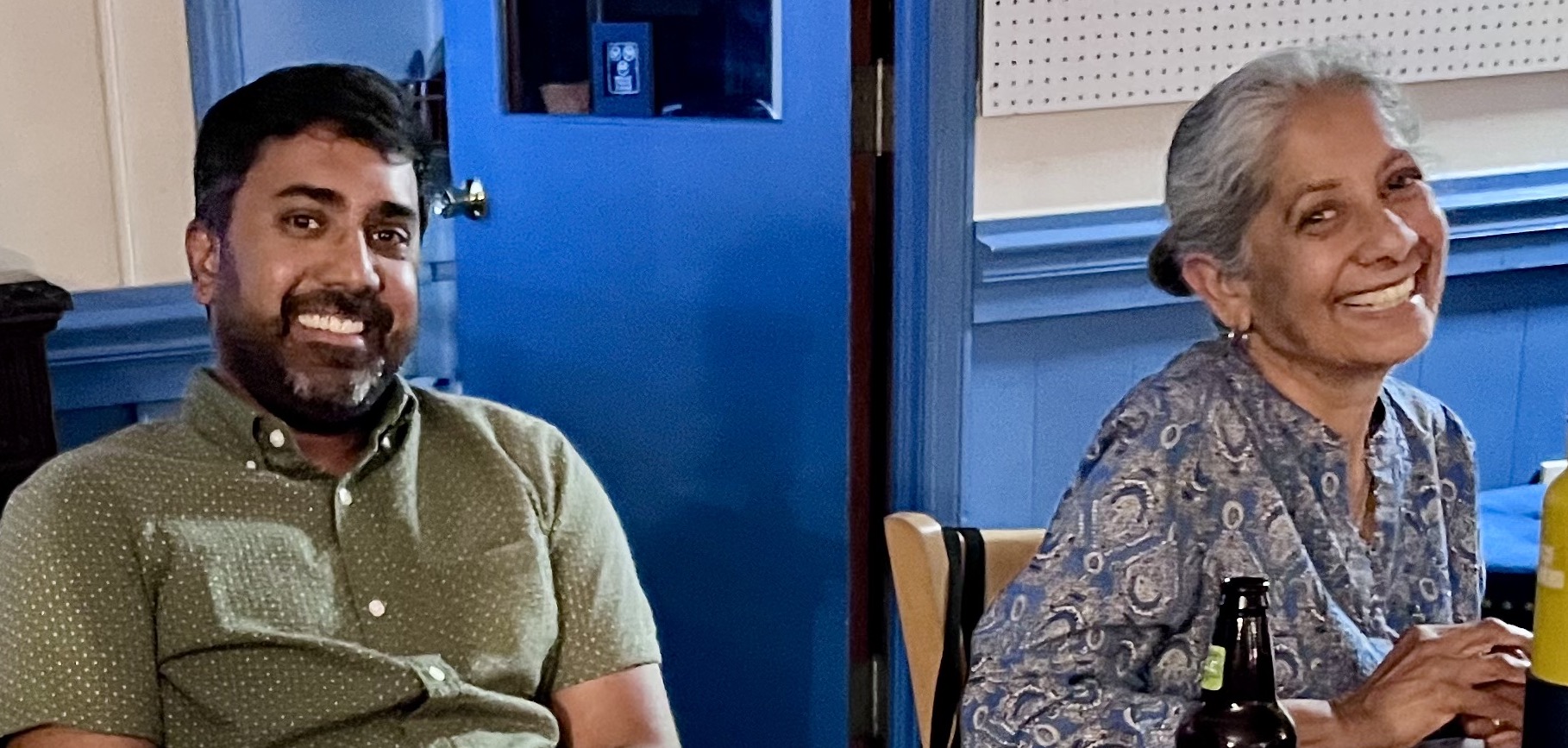
Nilanka was so affected by his experience that he persuaded his mother, Nilmani Seneviratne, to attend the school in 2025. Both have since become champions of the Thursday jazz and blues nights at GROW.
Nilanka and Nilmani Seneviratne at GROW
When approached to join the board, Nilanka said “at this moment, we all need to find how we can chip in, and for me that means building community locally as well as representing South Carolina in the national spaces I participate in and bringing resources back home.
“Given my background in nonprofit management, joining the board of the Progressive Network was a no brainer. I look forward to working with all of you to make South Carolina a better place. There’s much to do, so let’s get started!”
Protesters march down Laurel Street Oct. 18 in downtown Columbia on their way from the SC State House to the Governor’s Mansion.
According to organizers of the No Kings rallies, some 7 million people turned out at large and small events across the country. Even with numbers still coming in, Oct. 18, 2025, marks one of the largest single-day nationwide demonstrations in our history.
There were more than 2,700 protests across all 50 states. South Carolina did its part, with events from the Lowcountry to the Upstate. It was a joyful and peaceful day. The only arrest took place in Myrtle Beach, where a woman brandished a firearm to threaten the crowd.
Columbia turned out in a big way, gathering at the SC State House for a rally, followed by a march to the Governor’s Mansion. Congratulations to everyone who spent their Saturday defending democracy. You looked amazing.
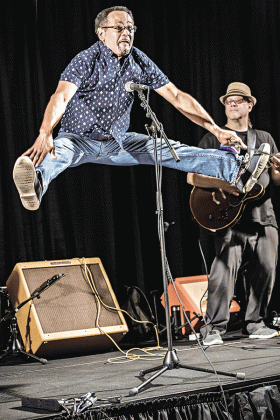
Need relief from all the crazy? Put on your party dress, lace up your dancing shoes, and join us Thursday night at 8 for GROW’s first Blues Workshop Jam.
It promises to be a lively gathering, headlined by Donald Cesar, who has become a crowd favorite at GROW’s jazz shows.
A Louisiana native who now lives in Orangeburg, Cesar was born into a family whose musical heritage spans generations. His grandfather Alphonse “Bois Sec” Ardoin, was a pioneer of the gumbo that is zydeco, and was so accomplished that he earned a NEA Heritage Fellowship.
Small wonder that Ceasar would become a musician himself, learning to play the drums, keyboard, and harmonica. He has shared the stage with legendary artists, including John Delafose, Fats Domino, The Nevilles, B.B. King , Ruth Brown, Gatemouth Brown, Allen Toussaint, James Brown, The Platters, The Drifters, The Clovers, The Temptations, Tyrone Davis, Prince, and Dion Warwick, among many others. Cesar has performed at Spoleto, at various music festivals, and in venues across the South.
“He’s played with everybody,” said vocalist Sara Williams, a fixture in the local music scene and the original force behind GROW’s jazz workshops. “He brings such joy to his music that you can’t help but dance when he’s on stage. He’s also just a really good guy. I met up with him in DC when he drove Drink Small up there to receive a national award.”
Ceser has deep roots in the Creole tradition, and he plans to weave music history into the shows, making them true workshops.
“Cesar is a natural entertainer,” said Brett Bursey, executive director of the SC Progressive Network, the nonprofit overseeing GROW’s operations. “We are thrilled for the chance to showcase his extraordinary talent and help grow the blues community in Columbia.”
Blues workshops will be held 8–10pm every 2nd and 4th Thursday, will follow the style and spirit of the jazz workshops, which feature a core band, Justus, who are joined by musicians of various backgrounds and abilities each night. Some are regulars; some stop in every now and again. Every night is as different as the players on the stage, which keeps it interesting and fresh. The only constant is the warmth and camaraderie in the room.
“There is a generosity of spirit during these jam sessions that is a balm in these tough times,” said Becci Robbins, the Network’s communications director and GROW’s building manager. “Now I’ve got two more Thursdays each month to help me adjust my attitude. I swear it is the best therapy.”
As Ceasar himself commands, “Come get you some!”
GROW is located at 1340 Elmwood Ave. in the heart of Columbia. Easy parking. Doors open at 7:30. Music begins at 8. No cover, but we rely on donations to help support the artists and keep the lights on at GROW.
Questions? Call 803-808-3384 or email network@scpronet.com.
• • •
Check out one of Cesar’s first performances at GROW, a rendition of Kansas City punctuated with white-hot harmonica.