Dr. Robert Greene II
Once more, the American experiment in democracy finds itself in peril. Like numerous other times in our nation’s history, this peril is primarily from within. Once, it was forces such as the Confederacy, the Ku Klux Klan, or the radical opponents of the Civil Rights Movement. Now, Trumpism has scored another victory, and many Americans are puzzled about what to do next.
Now is not the time to give into despair. History offers us something to hold on to—not a false hope that things will automatically get better, but that the hard work of building democracy has been done before. It can, therefore, be done again.
In another age of reaction and despair, Frederick Douglass counseled Black Americans to hold the line for freedom. His 1894 address, “Lessons of the Hour,” was given two years before the Plessy v. Ferguson decision enshrined Jim Crow segregation for decades. But he saw the writing on the wall, as Southern states wrote new constitutions to disenfranchise Black Americans, and Northern leaders simply did nothing in response. Wrote Douglass, “Put away your race prejudice. Banish the idea that one class must rule over another.”
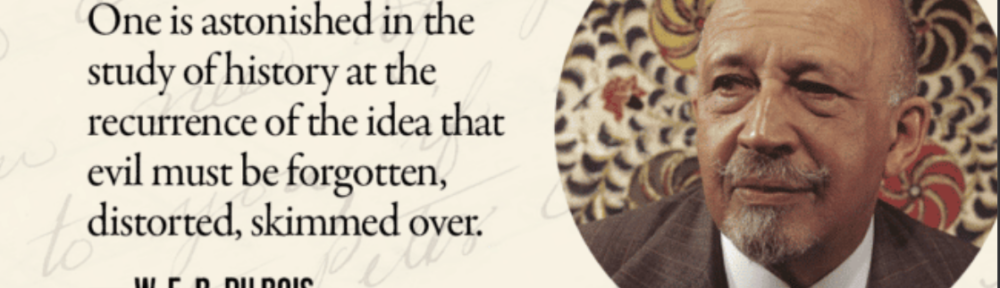
Or, as W.E.B. Du Bois argued in 1946 at the Southern Negro Youth Congress’ convention in Columbia, South Carolina, “To rescue this land”—referring to the South—“in this way, calls for the Great Sacrifice; this is the thing you are called upon to do because it is the right thing to do.”
Like Douglass, Du Bois understood the uphill battle for freedom he and his colleagues faced in the South, across the U.S., and around the world. DuBois told the overflow crowd from across South Carolina and the region, that they were on the “firing line not simply for the emancipation of the American Negro…” but for “the emancipation of the white slaves of modern capitalist monopoly.”
Like both of those men, we face our own long, twilight struggle—but it is one that begins right here, in South Carolina. What we do here will impact millions across the country and around the world.
Now, we rest. Next, we strategize. But soon, very soon, we must organize and prepare ourselves to, once again, make a way out of no way.
• • •
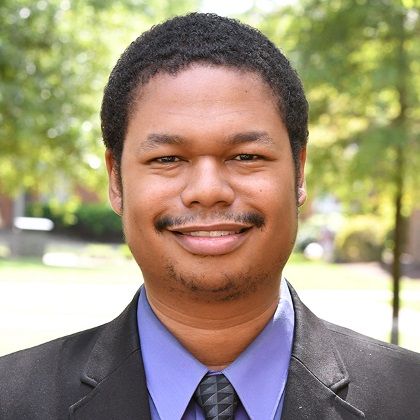
Dr. Robert Greene II is an Assistant Professor of History at Claflin University. He is co-editor, along with Tyler D. Parry, of Invisible No More: The African American Experience at the University of South Carolina. Dr. Greene II is also the President of the African American Intellectual History Society, and Publications Chair for the Society of U.S. Intellectual Historians. He also serves as the Lead Instructor for the Modjeska Simkins School of Human Rights for the South Carolina Progressive Network. Dr. Greene II also co-hosts the podcast, Our New South, for the Next Chapter Podcast Network. He has also written for various publications, including The Nation, Dissent, Jacobin, and Oxford American. Currently, Dr. Greene II is working on his book, The Newest South: African Americans and the Democratic Party, 1964-1994, which details how the Southern leaders of the Democratic Party in the post-Civil Rights era crafted strategies to attract, and hold onto, the Black vote across the nation.