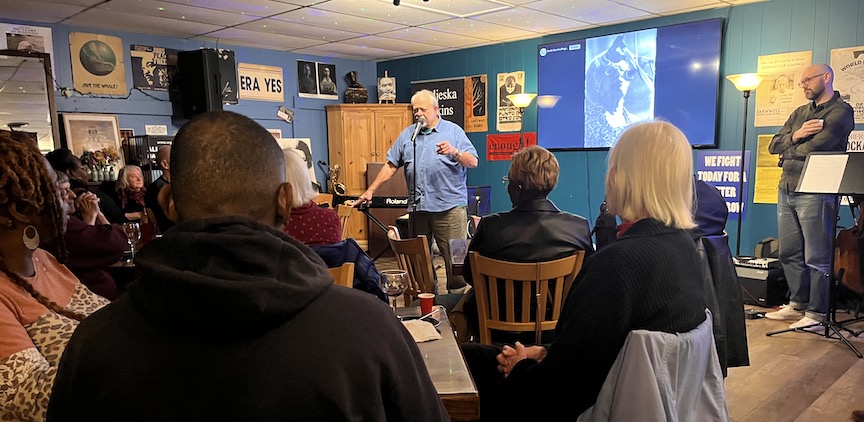
GROW has never been as packed as it was on the evening of Dec. 5, on the occasion of Modjeska Monteith Simkins’ 125th birthday. One can only imagine what she might have thought of the gathering. This much we can guess: she would have approved of the fact that the event was free. She once groused about a fundraiser being held in her name, saying she wouldn’t pay the ticket price to attend.
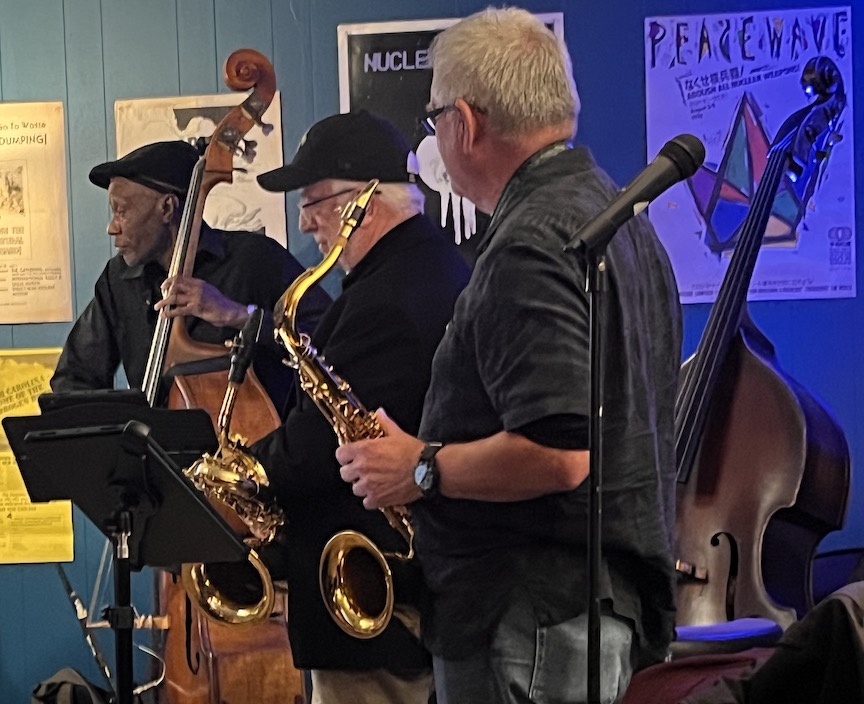
As it does every year, the SC Progressive Network threw a party to remember the human rights activist who continues to inform and inspire our work. This year was special in that it fell on the night GROW holds its first-Thursday jazz workshop. The GROW house band was joined by the USC Congaree New Horizons jazz improv group for a great night of live music.
Dr. Robert Greene, lead instructor for the Modjeska Simkins School, reminded us how important it is to remember not just the bad actors in SC history, but also the people such as Ms. Simkins who fought back against stiff odds.
“If you live in South Carolina, you not only live in a state influenced by John C. Calhoun, or Ben Tillman, or James Byrnes. You are also living in a state impacted by the rebels in Stono, by Robert Smalls, Septima Clark and Modjeska Simkins.”
You can listen to Dr. Greene’s full remarks, and those of former SC Rep. James Felder and Network Executive Director Brett Bursey, in this video.
It was an evening full of fellowship and hope, just what the doctor ordered in these troubled times.
Members and allies of the SC Progressive Network packed GROW on Nov. 20 to process the grim new reality after the latest election. They were joined by 35 folks on Zoom.
Dr. Robert Greene II, lead instructor at the Modjeska Simkins School, offered a historical perspective. Network Executive Director Brett Bursey offered an organizing perspective. Modjeska School graduate Josh Dunn and Network staffer Gabbi Zurlo facilitated break-out sessions.
The evening was surprisingly upbeat. While we lack political power, that is nothing new and we know that there is much we can do as a collective to support each other, being especially mindful of those who will bear the brunt of the harsh policies the new administration has promised.
The Network is committed to providing space for allies to meet, strategize, and grow our community, an extended family built on shared values and a vision of a more just South Carolina.
Once more, the American experiment in democracy finds itself in peril. Like numerous other times in our nation’s history, this peril is primarily from within. Once, it was forces such as the Confederacy, the Ku Klux Klan, or the radical opponents of the Civil Rights Movement. Now, Trumpism has scored another victory, and many Americans are puzzled about what to do next.
Now is not the time to give into despair. History offers us something to hold on to—not a false hope that things will automatically get better, but that the hard work of building democracy has been done before. It can, therefore, be done again.
In another age of reaction and despair, Frederick Douglass counseled Black Americans to hold the line for freedom. His 1894 address, “Lessons of the Hour,” was given two years before the Plessy v. Ferguson decision enshrined Jim Crow segregation for decades. But he saw the writing on the wall, as Southern states wrote new constitutions to disenfranchise Black Americans, and Northern leaders simply did nothing in response. Wrote Douglass, “Put away your race prejudice. Banish the idea that one class must rule over another.”
Or, as W.E.B. Du Bois argued in 1946 at the Southern Negro Youth Congress’ convention in Columbia, South Carolina, “To rescue this land”—referring to the South—“in this way, calls for the Great Sacrifice; this is the thing you are called upon to do because it is the right thing to do.”
Like Douglass, Du Bois understood the uphill battle for freedom he and his colleagues faced in the South, across the U.S., and around the world. DuBois told the overflow crowd from across South Carolina and the region, that they were on the “firing line not simply for the emancipation of the American Negro…” but for “the emancipation of the white slaves of modern capitalist monopoly.”
Like both of those men, we face our own long, twilight struggle—but it is one that begins right here, in South Carolina. What we do here will impact millions across the country and around the world.
Now, we rest. Next, we strategize. But soon, very soon, we must organize and prepare ourselves to, once again, make a way out of no way.
• • •
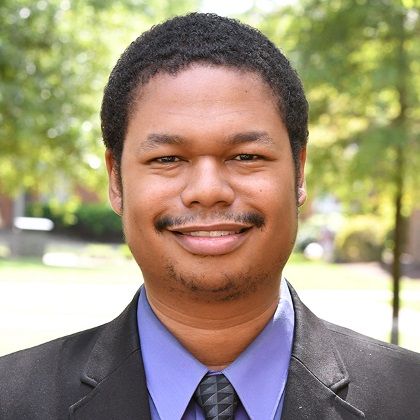
Dr. Robert Greene II is an Assistant Professor of History at Claflin University. He is co-editor, along with Tyler D. Parry, of Invisible No More: The African American Experience at the University of South Carolina. Dr. Greene II is also the President of the African American Intellectual History Society, and Publications Chair for the Society of U.S. Intellectual Historians. He also serves as the Lead Instructor for the Modjeska Simkins School of Human Rights for the South Carolina Progressive Network. Dr. Greene II also co-hosts the podcast, Our New South, for the Next Chapter Podcast Network. He has also written for various publications, including The Nation, Dissent, Jacobin, and Oxford American. Currently, Dr. Greene II is working on his book, The Newest South: African Americans and the Democratic Party, 1964-1994, which details how the Southern leaders of the Democratic Party in the post-Civil Rights era crafted strategies to attract, and hold onto, the Black vote across the nation.
For the 16th year, the SC Progressive Network Education Fund is coordinating the Election Protection Coalition’s ground game in South Carolina by training volunteers and circulating the 866-OUR-VOTE hotline number that helps voters who experience problems at the polls.
Election Protection Coalition, the largest nonpartisan organization protecting the nation’s vote, is collaborating with nonprofits like ours to ensure that all eligible South Carolina voters are able to cast a ballot in the 2024 election.
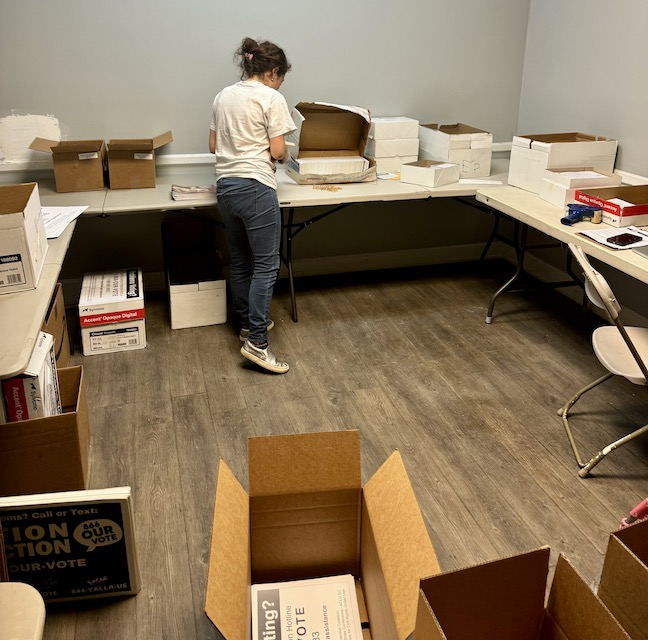
Network staffer extraordinaire Gabbi Zurlo prepares boxes of Election Protection material to dispatch to NAACP allies in 46 SC counties.
“Calls to the hotline provide the only real-time, nonpartisan statewide audit of our election system,” said Network Executive Director Brett Bursey. “The hotline not only offers voters immediate help at the polls, reports to the hotline also helps us identify and address systemic problems.”
President John F. Kennedy anticipated the difficulty of getting the old Confederate states to comply with the Civil Rights and Voting Rights Acts, so he asked the American Bar Association to form a pro-bono lawyers committee to offer legal aid to help insure all eligible voters’ ballots be counted.
In 2008, the Lawyers Committee for Civil Rights launched a toll-free number to provide immediate legal assistance to voters through the the Election Protection 866-OUR-VOTE hotline. Spanish speakers can call 1-888-Ve-Y-Vota (1-888-83-9-8682) for assistance.
By calling the hotline, voters can confirm their registration status, find their polling location, and ask about required identification at the polls. Voters are encouraged to report any problems so that any patterns of failure can allow for corrections before the next election.
The Network is partnering with the SC NAACP to distribute the number statewide and to post the hotline in polling sites in all 46 counties.
If you would like to help, you can print out the hotline sign and post it prominently. You can also pick up printed materials, yard signs, and magnetic car signs at our office. Call 803-808-3384 to make arrangements.
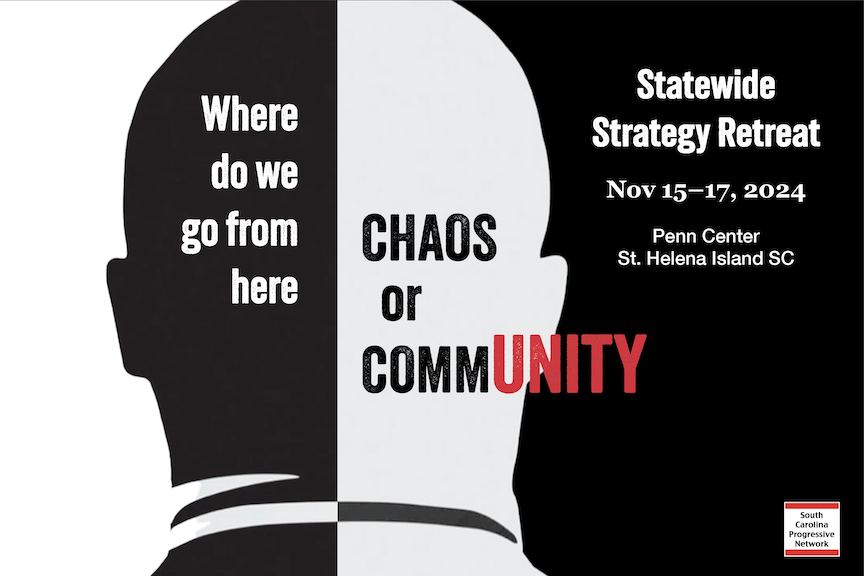
SC Progressive Network members and allies from across the Palmetto State will gather the weekend of Nov. 15–17 at historic Penn Center to network, map strategy, and build community.
The Network was founded at Penn in 1996, and we have met there many times over the years. It is a unique place steeped in rich culture and history. We will meet in the same room where Dr. Martin Luther King Jr. and other luminaries of the civil rights movement met to find fellowship and map strategy. We will sleep on the same campus where formerly enslaved children studied freely for the first time in America.
Dr. King Jr. wrote his I Have a Dream Speech at Penn. We will consider the same question he posed in 1966: Where do we go from here?
We hope you will join us for some old-school grass-roots organizing, face-to-face and in the round. Come for a day or the whole weekend. We promise that you will leave more energized, inspired, and hopeful than when you arrived.
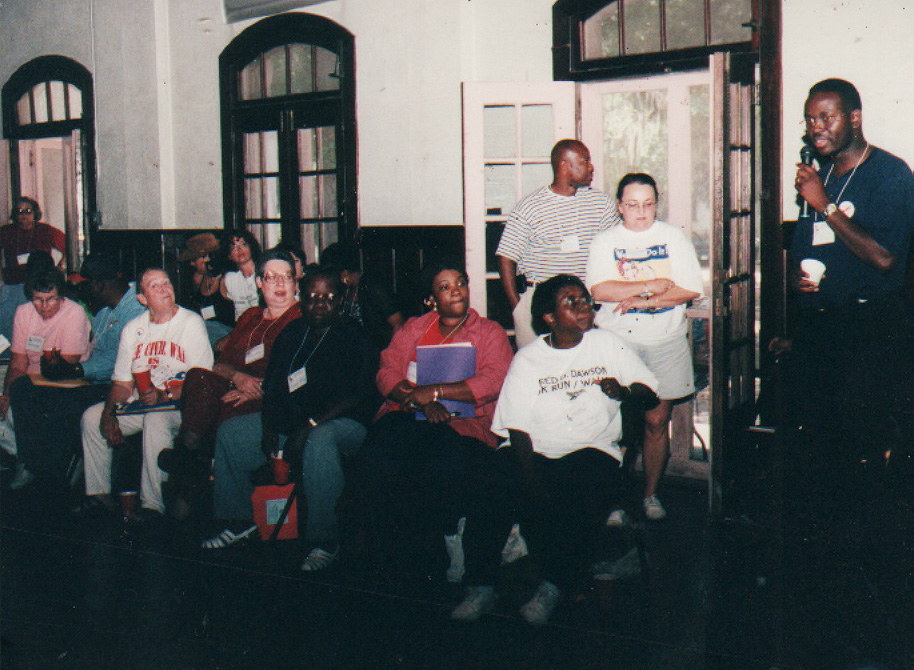
Sen. Clementa Pinckney, with microphone, speaks at an early Network conference at Penn Center.
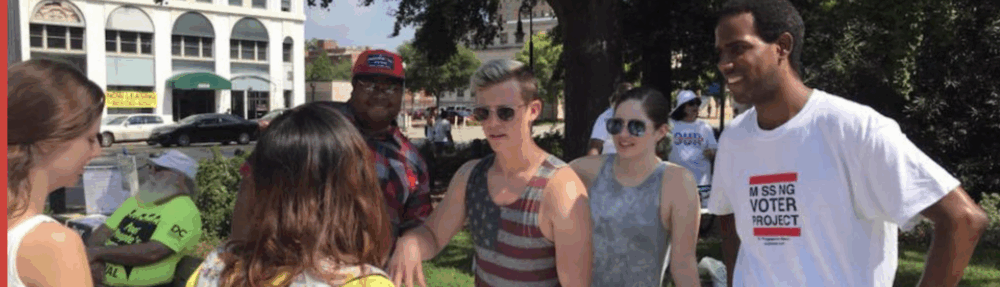
Over the weekend, we will unpack the latest election and what it means for us as South Carolina citizens and as organizers. We will update members about the Network’s ongoing programs, including our Missing Voter Project, the Modjeska Simkins School, and our SC Fair Maps campaign to end gerrymandering.
We also will enlist participants’ help map our 2025 DemocraSC campaign — a civics model that connects all of our projects — and to brainstorm about our relaunch of the Network’s Healthy Democracy Road Show. In 2014, our 10-city road show focused on Medicaid expansion. The campaign included a spirited rally at the State House, intense lobbying of lawmakers, and peaceful protests over several weeks.
In 2025, we will focus our campaign on the increasing assault on public education — and on our commitment to teaching truth.
The retreat will provide enough structure to be practical and productive, but will allow enough free time for participants to caucus on their own or explore the beautiful Lowcountry culture and landscape.
Hunting Island State Park is 10 miles from Penn, with spectacular, undeveloped beaches on a 5,000-acre barrier island.
Members of allied organizations are welcome to bring promotional materials to share with retreat participants about their work. Please remember that the Progressive Network is nonpartisan.
To help provide scholarship assistance, donate HERE. To request scholarship assistance, call the Network’s office at 803-808-3384 or email network@scpronet.com.
If you can share a ride to Penn — or if you need one — call 803-808-3384 or email network@scpronet.com.
We invite you to join the SC Progressive Network‘s campaign to help protect the vote in 2024. As Election Protection volunteers, we support more secure, transparent, and accessible elections for all South Carolinians. We also consider voter education an important part of election protection.
The trainings will be led by Susan Dunn, former SC ACLU lawyer who for years has worked with the Network on election protection. Volunteers are required to attend one training session on Zoom:
 • Tuesday, Oct. 8, 7pm: register HERE

 • Thursday, Oct. 10, 5pm: register HERE

 • Saturday, Oct. 12, 10am: register HERE
Please share with anyone you know who might be interested in participating. Questions? Call the Network office at 803-808-3384.
The video clip below is an edited recording of the Network’s September meeting. It’s a good primer on our Election Protection work in 2024 and our broader strategy on voter education.
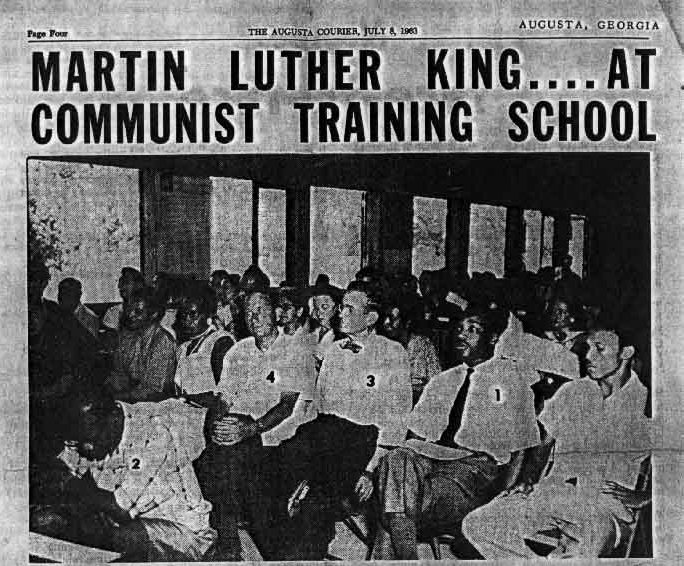
I was asked to share my recent experience at Highlander Folk School, but I hesitated for fear of being dismissed as a SC Progressive Network fangirl. Maybe that’s true, but the more I reflect on it, maybe that’s okay. There’s so much to be proud of — and to fight for — in South Carolina.
A few months ago, with no real organizing experience, I left my hospital administration career, graduated from the Modjeska Simkins School for Human Rights, and joined the SC Progressive Network staff. Just weeks into the job, Network Director Brett Bursey suggested I apply for the LIFT fund’s leadership pipeline annual convening at the famed and fabled Highlander Folk School (now known as the Highlander Research and Education Center).
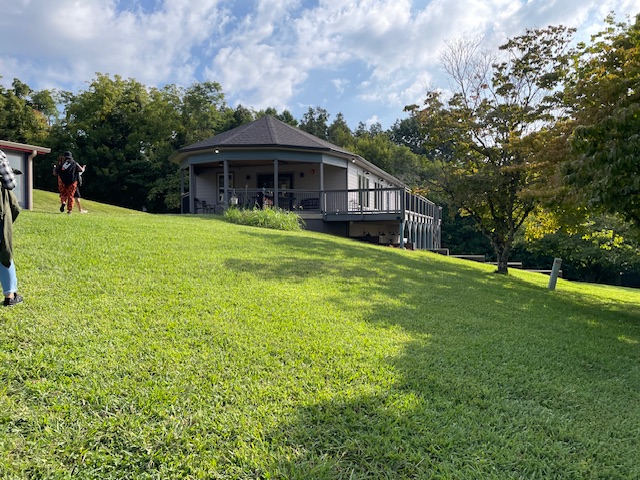
Though brand new, I was accepted. And as other’s excitement for me grew, so did the looming sense that I was depriving more deserving organizers from this opportunity. The Law of Abundance meant that in this I was not only abundant in support and opportunity, but in fear. What if my ineptitude embarrassed the Network? Who was I to be among those hallowed hills in Tennessee, where Martin Luther King Jr, Rosa Parks, John Lewis, and my personal hero, Septima Clark once gathered?
Ideally, once I arrived I would have felt a sense of purpose and belonging. For those three days, however, I struggled to make sense of what I could possibly offer the others. They were leaders of their unions and worker centers across the south, many knowing each other for years. But I stayed determined to harvest whatever I could despite the anxiety.
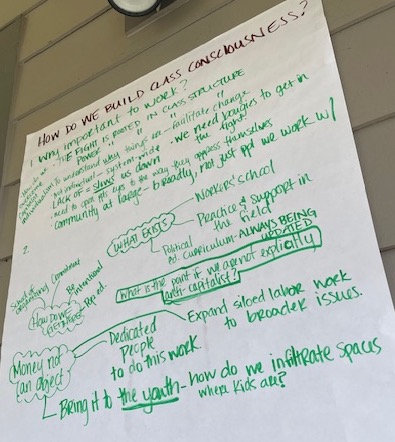
We spent hours huddled in the small room scribbling the essence of our individual organizations on giant sticky notes for the rest to review and question. The purpose of this convening was to identify our “needs” and “dreams” — of the movement, of our organizations, and of ourselves.
As these seasoned leaders and activists shared their dreams, I sat back in shock. They were dreaming of citizenship schools, inter-generational support, a community space for art and events, analyses on class consciousness and working outside of the capitalist system, for time and space to dream. These dreams were my dreams too — but they are also my reality.
Those three days were educational and inspiring, not because they were teaching me new things, but because I was awakened to the true marvel of South Carolina. In the Modjeska School we were warned that South Carolina is like no other state. For all of the horrors that comes with that, so too comes hope, because the Network is already manifesting what many activist organizations in other states are only daring to dream of.
So, when I think of my needs and dreams as an organizer, I dream of remembering this gratitude. I need the daily phone calls with Brett and Becci Robbins. I need the fear and anger – the thrill of still having so much to learn. I need dancing with Femi at GROW’s Jazz Nights, and I need the 50 years of activism behind me so that I can do my part for the next 50 years.
And if I come across as a fangirl or acolyte, then so be it. We have work to do. The Network allows me to fulfill the needs and to dream my dreams; and whether or not you know it, we’re working for your needs and dreams, too.
Read more about Gabbi Zurlo in an earlier blog post.