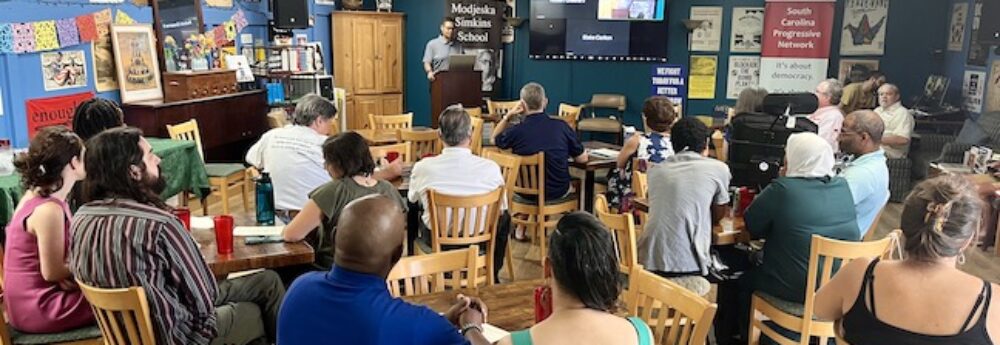
A press conference was held yesterday at the State House in Columbia to announce the formation of the Southeastern Institute for Women in Politics, which aims to identify, recruit and support female candidates for political office in South Carolina.
The Palmetto State ranks 50th in the percentage of women office holders, with only nine percent serving in the State House, Senate or statewide office. Only two women serve in the State Senate.
The Institute will hold its first day-long workshop on Feb. 8. Keynote speaker will be Delaware Gov. Ruth Ann Minner, whose impressive political career demonstrates the impact women in power can have on health care, education and other issues critical to women and families.
The Institute proposes to change the gender imbalance in South Carolina politics by:
* Identifying women already elected or appointed to local government councils, committees, and task forces, and women members of PTOs and other leadership organizations;
* Recruiting women from private sector professions such as law, real estate, and education who have potential for serving as public officials;
* Building a grassroots network of these politically-viable women, including conferences, a web site, issue resources, and training in advocacy, fund-raising and campaigning skills; and
* Researching, district by district, demographic, attitudinal, partisan and other political factors that affect election outcomes.
For details, call 803-206-0901 or e-mail wil@campaignsystems.com.
Read more in today’s The State.