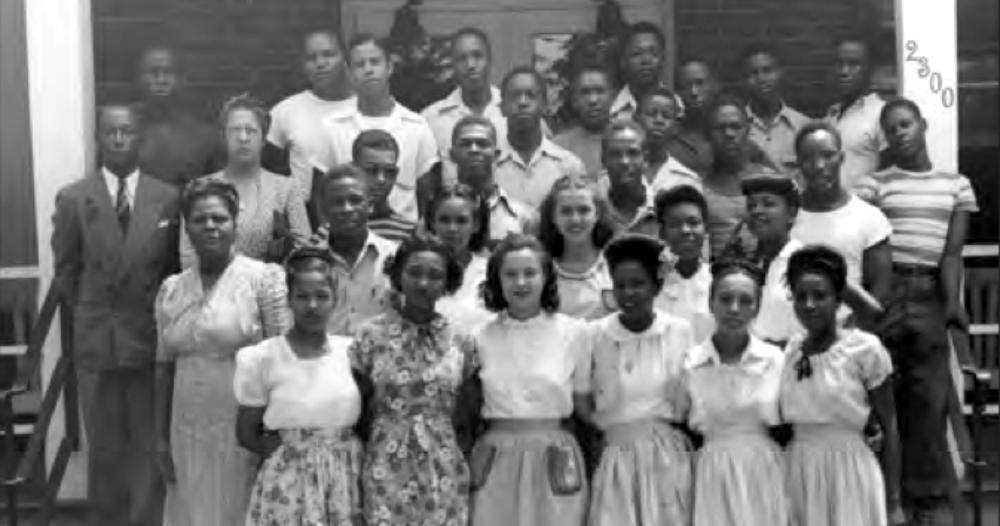
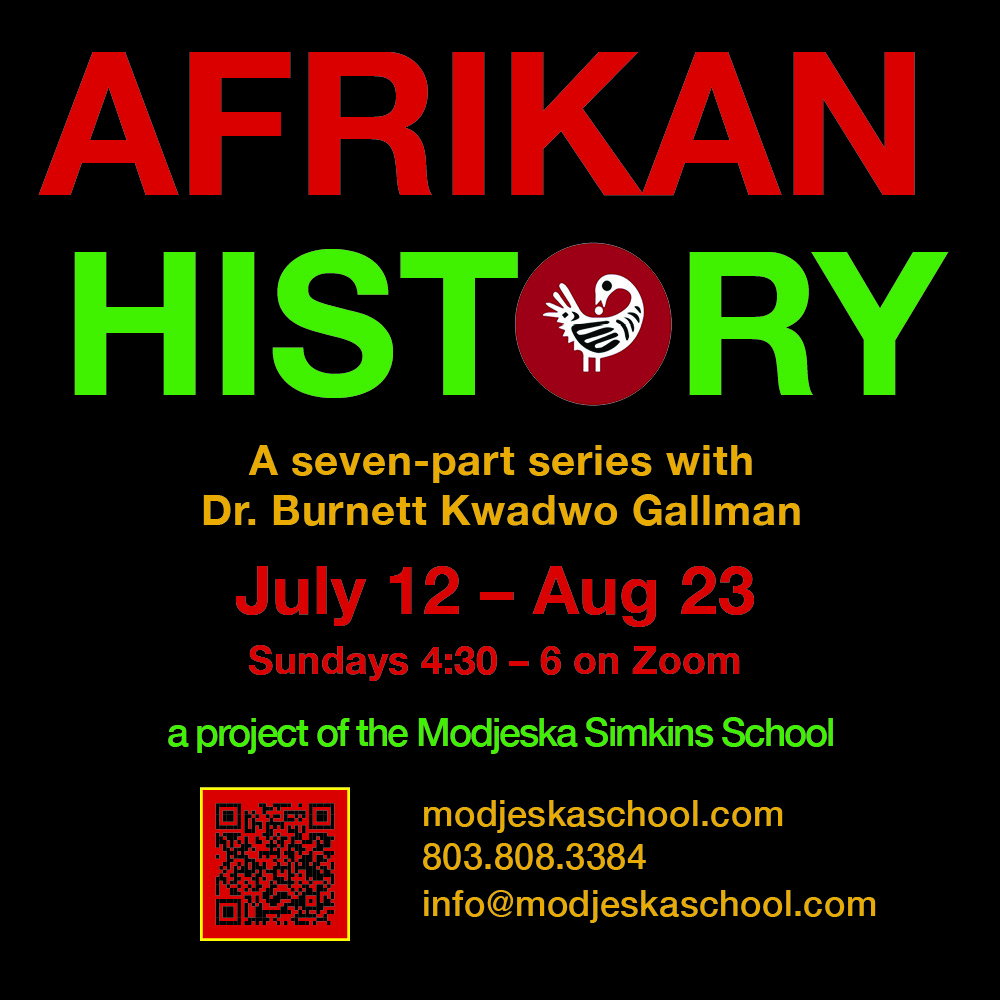
Since 2023, Dr. Burnett Kwadwo Gallman has been teaching Afrikan history to Modjeska Simkins School students during its spring session. This year, for the first time, the school is opening his lecture series to the general public.
The seven-part series will be held on Zoom Sunday afternoons at 4:30 from July 12 through Aug. 23. For details or to register, click HERE.
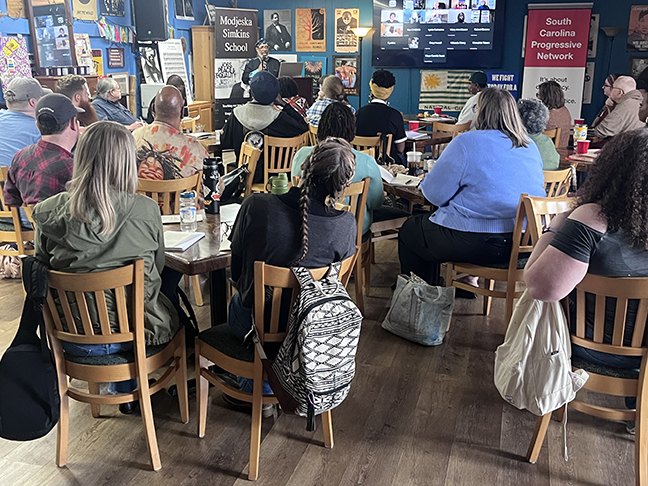
Dr. Gallman says, “The lecture series is important because it seeks to correct the lies and misinformation that has, unfortunately, become standard. It will cover the high points in the history of Afrikan people that have been ignored, distorted, or claimed by others.”
Dr. Gallman is a Columbia physician who has practiced gastroenterology for more than 40 years. He has a special interest in addressing and eradicating racial health disparities. He is a former musician whose college education was partially financed with band scholarships.
Dr. Gallman was born and reared in Hartsville, SC. He is a graduate of Butler High School, Benedict College, and the Hahnemann Medical College and Hospital (now Drexel University).
Dr. Gallman has taught, lectured, and written for civic, religious and professional groups, correctional institutions, high schools, and universities across the United States and Afrika. His passion for genealogy and Afrikan history was sparked while researching his roots for a 1985 family reunion. He traced his paternal line to 18th century Angola.
“Burnie has such a deep wealth of knowledge about Afrikan history and culture, I asked him to teach a class to counter the myths we are taught in school,” said SC Progressive Network Director Brett Bursey, who met Dr. Gallman in the mid 1980s. “He came to GROW to get some printing done and we’ve remained good friends.”
Dr Gallman has served on the SC Progressive Network‘s board since 2021, and he currently serves on the national board of the Association for the Study of Classical African Civilizations (ASCAC). He has authored or co-authored seven books and numerous articles, including a book on Afrikan-centered rites of passage.
Pingback: Modjeska Simkins School to offer weekly class on Afrikan history July 12–Aug. 23 - Topics