Killing for fun; military madness

by Tom Turnipseed
Columbia, SC

Successful professionals enjoy their work. The Obama administration has picked a successful and happy warrior in Marine Corps Gen. James N. Mattis to head the US Central Command. The command includes all US forces in Afghanistan, Iraq, the entire Middle East and Central Asia. Mattis has gloated that it is “fun to shoot some people” and “have a plan to kill everybody you meet”.

Killing is the key to success in military actions. Killing enough insurgents by invading and occupying US forces enables the winners to subdue and subjugate the survivors. The real winners in the Middle East are the US based corporations who seek to exploit the resources of energy and mineral rich countries like Iraq, Afghanistan and Iran. Also the corporate war profiteers of the defense industry are making out like bandits. They furnish the killing tools, the hired mercenaries and other wasteful and expensive materials, equipment and supplies for our never-ending wars-on-terror.

Mattis has a strong resume in the military killing business. He was a lieutenant colonel in the US invasion of Iraq in 1991, directed the Marines in the 2003 invasion of Iraq, headed the US assault on the Iraqi city of Fallujah in 2004 and helped design the siege that destroyed the city and killed thousands of Iraqi civilians. Mattis also commanded the initial troops that went into Afghanistan in 2001.

Describing his feelings about the people in Afghanistan, General Mattis said, “… It’s a hell of a lot of fun to shoot them. Actually it’s quite fun to fight them, you know. It’s a hell of a hoot. It’s fun to shoot some people. I’ll be right up there with you. I like brawling.”

Author Thomas Ricks wrote that Mattis told his troops to, “Be polite, be professional, but have a plan to kill everybody you meet.”

During Operation Desert Storm in Iraq, Mattis reportedly told his troops, “It’s the mission of every Marine in the battalion to send one dead Iraqi home to Mama.”

Perhaps World War II Army General George S. Patton, Jr.  is a role model for Mattis in his  glorification of  military madness and the joy of  killing.  Patton said “Magnificent! Compared to war all other forms of human endeavor shrink to insignificance. God help me, I do love it so!” and “No bastard ever won a war by dying for his country, He won it by making the other poor dumb bastard die for his country.” Patton also said, “America loves a winner, and will not tolerate a loser, this is why America has never, and will never, lose a war.”  Of course that was before our ill-fated military ventures in Korea, Vietnam and Afghanistan.

Defense Secretary Robert Gates called Mattis “one of our military’s outstanding combat leaders and strategic thinkers, bringing an essential mix of experience, judgment and perspective to this important post.” Asked about Mattis’ bloodthirsty rhetoric, Gates brushed off an official rebuke against Mattis saying it was five years ago.

In Afghanistan, US and NATO forces casualties continue to escalate. The number of Americans killed so far this month is at least 23 with 14 killed last week. In June, 102 occupation troops were killed including 60 Americans. 1,149 American soldiers have been killed in the war in Afghanistan, and countless numbers of Afghan civilians have died. We don’t do body counts of “the enemy” because, as former Defense Secretary Rumsfeld said, “death has a tendency to encourage a depressing view of war.”

Our economic crisis is directly tied to the cost of the war. It costs $1 million per year to maintain a single soldier in Afghanistan.  The 2010 Pentagon budget is $693 billion, which surpasses all other discretionary spending programs combined–while our deficit soars. We desperately need money to create green jobs, rebuild our crumbling infrastructure and improve education.

President Obama replaced General McChrystal with General Petraeus as commanding general of US and NATO forces in Afghanistan. McChrystal had made derogatory remarks about Obama and his administration’s conduct of the war.  Petraeus was head of the Central Command and will be replaced by Mattis. Obama said, “War is bigger than any one man or woman, whether a private, a general or president.”

The war in Afghanistan is a big loser. Rearranging deck chairs to include one more “fun to kill” military madman will not keep it from sinking like the Titanic. Only ending the war will save Obama.

A recent ABC / Washington Post poll found that people felt the war was not worth fighting by a 53 to 44 margin. An NBC/Wall Street Journal poll had 62% of the American people saying the country was going in the wrong direction and Obama’s approval rating at 45% with 48% disapproval.

President Obama was the most successful politician in the US who seemed to enjoy being elected to the highest office in the land. Fulfilling his promise of peace, hope and change is a winner.  However his failure to conclude killing for fun military madness will make him a loser in 2012 and doom his party in November

Tom Turnipseed is an attorney, writer and peace activist in Columbia, SC. His blog is here.

Restoring balance between Wall Street and Main Street

By Frank Knapp Jr.
President and CEO of SC Small Business Chamber of Commerce

The South Carolina Small Business Chamber of Commerce, the U.S. Women’s Chamber of Commerce and small business organizations and owners across this country want Wall Street reform. But you wouldn’t know that from the attention the media gives to the U.S. Chamber of Commerce, which is the mouthpiece for the big financial institutions that oppose reform.

The U.S. Chamber purports to represent small businesses. However, the reality is quite different. The July/August edition of the Washington Monthly features an eye-opening story on Tom Donohue, the CEO of the U.S. Chamber, who has a plaque on his desk that reads, “SHOW ME THE MONEY.”  In 2008, a third of the Chamber’s revenues came from just 19 big companies.

When big oil, insurance and other companies are out of favor because of their greed, they turn to the U.S. Chamber to convince Congress and the public that the needed reforms are bad for business in general and small business in particular. This is exactly what is going on regarding Wall Street reform.

It’s clear that the U.S. Chamber does not represent the interests of small businesses that have suffered because of the irresponsible actions of the nation’s biggest banks. The greed of these financial institutions collapsed our economy and shut down loans and credit lines to our small businesses. We hear macro and micro stories every day about small businesses not getting access to the money they need. And every economist acknowledges that small businesses must hire the employees we need to lead us out of this recession just as they have in the last three economic recoveries.

But ironically, the only business sector that’s apparently hiring is Wall Street, as the New York Times explains in a recent piece. Greed is still alive and well on Wall Street. And we all know that without Wall Street reform, greed will bring our economy down again and tear apart our small businesses — if we can ever get them back on their feet.

Yet, the U.S. Chamber still wants Congress and the public to be afraid — very afraid. Wall Street reform will dry up loans to small business, the U.S. Chamber warns. That’s wrong. Their big bank donors are doing pretty well right now and they aren’t doing that by making small business loans and investing in our communities. They’re making money gambling on Wall Street.

The U.S. Chamber pretends to be a friend to Main Street worried that Sam the Butcher, Joe the Orthodontist and your local car dealer will be regulated out of business. That’s not in the Wall Street reform proposal.

What the butcher, orthodontist and car dealer want are customers — the customers who lost their jobs because of Wall Street greed.

Small business supports this reform because it will restore balance between Wall Street and Main Street through fair and commonsense policies and create a stable, transparent financial environment in which community banks and credit unions can once again feel secure in making loans.

We at the South Carolina Small Business Chamber of Commerce have been strong supporters of a Consumer Financial Protection Bureau to better protect consumers, which includes small businesses. We’re not afraid of good regulation that keeps our customers and us safe from financial predators.

We’re in favor of making banks be banks and not gambling houses. We have been strong supporters of the “Volcker Rule” to put the brakes on proprietary trading by banks — the practice that largely is responsible for bringing us to the brink of another Great Depression.

Congress should just say no to the U.S. Chamber. The financial health of our country and our small businesses depends on it.

Activists urge senators to vote on jobs bill

On June 30, union and community leaders gathered in front of US Sen. Jim Demint’s office in Charleston. They were among thousands of others across the nation sending a message to their Republican Senators: “Vote on the Jobs Bill Now!”

“On Thursday, June 23, the Senate again failed to get cloture on the Jobs Bill even after Democrats agreed to reduce the overall cost of the bill.” said Leonard Riley, ILA member and president of Carolina Alliance for Fair Employment (CAFE).

Riley was joined by leaders of the Charleston and Columbia Central Labor Councils(CLC), SC Alliance for Retired Americans (ARA), SC Progressive Network, ILA Local 1422, AFSCME Local 1199 and the SC AFL-CIO.

Jenny Patterson, president of the Columbia CLC, said, “We are tired of Senator Demint pulling the rug out from under unemployed workers in our state and our public health and safety just to score political points. His refusal to vote for funding to keep teachers, police officers and other workers on the job and to protect elderly residents from being tossed out of nursing homes is outrageous.”

Vic Rawl, former Democratic candidate for US Senate, was among those attending the action. Rawl was endorsed by the SC AFL-CIO.

It’s time to refocus abortion debate

Cory Manning
S.C. Coalition for Healthy Families

On June 16, the Legislature passed the so-called 24-hour waiting period bill. Previous versions of the bill required women to make two trips to an abortion provider: one to get the materials and one to have the procedure. The bill that was finally passed allows women to review the materials on-line, eliminating the two-trip requirement. This was a victory for S.C. women and others concerned about reproductive rights.

Unfortunately, this was yet another example of the misguided discussion regarding abortion.

The participants in the abortion debate often seek legislative endorsement of moral positions that leave little room for compromise. Instead of seeking to score points or curry favor with constituent groups, they should focus on addressing the problem: unintended or unwanted pregnancies.

Both sides of this debate, if they are being realistic and want solutions, would support measures that reduce unintended or unwanted pregnancies. For example, educating teenagers with age-appropriate information about sexual activity, including contraception and abstinence, and supporting low-income women in economically rational ways that give them real choices regarding the decision to have a child will reduce the number of unintended and unwanted pregnancies (and hence the number of abortions) in South Carolina. If both sides focused on this common ground, we could see genuine improvement in the quality of life for women, children and all citizens of South Carolina.

Help us now to protect your vote in November!

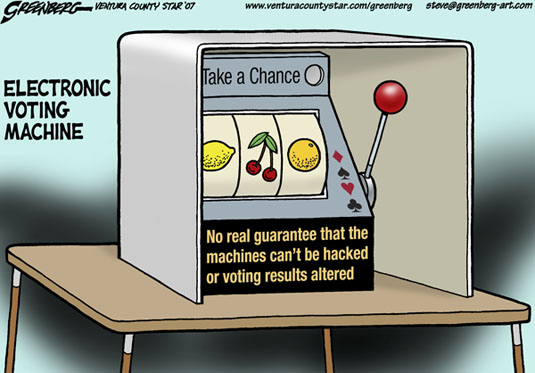
SC Progressive Network Director Brett Bursey filed a complaint in federal court on June 17 to require the state to preserve voting records in federal elections. Since then, the Network has worked to arrange an audit of the entire June 8 South Carolina primary vote.

As you know, the results of two federal elections — US Senate and Congressional District 1 — were, in the words of numerous well-credentialed experts, “anomalous.”

The Verified Voting Foundation released a statement on the South Carolina primary results that concluded, “Whether specific reports of irregularities in this election are confirmed, the most important fact about South Carolina’s voting system is that most ballots cannot be effectively audited or recounted. Serious concerns about the integrity of the primary (and of other elections conducted using the same technology) are inevitable, and legitimate.” For the full statement go to Verified Voting.org.

Since a “recount” of the voting machine tallies we use in South Carolina can only produce the same number, over and over, an audit of the internal memories on the machines is the only way to discover anomalies — and even this won’t reveal the intent of the voter beyond what is recorded by the software.

South Carolina is one of only eight states that uses paper-less, touch-screen devices that are not routinely audited. Thirty-four states now require a “voter verified paper ballot” that can be referred to in the event of a recount or audit.

“We are not questioning the results of the June 8 primary,” said Bursey. “We are questioning whether the machines we use can be audited to insure that the results reflect the voters’ true choices, and if the preserved records satisfy federal requirements.”

Yesterday, we gave up on trying to get the SC Election Commission to agree to a third-party audit of the entire system. The executive director of the SCEC, as well as the board chair, both had roles in the purchase of these machines in 2004. They maintain that the system works fine and no audit is necessary.

We are now focusing on the federal complaint we have filed that questions whether the intent of the federal records preservation statute can be met using the counties’ current systems and software. Our lawsuit is the only thing standing between us and another election in November with unverifiable results.

We have filed a request for all the compact discs that each county was supposed to have used to record the flash memory of each voting machine.

The state Election Commission does not know if all counties followed this procedure, or whether this procedure adequately preserved the records, or whether what is preserved is sufficient to reliably determine the voters’ intent. The state Election Commission is arguing that it is not its job to keep these records, nor to gather them for us.

We need immediate financial help to make our case. We need to raise $3,000 to cover filing fees and expert assistance. If you can help, please do.

We hope that this case, and the growing public awareness of the inherent shortcomings of our voting system, will lead to a voter-verifiable, recountable, paper record of the most critical part of our democracy — our vote.

Please make a secure donation now and indicate in the gift information “verified voting.”

Thank you for your support.

America Speaks Back

By Becci Robbins
SC Alliance for Retired Americans organizer

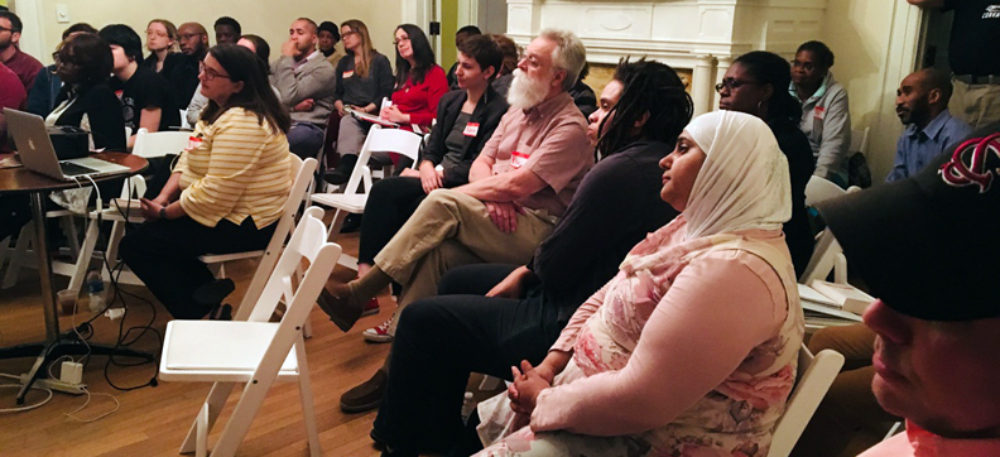
Some 700 South Carolinians gathered last Saturday in the big hall of the convention center in Columbia to talk about the deficit. No kidding. They could have been grilling or napping or swimming on a lazy summer day, but instead they chose to spend six hours huddled around tables and grappling with this country’s fiscal crisis. The average age in the room was 58.

That sort of civic engagement speaks volumes about our community, and that is very good news.

Unfortunately, the folks who turned out for the Columbia event — and the thousands like them who participated in 60 other cities across the country — may simply be pawns in a larger game staged by powerful forces trying to shape the national discussion on our economic policy.

The much-hyped “town hall” meetings were the product of America Speaks, a group funded by Wall Street fat cat Peter G. Peterson, whose proclaimed mission is to privatize Social Security. It was Peterson who urged President Obama to create the Fiscal Reform Commission — the body that is to receive on June 30 a special report culled from the results of last weekend’s town halls. In December, the Commission will offer its recommendations to Congress, which will then vote — with no debate.

Participants at the America Speaks events were given hand-held devices to record votes on items outlined in our workbooks. We sat at tables made up of 8 to 12 people, and discussed our votes as a group before we cast our individual votes. While we could create our own options if we didn’t feel satisfied by what we had to choose from, these alternative options were not recorded in the electronic tally.

Our table, for instance, unanimously supported the idea of single-payer as the best fix for our health care system, but that was not an option on the table. We objected to a process that did not include the one option we thought most viable and responsible. But our electronic votes did not — and in fact could not — reflect our true wishes.

The discussion became, then, not whether to cut services, benefits and entitlements, but by how much, and to whom. The workbooks offered background information about the deficit and economic projections that were misleading.

Social Security, for instance, does not contribute a penny to the deficit yet was on the chopping block for cuts. Given the false parameters, participants at the America Speaks events voted to raise the retirement age for full benefits to 69, never mind the system is fully funded well beyond 2025.

And while the workbooks at the America Speaks events did say the rising costs of Medicare and Medicaid are fueled by a health care system that is unsustainable and costing twice as much per person than in any other country, reforming health care was not an option.

“We’re playing with a stacked deck,” said SC Alliance for Retired Americans Vice-President Brett Bursey, who attended the event in Columbia. “We’re going to end up with results that are manipulated by those that framed the question.”

He said, “There is no mention of the fact that the war budget is one of the reasons we have this tremendous deficit. There is nothing about the housing bubble causing a $4 trillion hole in the budget that was due to financial mismanagement. So the things that created the situation are not even on the table to be discussed.”

America Speaks challenged participants to find ways to cut the deficit by $1.25 trillion by 2025.

“Single payer and negotiations for prescription drug prices could reduce the budget by $1.25 trillion by 2025,” Bursey said, quoting figures from the Congressional Budget Office that weren’t in the workbook.

According to the Center for Responsible Economic Policy, an infinitesimal tax on all Wall Street transactions could yield $300 billion. America Speaks option was to raise $30 billion with a tax only on standard stock transactions, not the exotic derivatives or default swaps that helped bring on our current economic crisis.

We can only hope that the President’s Fiscal Reform Commission is as thoughtful as Saturday’s participants when they go looking for their $1.25 trillion to plug the hole.

Becci Robbins is the state organizer for the South Carolina Alliance for Retired Americans. For more about the Alliance, call 803-957-8740 or email scalliance@mindspring.com.

SC Progressive Network scrambles to preserve voting machine records

If the 46 county election offices are not stopped, within days they will erase the most critical data from the memories of all the voting machines, warns SC Progressive Network Director Brett Bursey. With controversy over the reliability of the touch-screen computers heating up, the Network is working to ensure that valuable information is not lost as counties prepare the machines for the upcoming run-off elections.

Bursey explained that the state Election Commission only keeps a summary of the information from the counties, and that only by preserving or copying the flash cards (memory chips) inside the computer will there be enough information to perform an audit.

“There is no way the machines you have in South Carolina can be audited without all the information on the computer flash card in each machine,” Dr. Douglas Jones said. Jones has taught at the University of Iowa Department of Computer Science since 1980, served on the Iowa Board of Examiners for Voting Machines and Electronic Voting Systems from 1994 to 2004, and chaired the board for three terms.

Jones, who serves on the Federal Election Assistance Commission’s Technical Guidelines Development Committee, has performed numerous audits on voting machines like those used in South Carolina. He provided the Network with an affidavit outlining the necessary steps to preserve data for an audit.

“We have been in communication with the US Justice Department’s Voting Rights Section,” Bursey said. “We are arguing that erasing the data violates the federal statute (USC 42-1974) that requires all records in a federal election to be preserved for 22 months.”

Bursey said that if the Justice Department doesn’t intervene, they will try to get a federal judge to order a halt to erasing the records. “We are not questioning candidates, motives or conspiracy theories,” Bursey said. “We simply want a trustworthy audit to assure that all votes are counted accurately.”

“It’s not difficult or expensive to copy the flash card,” Dr. Jones said. “You can hook up a flash card reader that you use to download pictures on your computer from a digital camera and save the data to a CD.” Replacing the flash card would cost a few dollars for each machine.

The flash card records all actions taken on the machine, the time of the vote or any errors in an “events log.” The “ballot image log” records the actual ballot cast. The detailed information on the flash cards is not saved by the state or counties and is routinely erased to prepare the machines for the next election.

Even as the calls increase for investigations into several races, counties will erase the data and install the ballot program for the June 22 runoff. “In a matter of days, there won’t be any way to determine whether the machines played a role in the unusual vote counts,” Bursey said. “We simply want a trustworthy audit to assure that all votes are counted accurately.”

Sen. Phil Leventis (D-Sumter) has sponsored legislation to require voting machines to produce a voter-verifiable paper record that can be used to recount or audit an election.

“With these machines not only is there no paper trail to examine, if the records are erased it’s like cremating the body before the autopsy is performed,” he said.

The Network presented expert testimony at a SC Election Commission Board meeting in  2004, urging the agency not to buy the iVotronic computers that do not have a voter verified paper record. SC is one of four states that has neither a paper record nor a regular audit of its machines.

Statement from Judge Vic Rawl regarding voting irregularities

Earlier today, our campaign filed a protest of last Tuesday’s election results with the South Carolina Democratic Party.

We have filed this protest not for my personal or political gain, but on behalf of the people of South Carolina.

There is a cloud over Tuesday’s election. There is a cloud over South Carolina, that affects all of our people, Democrats and Republicans, white and African-American alike.

At this point, the people of our state do not have the basic confidence that their vote will be counted.

The strange circumstances surrounding Tuesday’s vote require a thorough investigation. For better or worse, this protest process is the only platform currently available for that investigation.

And let me be clear: regardless of the outcome of this protest, a full and unblinking investigation of this election and the overall integrity of South Carolina’s election system must go forward. Whether our protest is upheld or not, I intend to bring my full energies to electoral reform well into the future.

I want to speak briefly about the bases for our protest.

First is ongoing analyses of the election returns themselves, which indicate irregularities.

Second are the many voters and poll workers who continue to contact us with their stories of extremely unusual incidents while trying to vote and administer this election.

These range from voters who repeatedly pressed the screen for me only to have the other candidate’s name appear, to poll workers who had to change program cards multiple times, to at least one voter in the Republican primary who had the Democratic U.S. Senate race appear on her ballot.

For those who experienced problems voting, I urge you to go to our website, www.vicrawl.com and use the form there to report them. You can also call our Election Integrity Hotline at 843-278-0510.

Third is the well-documented unreliability and unverifiability of the voting machines used in South Carolina.

It is worth noting that these machines were purchased surplus from Louisiana after that state outlawed them.

The full details of our protest will be presented on Thursday.

For the people of South Carolina, getting to the bottom of Tuesday’s results will build confidence, either way.

I also hope that a full and frank discussion of our voting system will result in substantial reform.

At the risk of repetition, this protest is not about me, or my personal political fortunes. Indeed, if the protest is upheld and a new election ordered, I have not decided whether to run in it.

But, either way, I am not done with the issue of fixing our elections.

Lastly, let me make something clear. Like all of you, I am aware of the controversies surrounding Mr. Greene. This protest is not about him either.

I would like to speak directly to Mr. Greene and say: “Sir, this is not about you, and it’s not about me. I wish you and your family nothing but the best in the weeks and months ahead.”