Problems voting?

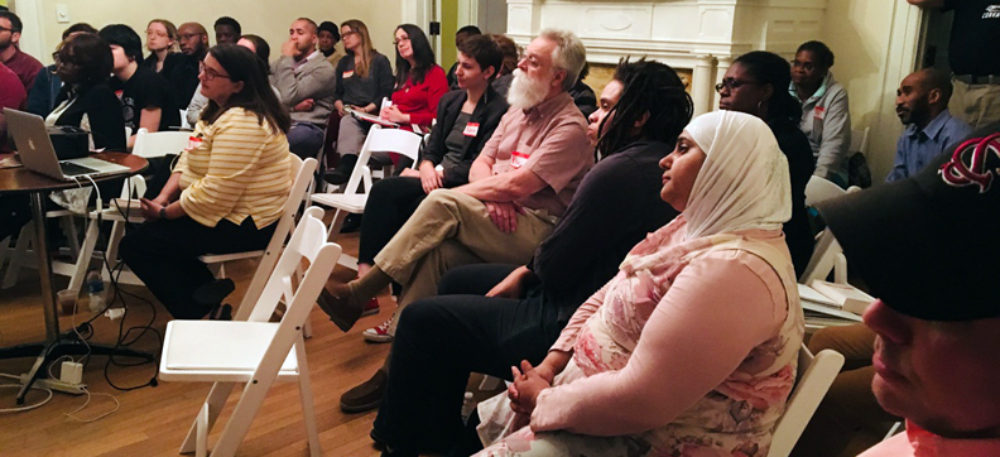
The public is invited to share any problems they encountered while registering or voting in the recent election in front of a panel of county election officials, council members, legislators and voting rights advocates. Data collected at the forums will be used to help shape voting reforms so that future elections will run more smoothly. Speakers will be allotted three minutes each. For more information, call the SC Progressive Network at 803-808-3384 or e-mail network@scpronet.com.

Town Hall Meetings

Columbia: Dec. 4, 5:30-7pm, Council Chambers, 2020 Hampton St.

Charleston: Dec. 9, 5:30-7pm, Charleston City Council Chambers, 4900 LaCross Rd.


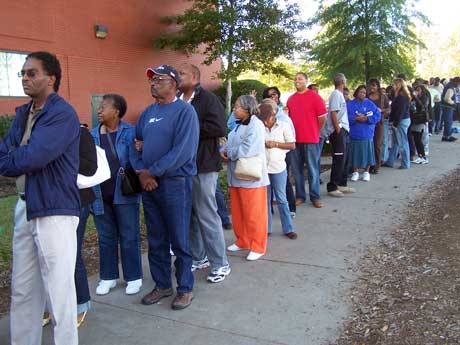
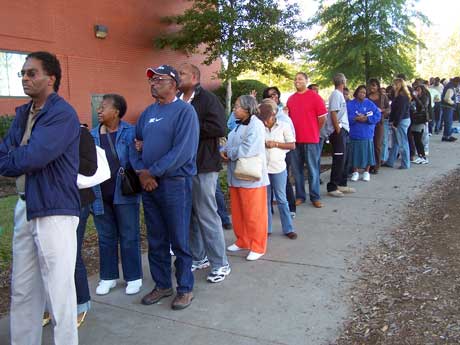
Voters wait up to four hours to vote absentee in Richland County on Oct. 31. For more photos, click here.

DHEC deja vu

By Becci Robbins

Today The State newspaper wrapped up DHEC Under Fire, an “exclusive” series exposing the failure of the state agency charged with protecting South Carolina’s environment. It was oddly familiar. In 1999, the alternative newspaper POINT ran a similar package. I remember it well; I was managing editor and wrote most of the stories. You can read them here.

This was the introduction we ran:

This issue is dedicated to South Carolina’s environment. Seems that while we weren’t looking, this state became the country’s garbage dump. We hope this issue of POINT gives you something to think about and, just maybe, something to fight for.

By way of full disclosure, readers should know that the publisher and editor of POINT have for the past year been working with grassroots groups from across the state on an initiative to restructure DHEC, the state’s environmental agency.

Some will argue that our connection to the project renders us incapable of covering this story without bias. Perhaps.

But we believe our experience lends us a valuable perspective that we could not have as a member of the “straight” media. For many months, we have been meeting with lawyers, legislators, community leaders and environmental activists, some of whom go way back with DHEC. We have heard them talk with the freedom they would not if they were “on record.” While we have not used any quotes from those meetings or discussed what went on in them, the discussions deepened our understanding of how DHEC works — and how it doesn’t.

Finally, we invite anyone at DHEC, including those who declined to be interviewed, to respond to our coverage in this issue. We will gladly publish any written responses in the next POINT.

While it’s good to see The State finally give DHEC the sort of scrutiny it deserves, it’s too bad it took them so long to do it. Frankly, it’s no surprise. The State, ironically, has a long history of doing what it now accuses DHEC of doing: coddling industry and putting the interests of big business above the public interest.

The paper has been unable, or unwilling, to connect the dots that draw the clear picture of systemic problems that allowed DHEC to operate so irresponsibly and with such devastating consequences. There is no excuse. We sent the newspaper the same press releases we sent the rest of the media informing them about our grassroots campaign and legislation designed to reform the environmental agency. They ignored us. No telling how much pollution went unchecked as a result.

The State’s reporters said they interviewed 200 people to write their recent DHEC series. Not one of them was from the SC Progressive Network, the organization that initiated the move to reform the agency and called the first meeting of legislators and activists to explore the issue. That’s shoddy reporting, at best. At worst, it reveals a pettiness unbecoming of the state’s main newspaper.

POINT cover, Winter 1999

Employee Free Choice Act

AFL-CIO:

In this economic crisis, working families are struggling. CEOs are raking in hundreds of times more than their employees earn and then giving the boot to workers who try to exercise their freedom to form unions. CEOs wouldn’t work a minute without a contract — but they do whatever it takes to keep their workers from gaining contracts. Three minutes of your time today could help restore the balance to our economy.

Watch this video, then click here to sign our petition.

No Excuse for Antiquated Voting System

By Brett Bursey, Director, SC Progressive Network
and Rev. Joe Neal, SC Legislative Black Caucus

Were you one of the many South Carolinians who stood in line to vote early this election, only to be told that our state doesn’t have early voting?

If you were confused about how you couldn’t vote early but could vote “in-person, absentee ballot” — provided you had one of 15 excuses to qualify — you were not alone in your befuddlement. Even our election officials don’t always agree on protocol. South Carolina’s voting laws are a hodge-podge of inconsistent rules that are interpreted and enforced by 46 independent county election directors.

Our voting system traces its roots to the constitution of 1895, which effectively codified Jim Crow laws that made it nearly impossible for black men to vote. Women couldn’t vote until 1921. For more than a century, SC citizens have been required to register to vote 30 days before an election. The rules were enacted at a time when horses were used to deliver the ballots to the county seat — way before telephones, the Internet or even Strom Thurmond.

Ben Tillman’s constitution established the county boards of elections we are still using. The governor appoints “discrete electors” to determine who votes and how in each county, some nominated by county councils and others by legislative delegations. There is no consistency in how they run their county’s voting system.

Continue reading

Some very personal thoughts on marriage

By Charlie Smith, Charleston

My cousin Wil sent me a YouTube clip today of Keith Olbermann making some observations about how marriage has dramatically changed in this country. Olbermann talks about how on Nov. 4, 2008 we elected a president whose parents at the time of his birth were legally unable to marry in 16 of our 50 states. On this same day, a majority of the citizens of California decided to relegate gay and lesbian people to that same station in life in which Barack Obama’s parents were forced to live just 47 years ago when the soon-to-be leader of the free world was born.

Olbermann’s comments reminded me of something that I don’t think I have ever revealed in public about myself. Something in fact that I have rarely ever mentioned privately even to my parents and sisters. In 1993 my partner of six years, a very handsome and wonderful man whom some of you knew, asked me to marry him. I did not know what to say when I heard those words. I wasn’t necessarily opposed to the idea, but I’d just never really thought that anyone would ask me that question. Why would someone? I mean I’m a guy…and guys were the askers, not the askees…and I knew that I would likely never be asking anyone…at least in the sense that the target of that question would be a woman. I did not know what to say to him, so I said what I always said when my partner asked me to do something that was obviously important to him…I said “Of course I will!”

My next big surprise came when I discovered that Carlos did not intend for us to have a small private ceremony with a handful of our closest friends as I had envisioned. He wanted us to join 2600 other couples in front of the IRS Building in Washington, D.C on April 24, 1993, during the March on Washington to be married by the Reverend Troy Perry, Founder of the Metropolitan Community Church. This was the wedding that became known at the time as the largest same-sex wedding demonstration and celebration in history. And so on that crisp Saturday morning in our nation’s capital we donned our Sunday finest and did just that.

Continue reading