A Fundraising Fling!

Join us for “An Argentine Affair” without leaving the state or wrecking your marriage. Attendees will enjoy the wines, food and music of Argentina, a tango exhibit by the Durlach-Breedlove Dance team, can bid on a variety of items in a silent auction to benefit the SC Progressive Network, and help honor three SC activists receiving awards for their work.

“An Argentine Affair” will be begin at 7pm on Saturday, Nov. 14, at The Big Apple in downtown Columbia (corner of Hampton and Park).

argentineart 1
Local artist Alejandro Garcia‘s original oil painting (50″x30”) will be included in a silent auction. The Spanish caption on the painting reads, “I want to drown my heart with wine, to extinguish a crazy love, that more than love, is pain,” words taken from Nostalgias, a famous tango.

The evening will conclude with an awards ceremony to honor three of South Carolina’s finest grassroots activists with the Network’s annual Thunder and Lightning Awards. This year’s honorees are: the Rev. Dr. Neal Jones of the Columbia Unitarian Universalist Fellowship, Tom Clements of Friends of the Earth, and Ruth Thomas, founder of Environmentalists Inc.

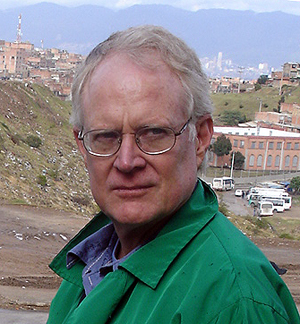
tom

Tom Clements is the Southeastern Nuclear Campaign Coordinator for the US branch of Friends of the Earth, an international environmental organization with affiliates in 70 countries. Based in Columbia, he works on issues related to the state’s seven nuclear reactors, four proposed new reactors, the Savannah River Site, and a low-level waste dump. Tom worked for 13 years as a nuclear campaigner with the Greenpeace International nuclear campaign, and for three years was the director of the Nuclear Control Institute in Washington, DC. In addition to a focus on DOE’s problematic management of 132 million liters of high-level reprocessing waste at SRS and management of surplus weapons plutonium, Tom is leading the fight in his state against four proposed reactors and the DOE’s effort to locate a reprocessing complex at SRS.

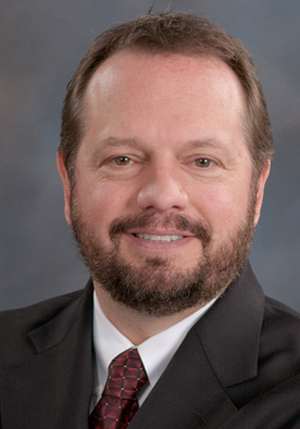
neal

Rev. Dr. Neal R. Jones earned a scholarship to Wake Forest University, where he became president of the Baptist Student Union, majored in political science, and graduated summa cum laude. He had planned to go to law school, but the chaplain at Wake Forest introduced Neal to the social gospel, which convinced him that religious faith could be a motivation for social justice rather than an obstacle. So he decided to become a minister and attended Southeastern Baptist Theological Seminary, where he earned a Master of Divinity degree. Neal never served a Baptist church, however, except for a brief stint as the interim minister of his home church — until they fired him for his liberal sermons. He then joined a more progressive denomination, the United Church of Christ, and served as the minister of a UCC congregation in Rockwell, NC, and then of a Moravian church in Winston-Salem. At these churches, too, his liberal sermons and his involvement in causes for social justice put him at odds with his parishioners. Also, his faith was growing beyond the confines of traditional Christianity and becoming more humanistic and universal. So Neal left the church and went back to school to earn a doctorate in psychology at Baylor University. There he discovered the Unitarian Universalist Fellowship of Waco, Texas, and was soon hired as part-time minister. Discovering Unitarian Universalism was a spiritual homecoming for Neal. For the first time, he experienced a religious community that respected the inherent worth and dignity of every person, that encouraged a free and responsible search for truth and meaning, that worked for peace and justice, and that recognized the interdependent web of all existence. He has been a passionate “evangelist” for UU principles ever since. Neal’s psychologist internship brought him to the University of South Carolina in 1999, after which he became the clinical psychologist for the Pastoral Counseling Center of Palmetto Health. Five years ago, Neal was hired by the Unitarian Universalist Fellowship of Columbia. Neal preaches and lives a practical spirituality that seeks personal wholeness, relational respect, social justice, and ecological responsibility. He would like to apply his values to law-making. Neal recently announced his candidacy for South Carolina House District 80.

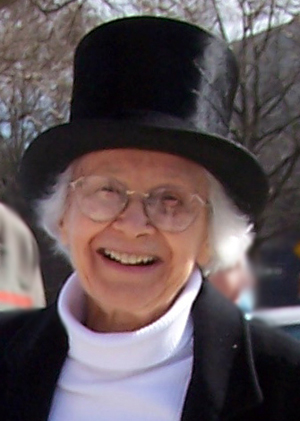
ruth_thomas

Ruth Thomas, founder of Environmentalist Inc., will receive the Lifetime Achievement Award for her service. In 1974, Ruth was the lone voice against building a facility in SC to process plutonium into a commercial nuclear fuel. Ruth would show up at state and federal hearings on the issue with a cardboard box of documents and face off a dozen high-paid attorneys. The plant — Allied General Nuclear Services — was the target of demonstrations the Natural Guard (the Network’s founding organization) organized in Barnwell SC in 1979, which turned out 5,000 people. The facility never operated, and the larger question of using plutonium for commercial power was addressed by Jimmy Carter’s presidential executive order banning the use of plutonium. For 30 years, Ruth was often the lone voice in SC Public Service Commission hearings on issues relating to rate payers subsides of nuclear development. Although Ruth moved into a nursing home this fall, she continues her fight against the use of plutonium-based fuel.

Tickets are $25 each; $40 per couple. Reservations appreciated, but not required, by calling 803-808-3384. Proceeds will help sustain the SC Progressive Network’s programs for a more just and equitable South Carolina.

Making the Case for Universal Broadband Access in SC

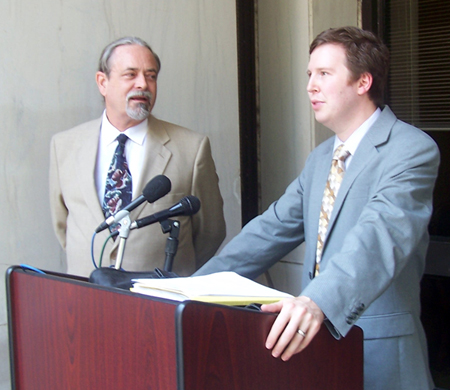
broad
SC Progressive Network Director Brett Bursey (left) and Sascha Meinrath, Director of New America Foundation’s Open Technology Initiative, speak at a press conference before a recent legislative hearing on the broadband transition.

On Sept. 18, Bursey was a guest on Frank Knapp’s U Need 2 Know radio program to talk about the latest developments in South Carolina’s broadband debate. Listen to the show’s audio stream here

[audio:http://www.scpronet.com/wordpress/wp-content/uploads/2009/09/BrettBursey9-18-09.mp3]

Bill Fletcher Talks About Organized Labor on Bill Moyers Journal

fletcherBill Fletcher, Jr., will keynote the SC Progressive Network’s fall retreat Oct. 3-4.

With public support for labor unions at its lowest point in 70 years, Bill Moyers on Sept. 18 talked with experts Bill Fletcher, co-author of SOLIDARITY DIVIDED: THE CRISIS IN ORGANIZED LABOR AND A NEW PATH TOWARD SOCIAL JUSTICE and Michael Zweig, director of the Center for the Study of Working Class Life at SUNY Stony Brook, about the state of organized labor.

Click here to watch.

Bill Fletcher will be the keynote speaker at the SC Progressive Network’s fall retreat at Penn Center Oct. 3-4. See our web site for details. Call 803-808-3384 to register for the retreat, which is open to anyone interested in improving the quality of life in South Carolina.

Register today for the Network’s annual grassroots retreat at historic Penn Center

LowcountrySunset

SC Progressive Network Fall Retreat
Oct. 3 – 4
Historic Penn Center, St. Helena Island (near Beaufort) SC

Get away to the Lowcountry to talk politics, build alliances, sharpen organizing skills and recharge your batteries. Find out what’s happening in South Carolina’s progressive community and how you can help grow a grassroots movement for social equality and political power. Come for a day or for the whole weekend.

Guest speakers include acclaimed labor and civil rights activist Bill Fletcher and SC Rep. Joe Neal, who will offer critical analysis and perspective on our state and nation. The most important component of the weekend will be the participants themselves, who will take a hands-on approach to advancing our issues in the coming year.

On Saturday afternoon, participants will break into caucuses to map strategy on the following issues:
• Workers’ Rights
• Waging Peace
• Racial Justice
• Environmental Protection
• LGBTQ Organizing
• SC Death Penalty

The weekend begins at 10am on Oct. 3 and runs through 2pm on Oct. 4. Full package is $100, and includes conference materials, all meals and overnight accommodations. Day-only registration is $10. Car pools available from Columbia, Greenville and Charleston. Call 803-808-3384 if you can offer or need a ride.

See the weekend’s full agenda by clicking here.

To register, call 803-808-3384 or download the registration form by clicking here.

Why I’m going to the big gay march on Washington

By Beth Sherouse
Columbia, SC

Since movement veteran Cleve Jones announced plans for a national gay rights march on Washington following the passage of California’s Prop. 8 last November, reactions from the LGBT community have been mixed. Supporters of October’s National Equality March are adopting a grassroots lobbying strategy, demanding “Equal protection in all matters governed by civil law in all 50 states,” and promoting a more direct appeal to the federal government for LGBT rights. Lukewarm supporters and skeptics of the march, mainly organizations like the Human Rights Campaign and state Equality groups, are concerned that the march will drain resources from the state-by-state approach for marriage equality. Critics of the march movement are also concerned that this march may share the fate of previous gay rights marches in ’79, ’87, ’93, and 2000, which seem to have accomplished little.

I have been a supporter of HRC for most of my adult life, and I have worked with both state, local, and campus organizations in South Carolina and Georgia. While I will continue to support such organizations, I think a national approach offers more hope for me and other South Carolinians than anything HRC or state-by-state marriage equality can offer.

South Carolina is one of only five states that has no hate crimes laws; other than a limited policy in the city of Columbia, there are no laws banning discrimination in employment or housing based on sexual orientation or gender identity; and the 2006 constitutional amendment prohibiting same-sex marriage in SC passed by 78%. For people who do not live in California or Massachusetts, for those who are part of otherwise disadvantaged communities, for those who live in constant fear of employment discrimination and physical violence because their states give them no protection, for those whose lives and relationships are invisible to most of America, marriage equality in progressive states is nothing more than a symbolic victory, and symbols cannot help them provide for their families or protect themselves from discrimination.

I do not plan to spend the rest of my life in SC. But for those LGBT folks who call South Carolina home, gay marriage fights in states like Maine and California offer little more than momentary comfort against communities in which they will remain second-class citizens for the foreseeable future unless the federal government intervenes. The state-by-state approach to equality seems meaningless in a state that has historically been several decades behind the rest of the country in terms of civil rights. If the federal government had left the battle for desegregation up to states to fight on their own, de jure segregation would arguably still be in place here in SC and a few of its neighboring deep South states.

We need to build support behind a federal gay rights agenda, because if we leave our rights up to the conservative majorities in states across the nation, we will never achieve equality. LGBT Americans should ALL enjoy the same civil rights as their heterosexual counterparts, whether they live in San Francisco or Atlanta, New York or Charleston. The federal government must step in and defend our civil rights in places where our community cannot adequately defend itself, and we must show Washington lawmakers that we are looking to them to change laws as we go about the work of changing hearts and minds.

So this is why we march on Washington on Oct. 10-11. We march because at no time in our nations’ history have gays, lesbians, bisexuals, and transgender people been more visible and political. We march because marriage is but one of the many rights and privileges that we deserve as citizens of this country, and because it is time for the Obama administration to make good on its promises to the LGBT community. We march because as Americans, our civil rights should not depend on our sexual orientation or gender identity, nor should they depend on what state we live in. We march because visibility matters and is the key to dismantling the foundations of prejudice and discrimination. And we march with the hope that standing in solidarity with each other and asserting our place in this nation has transformative potential.

NOW launches blog on Women’s Equality Day

The National Organization for Women is celebrating Women’s Equality Day this year by launching Say It, Sister! — a new blog designed to inform, inspire and instigate feminist activism.

Women’s Equality Day marks the passage of the 19th Amendment to the U.S. Constitution, which guaranteed women the right to vote. For more than 70 years, the foremothers of feminism campaigned for women’s equality at the polls, and they finally achieved victory in 1920.

Nearly a century later, the ballot box remains vital to protecting and advancing women’s rights, but the way we educate voters and petition our government has changed dramatically. The Internet has brought us unprecedented organizing power, and there’s little doubt that suffragists like Susan B. Anthony, Elizabeth Cady Stanton and Sojourner Truth would have welcomed this tremendous opportunity to amplify their voices and reach out to women across the country and around the globe.

In the tradition of those great feminists, Say It, Sister! will bring women’s rights supporters together to motivate and strengthen each other in our mission to end all forms of sex discrimination. The blog will serve as a place where NOW leaders speak their minds, call women and men to action, encourage feedback and facilitate a lively dialogue.

“I am thrilled to launch NOW’s blog, Say It, Sister!, on Women’s Equality Day,” said NOW Action Vice President Erin Matson. “As Elizabeth Cady Stanton said so long ago, there are many hungry people out there. Well, now we have this incredible power to nourish them and point them in the right direction to make change, and that’s just what we plan to do!”

Now Hear This: the Fair Elections Now Act

The House Administration Committee held a hearing on July 30 on the Fair Elections Now Act (H.R. 1826), at which members heard testimony on the bill and how similarly modeled programs have worked in the states.

Each member of the committee was given the chance to make introductory remarks before proceeding. Although there was some disagreement, all of the members agreed on one thing: their disdain for political fundraising. “I’m going to put it on the record, I hate raising money for campaigns. The only two people I know who enjoyed it, both went to prison,” said Rep. Daniel Lungren (R-Calif.).

Rep. Michael Capuano (D-Mass.) echoed this sentiment in his testimony:

“I actually think this concept [public financing] is exactly what we need. I hate raising money. I hate it. I hate the fact that the general public thinks that every time I raise a dollar, I’m being bought. I hate it. It’s bad not just for me. It’s bad for the system, it’s bad for people’s perception of government.…I would really much rather be reading a healthcare bill and having that debate, which is fine, or any number of things than ever picking up the phone to anybody to beg them, not for a hundred bucks but for thousands of dollars.”

The committee heard testimony from two panels of witnesses. The first panel included the bill’s lead sponsor, Rep. John Larson (D-Conn.), and original co-sponsors Reps. Chellie Pingree (D-Maine) and Walter Jones (R-N.C.). Speaking first, Rep. Larson said:

“Unfortunately there is, and will remain, the perception that contributions mean influence. This perception is incredibly harmful to Congress as an institution. It erodes the faith and trust of the American people in their government—a critical part of our democracy. We must change this system.“

Rep. Jones followed with some powerful remarks:

“I walked into this room today thinking this was the most important testimony that I could be part of because the system is broken, the system needs to be fixed. Mr. Larson has presented a bill that will work us towards a fix of this problem…[L]et’s return Congress to where they vote based on their conscience not on the influence or perceived influence of money that buys the conscience. Let’s return it back to the people.”

The second panel was comprised of witnesses representing both sides of the debate. Those speaking in favor of the bill were Maine state Speaker of the House of Representatives (and daughter of Rep. Pingree) Hannah Pingree (D); Jeffrey Garfield, executive director & general counsel of the Connecticut State Elections Enforcement Commission; and Arn Pearson, vice president for Programs at Common Cause. Testifying in opposition were Brad Smith, professor of Law at Capital University School of Law and chairman and co-founder of the Center for Competitive Politics; and John Samples, director for the Center for Representative Government at the right-leaning CATO Institute.

Pearson, who closed out the hearing with his testimony, left the members of the committee with a poignant question.

“I doubt this is what you had in mind when you decided to run for Congress. Surely the American people did not send Mr. Smith to Washington to spend his time raising money. They expect and deserve more, and so do you. If you could start from scratch, would this be the system you would choose?”

The hearing was a huge success. Members of the committee were engaged and the committee room was standing room only. During the August recess we will continue to ask lawmakers to co-sponsor the bill through phone calls, e-alerts, letters to the editor, and participating in town hall meetings. Be on the lookout for future calls to action and don’t forget to ask your member to support the Fair Elections Now Act!

Network still fighting privatization of SC ETV broadband


Sascha  Meinrath, Director of New America Foundation’s Open Technology Initiative, speaks at a press conference before the hearing.

A three-hour meeting of a legislative subcommittee Aug. 5 gave opponents of privatizing SC ETV’s broadband spectrum their first opportunity to challenge the contract that privatizes the system. The SC Progressive Network presented testimony that the state should retain control of 25% of the spectrum for public use. This “mid band” portion of the spectrum would allow robust wireless Internet statewide.

The contract now under consideration could result in the public losing control of the nation’s only unified, statewide broadband system.

The subcommittee decided that further study of the contract terms were necessary.

The proposed contact leases the statewide educational broadband system to Clearwire and Digital Bridge for 30 years.

Sen. Harvey Peeler and Rep. Gilda Cobb-Hunter, who represent rural counties, were concerned that the contract doesn’t require the companies to provide service in rural and under-served areas.

Sascha Meinrath, Director of New America Foundation’s Open Technology Initiative, testified and responded to questions regarding the practicality of adopting the system for public access. Meinrath’s participation provided the Network with the necessary technical side of issue. Meinrath’s comments on the historical under-valuation of public airwaves was of particular interest to the subcommittee.

Sen. Glen McConnell, chair of the subcommittee, gave all interested parties until Aug. 14 to submit additional information on:

* The value of public retention of 25% of the spectrum. What will it cost to set up and maintain public access WiMax systems and how will it be paid for (by off setting cost of public entities leasing service, etc.). We have to show that giving up $35 million in lease revenue over the 30 years of the lease is a good deal for the state and taxpayers. Can we show that the value of the licensed spectrum will increase?

* The contract calls for the vendors to provide three free, regular subscription broadband services in each area of the 67 licenses. Are there places where Clearwire, or other vendors, provided more free incentives for lucrative contracts?

* The companies are being asked to provide examples of how they provide service to rural areas to address the problem that the contract allows service to be “market driven.”

brett_bursey 


SC Progressive Network Director Brett Bursey addresses the media at a press conference before the subcommittee hearing.

Letters that support public control of 25% of the state’s educational broadband system should include specific cost savings and applications. Address your letters to: Sen. Glenn McConnell, Chairman, Joint Bond Review Subcommittee on the EBS. Send your comments to the Progressive Network at network@scpronet.com or PO Box 8325, Columbia SC 29202.