SC progressive community loses one of its own to coronavirus

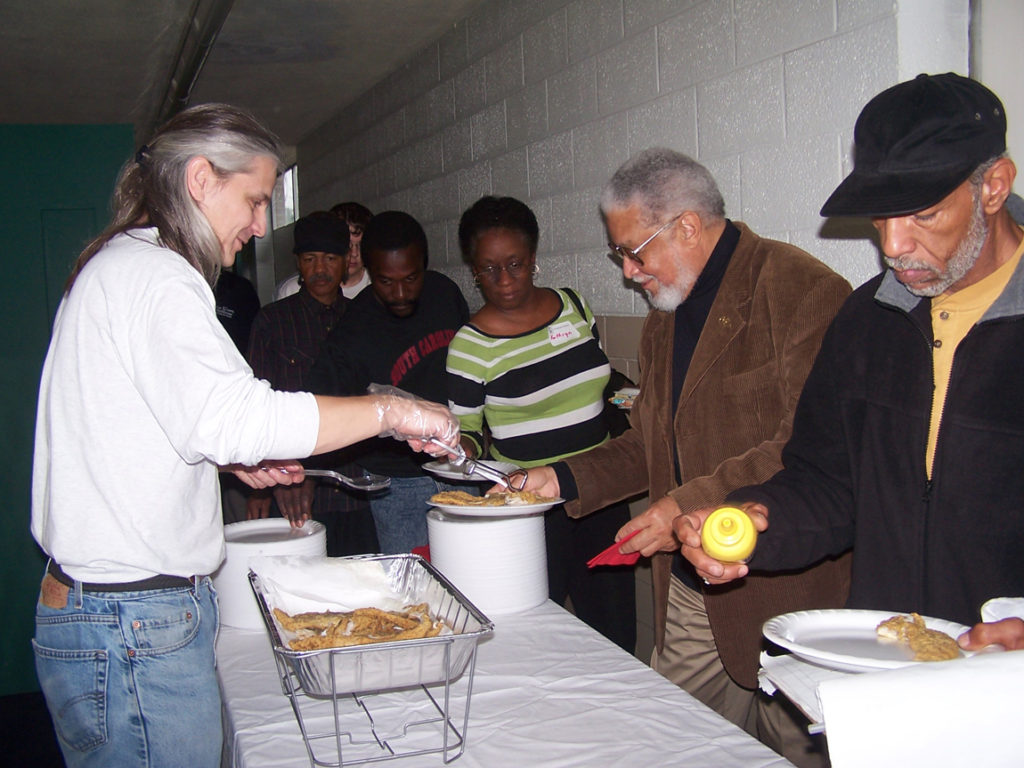
Tim Liszewski serves lunch at a Progressive Network conference in 2007.

We were heartbroken to learn that our friend and colleague Tim Liszewski died at his home in Columbia on March 28 of coronavirus, which he likely contracted at an Indivisible conference in Wisconsin. He was 60 years old, and leaves behind two children, Aaron and Rebecca Liszewski.

Tim was to be married in May to his longtime partner, Maris Burton. Instead, she is planning his memorial, which will be held when it is safe to gather. Meanwhile, Maris herself is recovering at the home she shares with her sister, Barb.

After feeling sick for a week and suspecting that it might be coronovirus, Tim was tested on March 21. He was told they would get results in 2-5 days, but it wasn’t until four days after his death that the coroner’s office confirmed that he had tested positive. Maris is frustrated that they did not know sooner so they could warn others with whom they’d been in contact.

Their story lays bare the state’s slow response to the pandemic and lack of transparency in testing and tracking of Covid-19 cases in South Carolina. The governor has yet to issue a stay-at-home order, making ours one of just 12 states without one. Tim, who worked as one of the Network’s ACA Navigators in 2013-2014, would be angered by the way the pandemic is playing out here and in other states that refused to expand Medicaid, as detailed in this story.
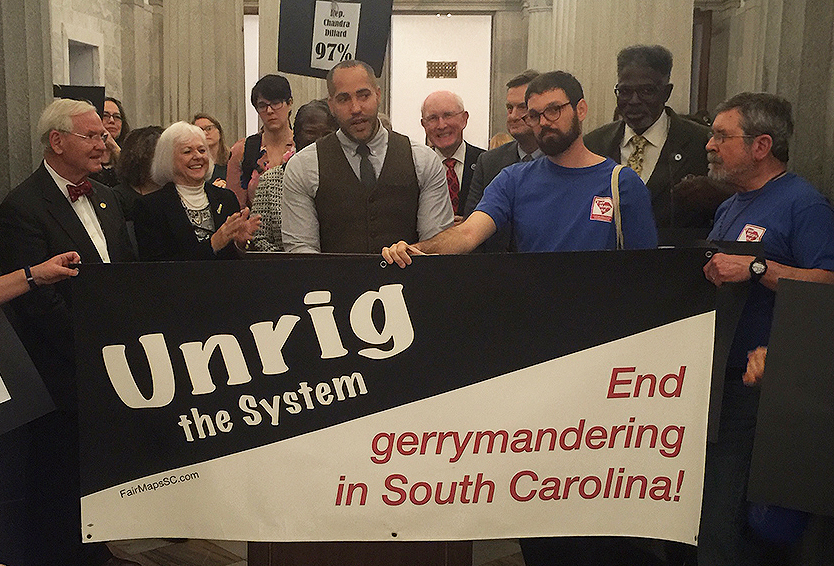
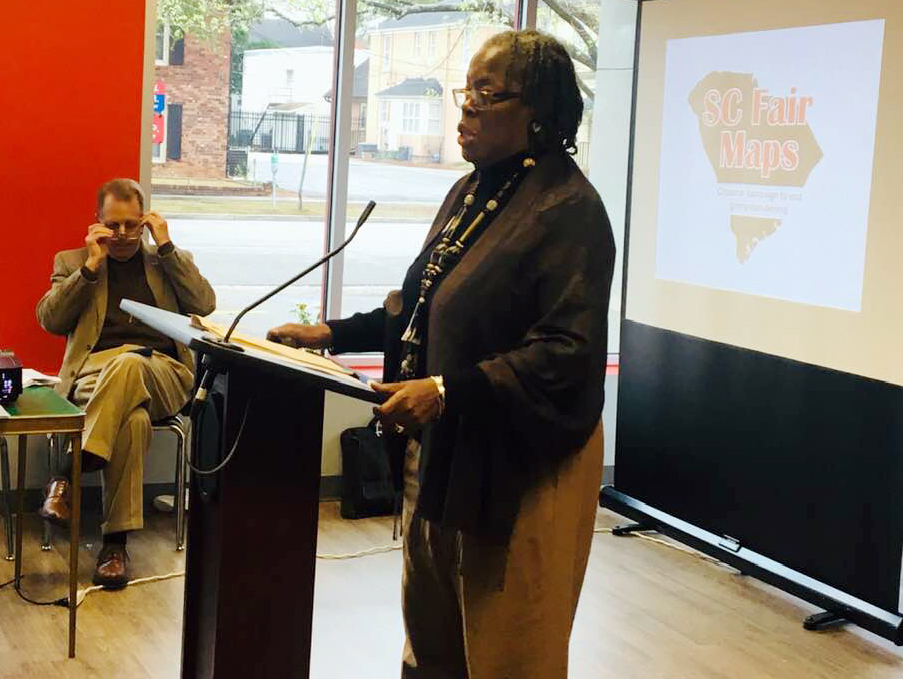
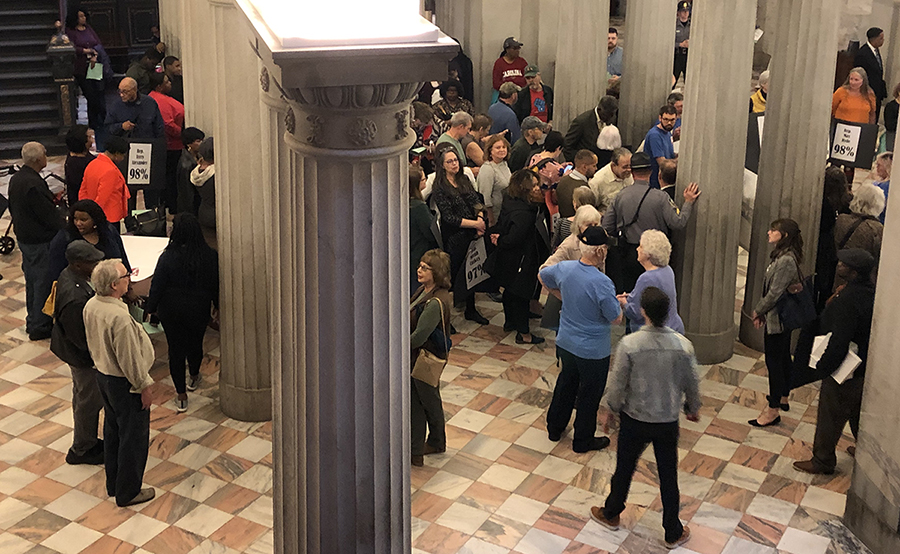
We got to know Tim when he moved to Columbia in 2005 from his native Cleveland, Ohio, to serve as director for the Carolina Peace Resource Center, a longtime Network member. He would go on to work for various political campaigns, in South Carolina and out of state, but stayed in touch. The last time we saw him was at our Fair Maps event at the State House on the first day of session to press lawmakers to end gerrymandering in South Carolina.
Tim was mild mannered and big hearted. He lived his values. Alongside Maris, he helped feed homeless people in Columbia through Food Not Bombs, and volunteered regularly at Nickelodeon Theater. In a story in The State about his work helping people access health care, Tim said, “This is not a job, it’s a lifestyle.”

Tim was one of 19 Occupy Columbia protesters arrested in November 2010 after refusing to bow to Gov. Nikki Haley’s order to evacuate the State House grounds. Charges were later dropped, and Occupiers were each awarded a $10,000 settlement for violation of their First Amendment rights.

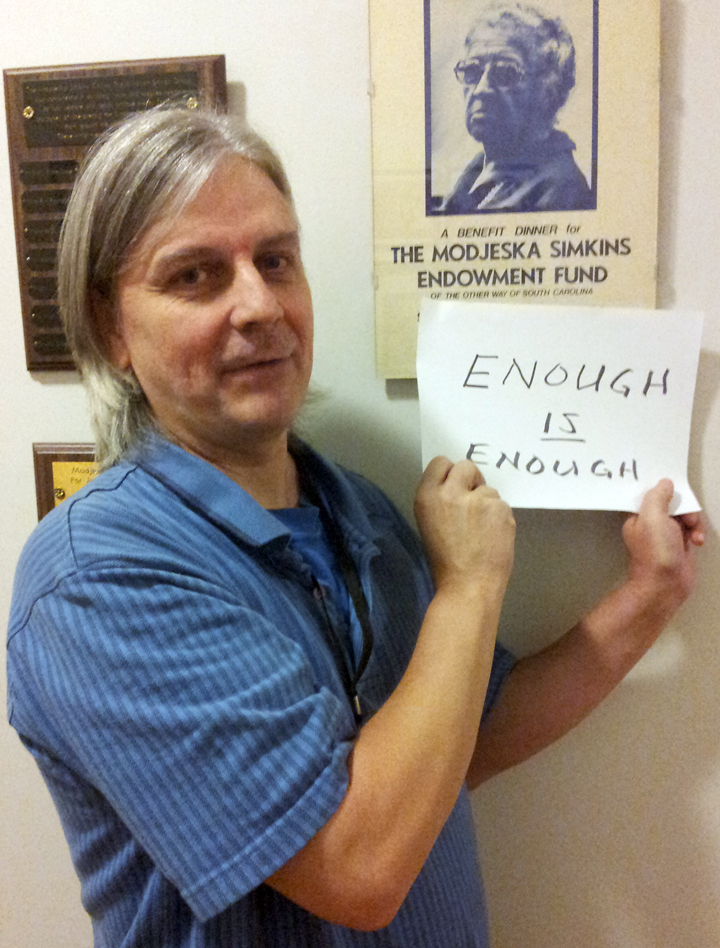
Tim graduated from the Modjeska Simkins School in 2017. In a blog post about the session he said, “Knowing there are people younger than I am who are actually taking up the cause gives me hope and makes me less angry. Let’s make some change that lasts.”
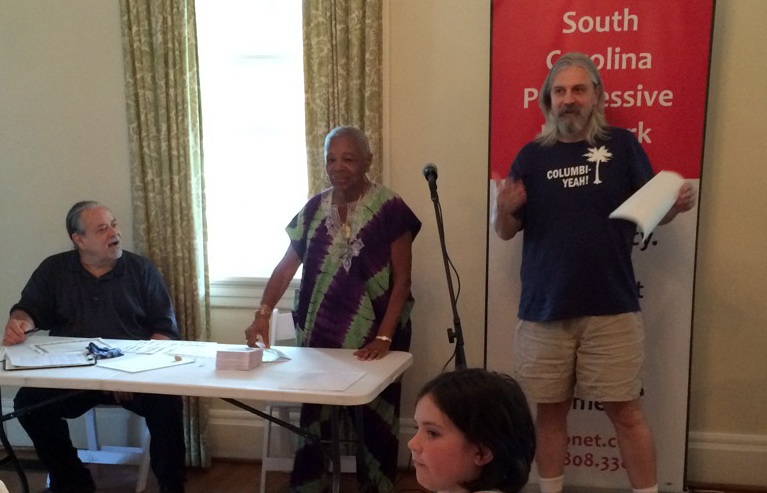
Network Cochair Kyle Criminger had this to say about our colleague. “A creative, civilly disobedient Occupier of Columbia, a first-rate ‘commandant’ (his word) of the Progressive Network’s efforts with the ACA Health Insurance Marketplace, and a senior regional leader of the Indivisible Project, Tim was an astute community organizer, laser-sharp with his words and with purposeful quips. He always studied and adapted in order to be effective where his feet hit the ground beside his fellow progressives. The social justice movement will miss him.”

The Network sends our collective love to Maris, and to her and Tim’s families.

Maris shared this message: Tim’s family, my sister Barb and myself are overwhelmed at the amazing outpouring of love, respect and kindness you are sharing about Tim (and me). He would be embarrassed at the fuss and then say, “is it true? Do they really mean that?” Yes Tim, you are loved by me and so many more. So thank you all for your words and your “Service in Action” that Tim practiced daily. Our lawn looks amazing, we are being fed, groceries supplied, laundry done! and a continuing offer for other services we will be needing. We feel the love. I am working on getting rid of my virus symptom of “the cough and fatigue” and being well enough to tackle household tasks. Be kind, do good deeds, wash hands and take this seriously. It kills.

At a hearing during the Occupy Columbia saga, which played out for months, Tim spoke on behalf of those arrested. “There are lobbyists and people with money who are occupying inside the State House. This was our symbolic representation of us taking back the State House grounds for all of the citizens, not just the citizens with influence and with money.”
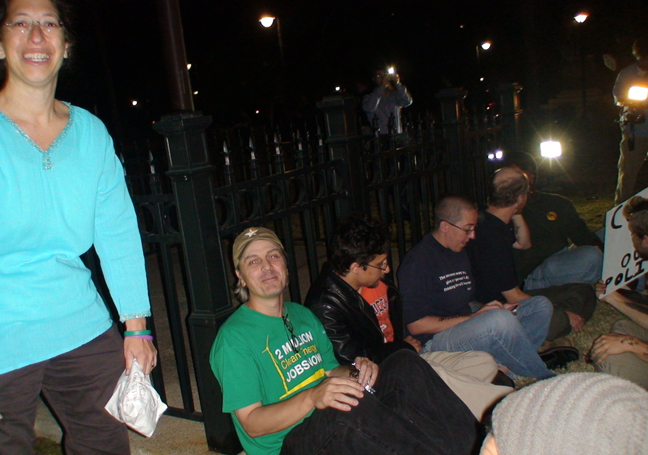
Maris Burton, left, and Tim under the Confederate Flag at the State House just before he is arrested along with 18 others.

Tim graduated from the Modjeska Simkins School in 2017. In a blog post about the session he said, “Knowing there are people younger than I am who are actually taking up the cause gives me hope and makes me less angry. Let’s make some change that lasts.”

Network Cochair Kyle Criminger had this to say about our colleague. “A creative, civilly disobedient Occupier of Columbia, a first-rate ‘commandant’ (his word) of the Progressive Network’s efforts with the ACA Health Insurance Marketplace, and a senior regional leader of the Indivisible Project, Tim was an astute community organizer, laser-sharp with his words and with purposeful quips. He always studied and adapted in order to be effective where his feet hit the ground beside his fellow progressives. The social justice movement will miss him.”

The Network sends our collective love to Maris, and to her and Tim’s families.

Maris shared this message: Tim’s family, my sister Barb and myself are overwhelmed at the amazing outpouring of love, respect and kindness you are sharing about Tim (and me). He would be embarrassed at the fuss and then say, “is it true? Do they really mean that?” Yes Tim, you are loved by me and so many more. So thank you all for your words and your “Service in Action” that Tim practiced daily. Our lawn looks amazing, we are being fed, groceries supplied, laundry done! and a continuing offer for other services we will be needing. We feel the love. I am working on getting rid of my virus symptom of “the cough and fatigue” and being well enough to tackle household tasks. Be kind, do good deeds, wash hands and take this seriously. It kills.
In face of pandemic, Modjeska Simkins School retools spring session

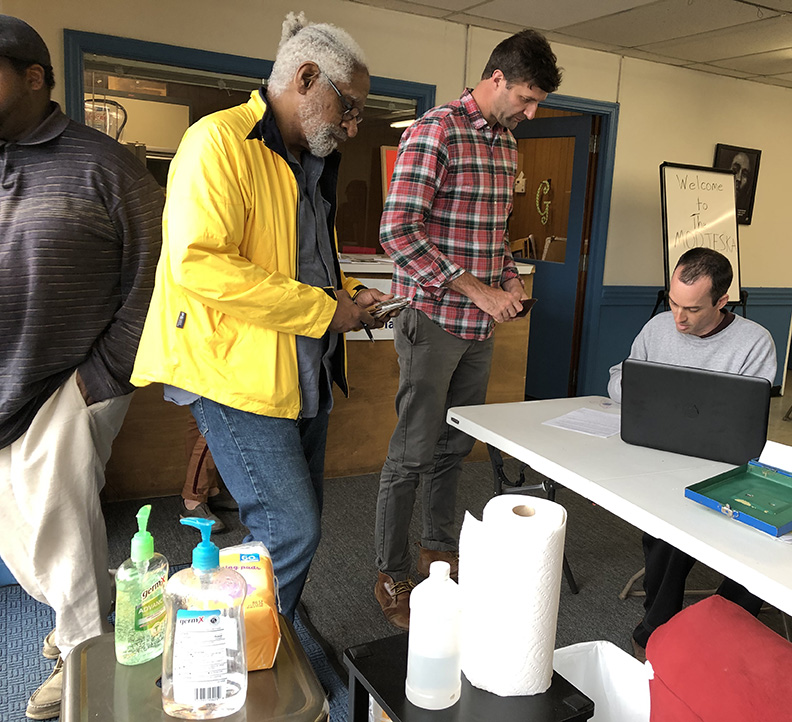
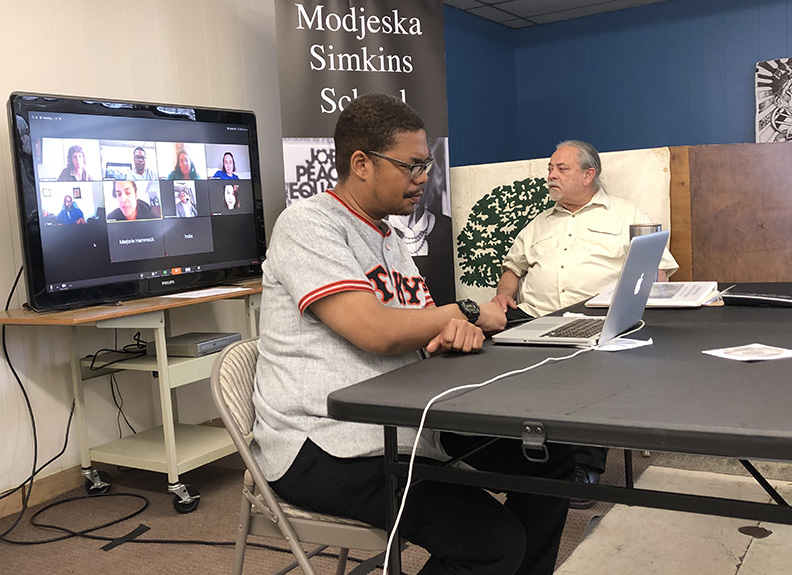
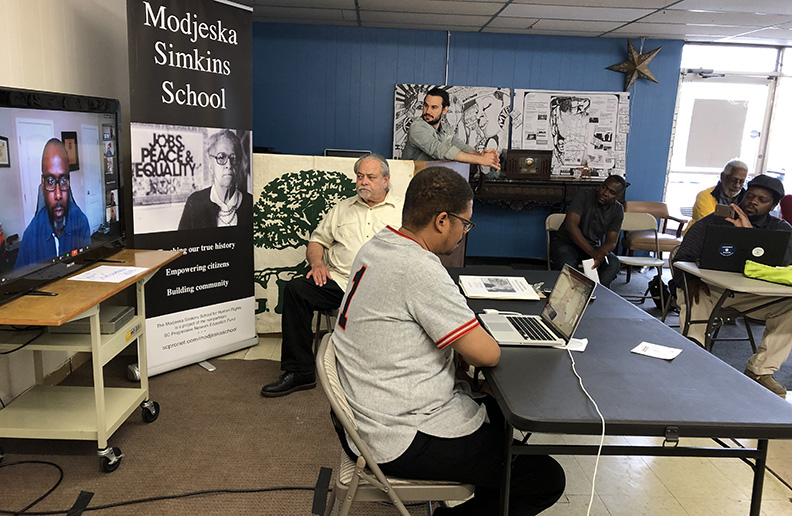
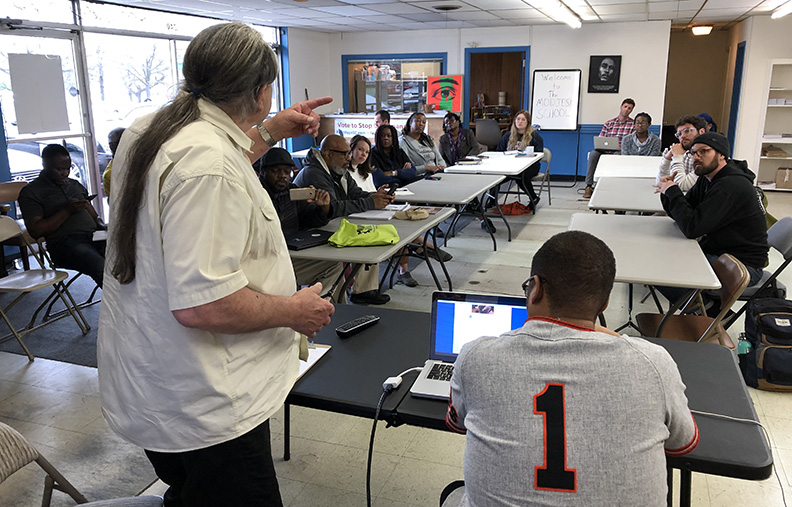
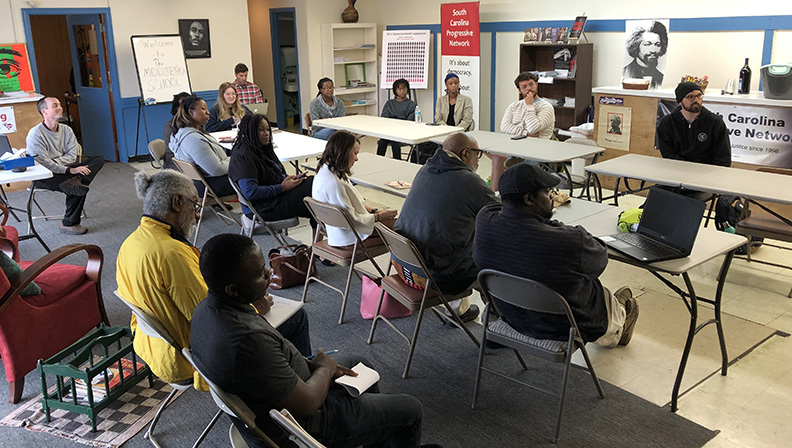
Instead of hugs and handshakes, students gathering for the first day of the spring session of the Modjeska Simkins School were greeted at the door with hand sanitizer and cleansing wipes. As the Palmetto State comes to terms with the growing coronavirus threat, some students opted to join through video conferencing. It is a sign of the times.

Today, after wide criticism for his slow response to the crisis, Gov. Henry McMaster cancelled classes in the state’s public schools for the rest of the month. Colleges across South Carolina have extended their spring breaks and are preparing to move their classes online.

The Modjeska Simkins School has decided to delay its next class for two weeks, and to live stream the rest of the session. “Being online will be a challenge,” said SC Progressive Network Director Brett Bursey, “but we are looking forward to learning new ways of doing things that will help us expand our distance learning capacity. Eventually, we’d like to make the school available to anyone, anywhere. This will help move us in that direction.”

Dr. Robert Greene (left) and Brett Bursey

The session will be led by Dr. Robert Greene (Claflin University). Joining him will be Dr. Todd Shaw (USC political science and African American studies), Dr. Jon Hale (USC education history), Dr. Alison McCletchie (USC sociology and anthropology), activist Kevin Gray, and special guests. Classes will be held on alternate Monday evenings through mid-July.

The class of 28 is made up of students with varied interests and backgrounds. The youngest is in 10th grade; the eldest is in her 80s. “We are impressed with this class,” Bursey said. “It will be a different experience for these students than those in years past, but we are confident it will be no less powerful.”

For more about the school, see the web site. Follow on Facebook.

SC Election Protection Hotline Now Live for Presidential Primary

The nation’s largest nonpartisan voter protection coalition, in alliance with various in-state groups, is ensuring that everyone has an equal opportunity to vote in South Carolina. Election Protection’s 1-866-OUR-VOTE hotline is an important resource for any voter who has questions or is experiencing problems at the polls. In addition, Election Protection volunteers will be on the ground across South Carolina to provide voters assistance.

“This will be the 12th year that this free, nonpartisan service has helped South Carolina voters with problems at the polls,” said SC Progressive Network Education Fund Director Brett Bursey. “The calls to the hotline provide the only real-time, statewide audit of our election system that helps us to identify and address systemic problems.”

Voters are urged to report problems that they experience or witness, so officials can see patterns and improve our election system.

Because not all polling places will be open on Feb. 29, voters should check the hotline or go to Find My Polling Place at scvotes.org. This is the first statewide use of our new voting machines that produce a paper ballot. Voters should verify their ballot was marked correctly prior to inserting it in the scanner. If the ballot does not reflect their choice, voters can turn it in to a poll worker and vote again.

“Voters must be aware that the state’s photo ID requirements will be enforced for voting in the 2020 presidential preference primary,” said Susan Dunn, attorney for the ACLU of South Carolina. All voters are required to bring either a valid driver’s license, DMV-issued ID card, or their photo-voter registration card with them to the polls on Election Day. Dunn pointed out that registered voters with a “reasonable impediment” to not having a photo ID will be allowed to vote, and the votes will be counted without the voter having to appear to defend their ballot at the county certification hearing. “We recommend voters without one of the accepted ID’s is to trade their old paper registration card at their county elections office for one with a photo on it,” Dunn said.

By calling the 1-866-OUR-VOTE hotline, voters can confirm their registration status, find their polling location, and get answers to questions about proper identification at the polls. Voters are encouraged to report any problems with the voting process to Election Protection.

Spanish language assistance is available at 1-888-Ve-Y-Vota (1-888-83-9-8682) or veyvota.org.

Voter Reminders

  • Verify your registration status to ensure that you can vote.
  • Confirm your polling location, even if it has been in the same place for years.
  • Bring required ID, and know your rights regarding providing identification.
  • Prepare your registered friends and neighbors, and bring them to the polls!

On the first day of session, lawmakers pledge bipartisan support for fair maps in SC

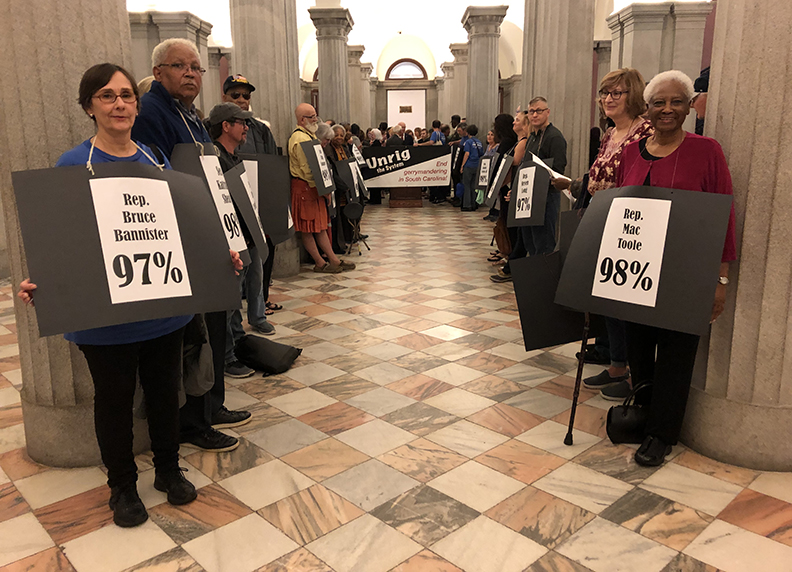
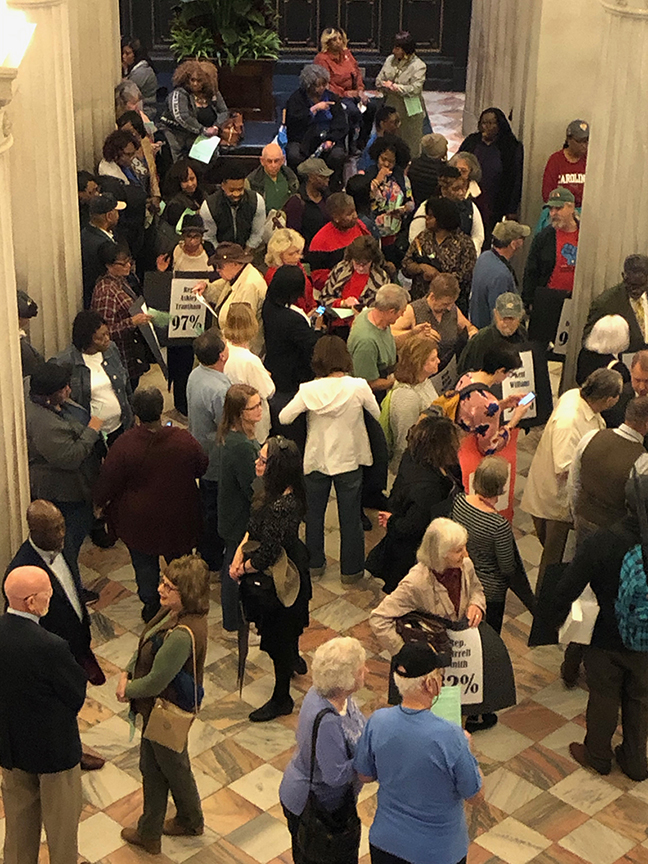
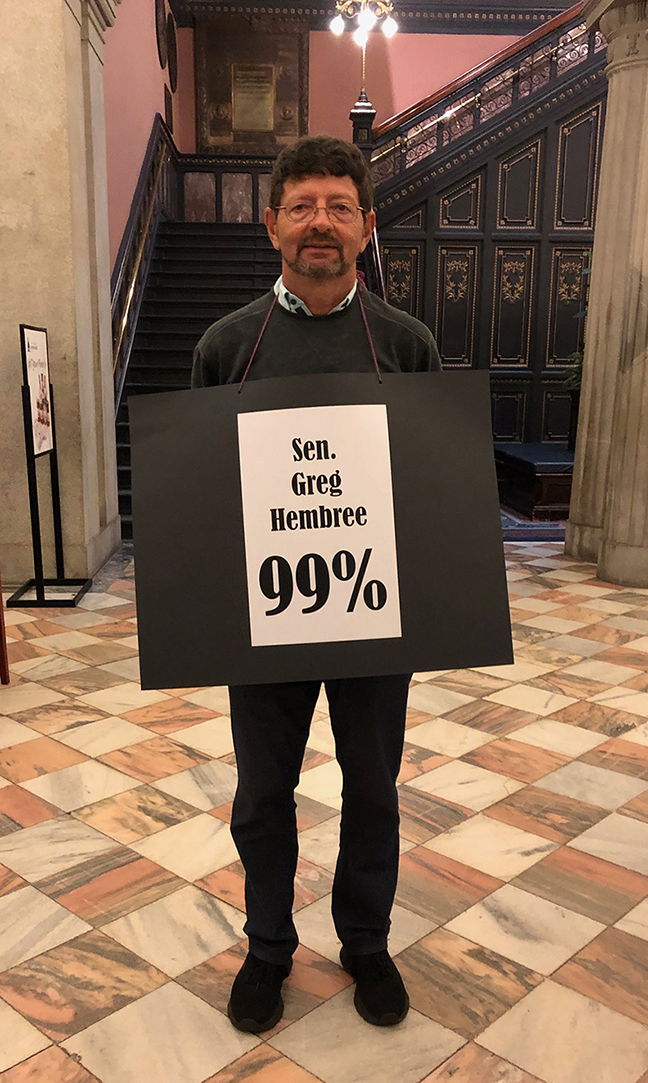
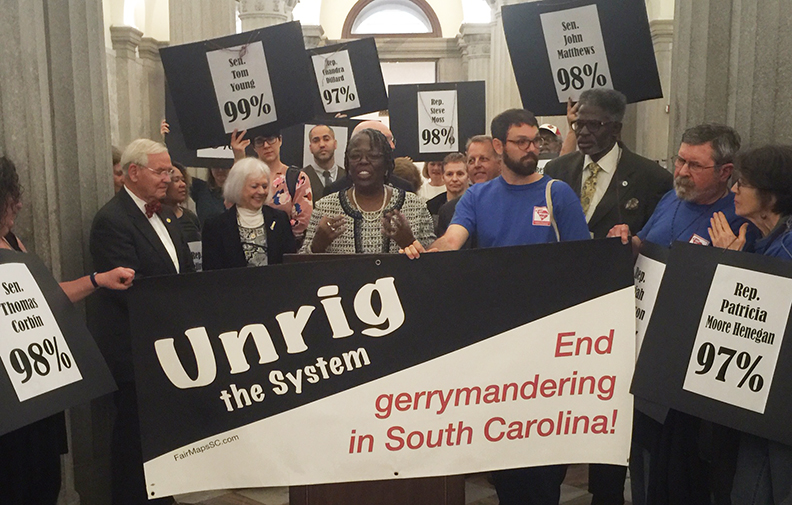
On the first day of the SC 2020 legislative session, fair maps advocates gathered at the State House holding signs with the names of state lawmakers and the percentage by which each won their seats. The original plan to assemble on the front steps of the State House was rained out, but it didn’t dampen the spirits of those who filled the lobby.

Some drove hours to be there — from Charleston, Greenville, Rock Hill, and more than a dozen from Horry County, where activists have been working a county-based petition drive for fair maps in South Carolina.

Brian Kasprzyk and his wife, Malle Kasprzyk, drove from Little River. It was a long trip, but worth the drive, he said. On the Fair Maps Facebook group, he posted: “Today was a great day for democracy and fair maps in South Carolina. It was great because 2 republican and 2 Democratic legislators joined together to address the crowd and support redistricting legislation — for the first time.”

Brian Kasprzyk

It’s true. In an unprecedented move, a bipartisan group of SC lawmakers stood in the State House together to make a strong and unified public statement against gerrymandering in South Carolina. Democrats Rep. Gilda Cobb-Hunter and Sen. Mike Fanning joined Republicans Rep. Gary Clary and Sen. Tom Davis at a morning press conference on Jan. 14.

Retired Sen. Phil Leventis made opening comments. In his 32 years as a state lawmaker, he took part in five redistricting sessions. “In 2002, we reapportioned the Senate,” he said, “and before the elections in 2004 it was reapportioned again. I can’t tell you why. But I can tell you it raises questions about the whole process. And the process needs to be fair.”

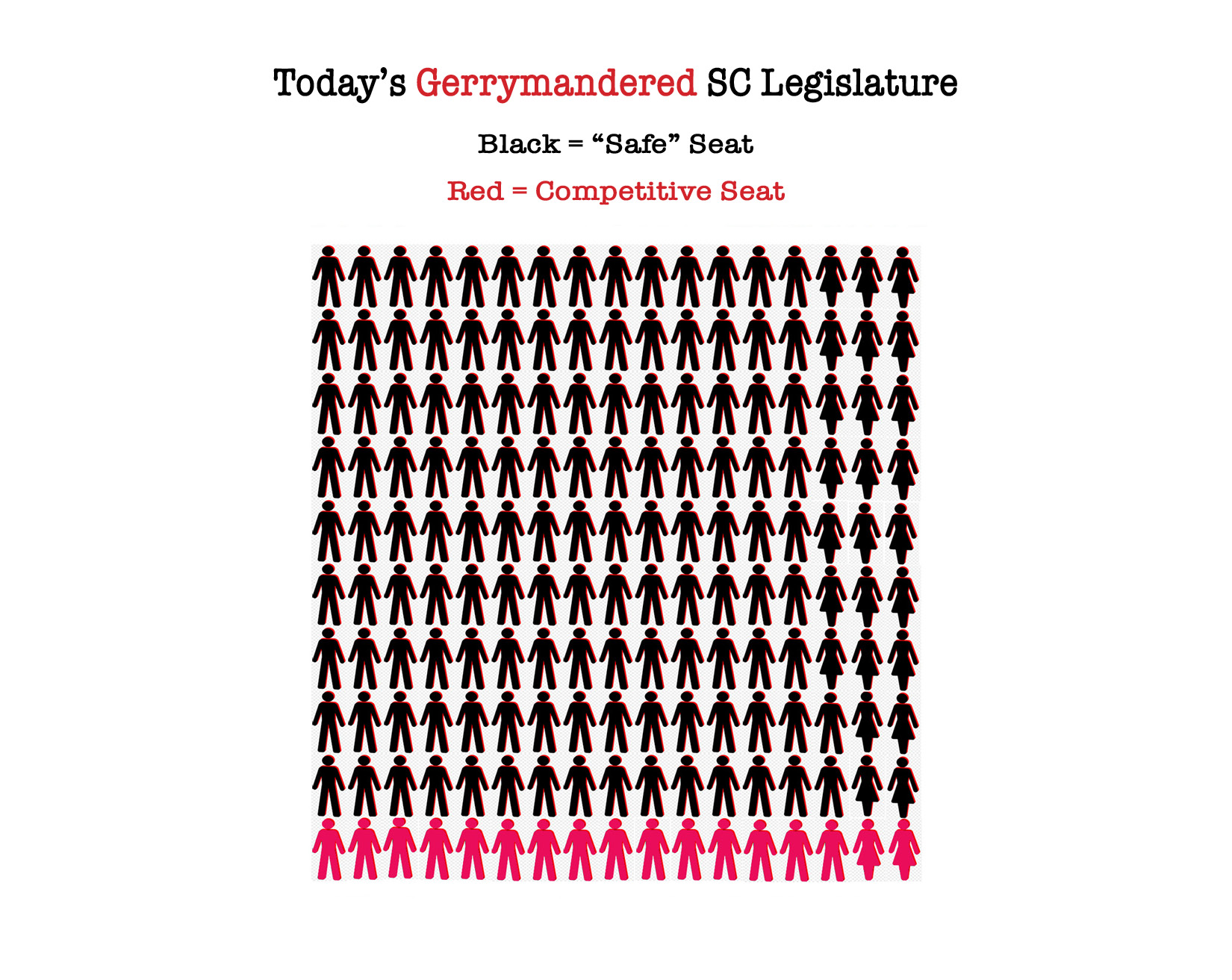
The system is broken. Fact is, 75 percent of South Carolina voters have only one name on the ballot for House or Senate. Ninety percent of legislative seats were won with an average of 86% of the vote. Just 10 percent of the General Assembly was won by less than 60 percent. That’s 17 seats out of 170.

Competitive districts make winners work to please a majority of the voters, not just the small percent that turns out for the primary.

The task at hand is studying and debating the several proposals that have been filed, and finding common ground that, ultimately, gets politicians out of the business of picking their voters.

“South Carolina has more problems with gerrymandering than any state in the United States of America,” Sen. Fanning said. “It is not a Republican problem or a Democratic problem; it is a people not having a voice in their government problem. For every solid, safe Republican seat we have a solid, safe Democratic seat. We have created an apartheid here in South Carolina that has divided the voters at the whim of politicians.”

Rep. Cobb-Hunter said, “We all can agree the system is, indeed, rigged.” She vowed to support any fair maps bill that gets traction. “It makes for a better South Carolina, a better governance when all of us who are blessed and highly favored enough to be in these positions when we have to reach out to everybody as opposed to a select group.”

Rep. Gilda Cobb-Hunter

Rep. Clary said, “What we’re talking about here is fundamental fairness. The idea that I, or any other member of the General Assembly, can go in and adjust the line to suit my whim – -to move someone out of my district or to remove a group from my district — is repugnant to me.”

Sen. Davis said, “What we have is a crisis of legitimacy. The idea that I or any other member of the General Assembly can go in and adjust the line to suit my whim – to move someone out of my district or to remove a group from my district is repugnant to me. What we’re talking about is restoring people’s faith in representative government. This is about returning power to the sovereign people.” 

Fanning, a former social studies teacher, said he taught civic engagement. “We registered to vote in my class. I made sure my students knew where to vote and when to vote. I had pumped them up, with as much passion as I had inside me. What broke my heart is that when my students came back and said, ‘There was only one name on the ballot. My vote didn’t matter.’ There wasn’t anything I could say to that.

“We have banded together as Republicans and Democrats in the Senate and the House. Each of us has bills, but none has gotten traction because the argument doesn’t belong to us, the argument belongs to the people.”

Preston Anderson has taken that directive to heart. As a volunteer with the Fair Maps SC Coalition  has spent months going to events to talk about fair maps and gather signatures for the Richland County petition drive. By now he has talked to hundreds of South Carolinians. “Across the political spectrum, people were very interested in learning more about gerrymandering and the effect it has had on the political situation in South Carolina.”

Fair Maps organizer Preston Anderson

Fair Maps volunteers who have been in the field see a steep learning curve ahead. They are finding that a surprising number of voters know little to nothing about gerrymandering and how it corrodes the integrity of South Carolina’s elections. Same goes for lawmakers.

To that end, we gave each of them our handout full of numbers that should alarm anyone who cares about the state of democracy in South Carolina.

For more about the Fair Maps Coalition, (the SC Progressive Network is a member) see FairMapsSC.com.

10,000 teachers make history at SC for Ed rally

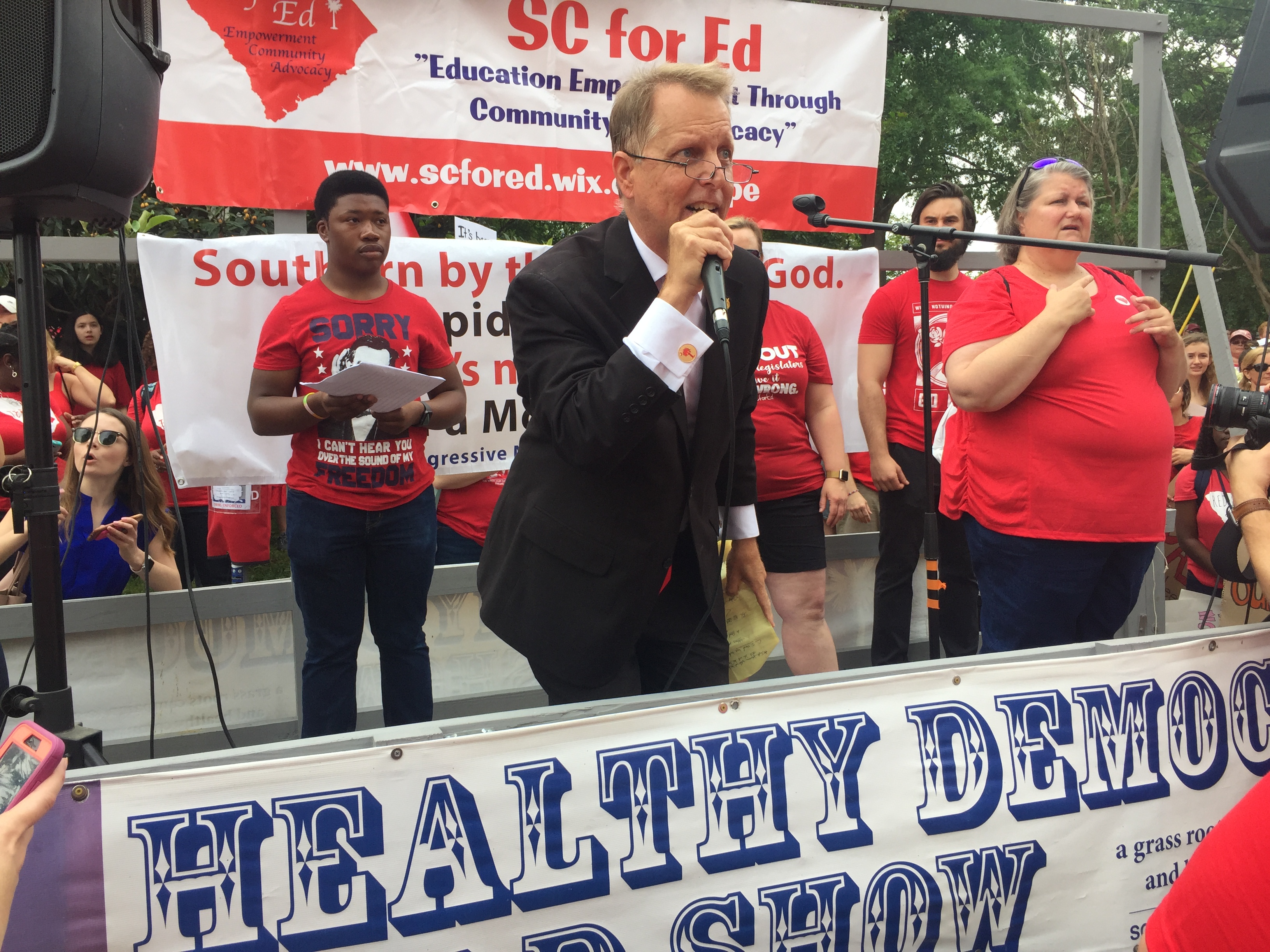
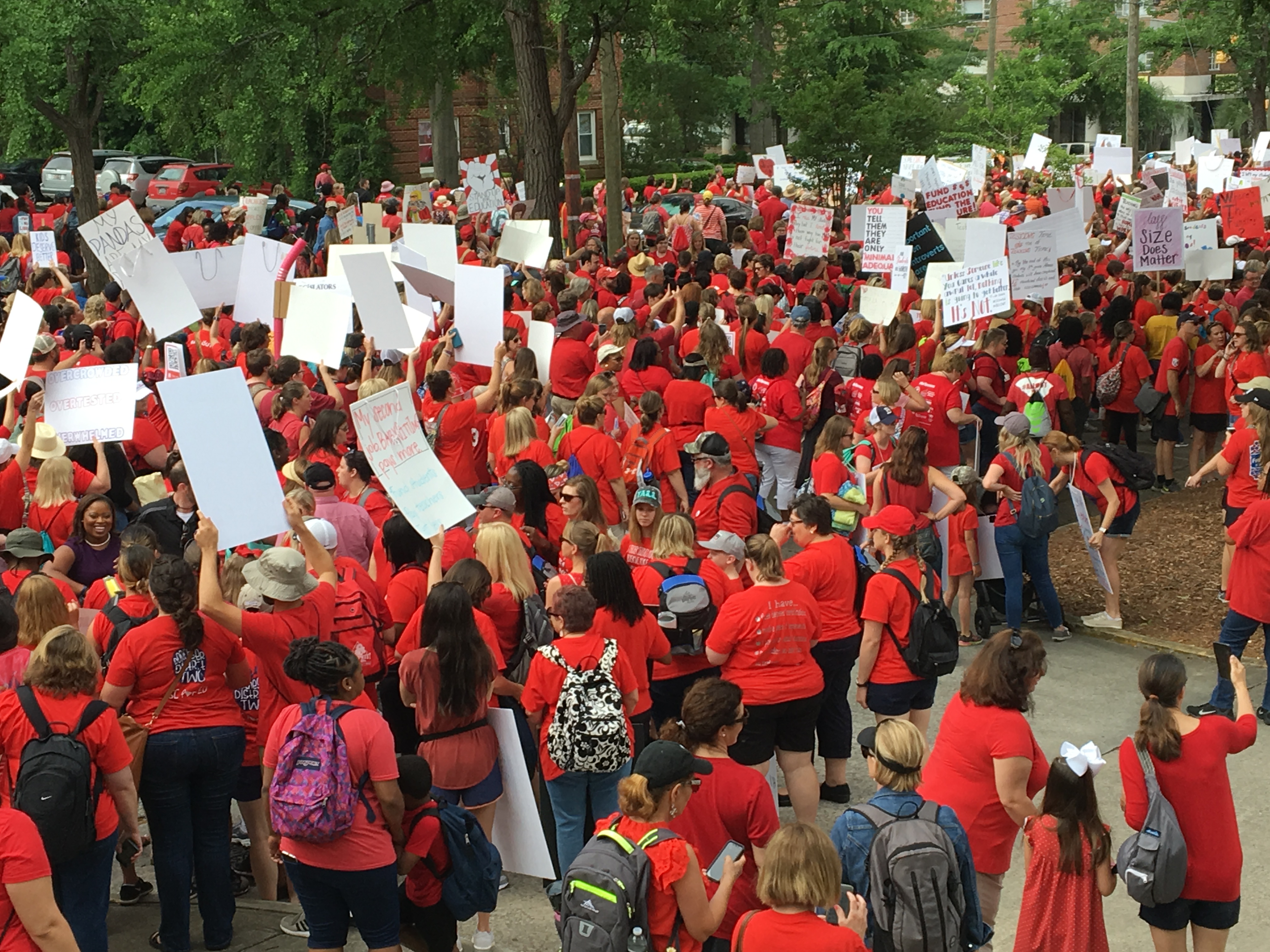
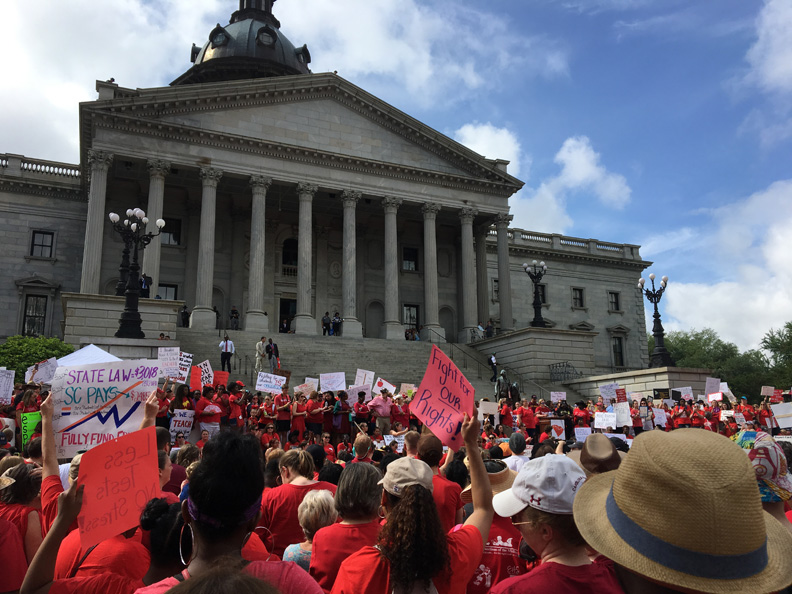
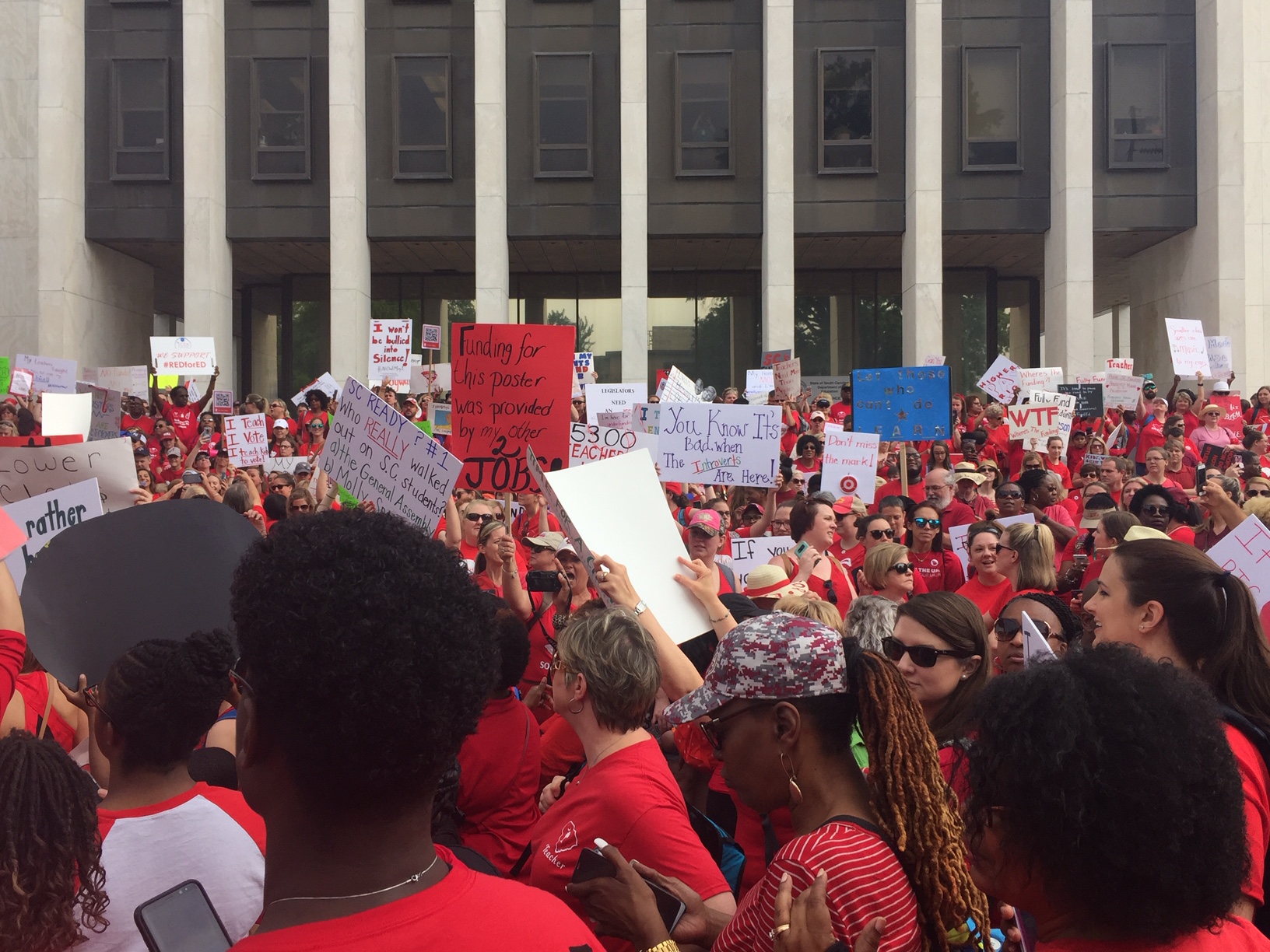
On May Day, 10,000 educators, students, and supporters marched from the state Education Department down Senate Street to the State House grounds, where they held a spirited rally — and made history. The grounds were a sea of red, a powerful show of unity and stregth, the crowd audible to lawmakers inside.

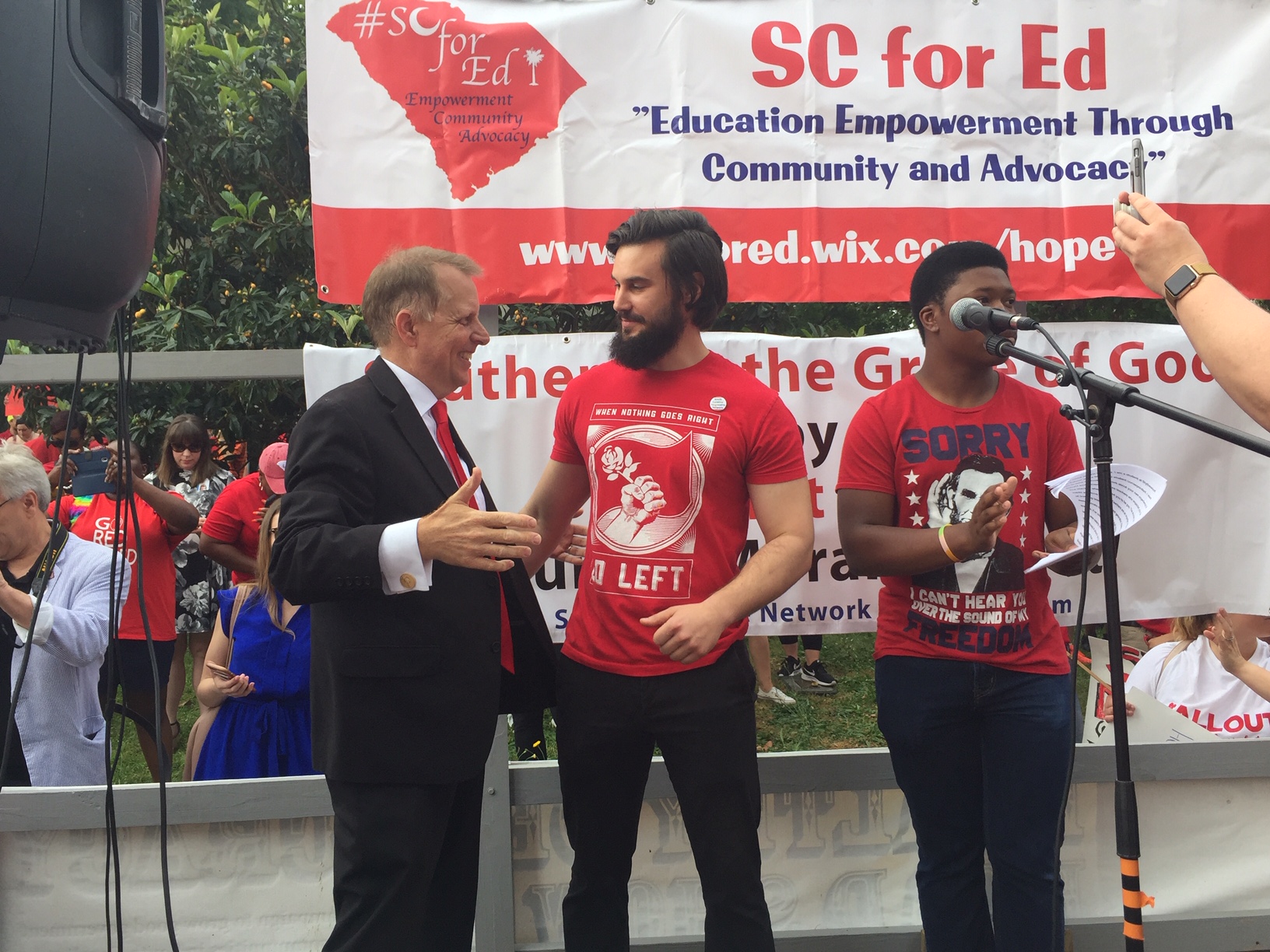
Sen. Mike Fanning opened the rally on the Network’s Healthy Democracy rolling stage,  and closed the rally at the State House with a call to action. A teacher himself, Fanning has championed educators in the Senate and is passionate about advocating for real reform rather than the lip service that’s been given for decades to education in South Carolina.

“For too long in South Carolina, teachers have been sitting back and letting non-teachers set the vision for learning, and that has to stop,” Fanning said.

“We have to speak up. We don’t want something done in 10 years — the time is now!

“You are here today — the largest gathering of teachers in the history of South Carolina — and you have done something my colleages never thought you’d do. We showed up by the thousands, we made noise, and we ain’t done yet.”

Teachers are asking for reduced class size and less mandated testing, and more mental health counseling. (Half of schools have no counselors, and half have them only on Tuesdays and Thursdays.)

Fanning said, “You’ve been bullied this week by the community, by your own state superintendent of education.” Molly Spearman issued a statement two days before the rally decrying the “walkout.”

“Year in and year out we rank 48th and 49th in teacher pay,” Fanning said. “We have a base per-student formula that we haven’t funded one time in 11 years. Eleven years doesn’t sound long to those folks, but that is an entire career of a student.

“This year the General Assembly had 1.1 billion extra dollars. Guess what we did to the base student formula? The House cut it by 18 dollars, the Senate cut it by three dollars. Whatever budget passes, you will get less money next year than you got this year per student.

“Eight people crafted the reform bill, with not a single teacher in the room. The bill passed the House 106 to 4. What’s the magic bullet, people ask: I say: Let teachers teach and students learn.

“You blew people’s minds today. Nobody exptected 10,000 teachers. If you’d shown up yesterday, it wouldn’t have been nearly as powerful as showing up with 9,999 others. I need you to make sure they hear your voice, and you’re not going away.

The rally ended with 10,000 voices chanting: I teach, I vote!

This could be a turning point in the long fight for public education in South Carolina. Whatever happens, the rally was a stunning example of worker solidarity that should inspire people across the state.

The SC Progressive Network offered logistical support at the rally. We look forward to collaborting with educators in the coming legislative session.

Sen. Mike Fanning chats with the Network’s Midlands coordinator Daniel Deweese

Letting citizens draw district maps: an idea whose time has come

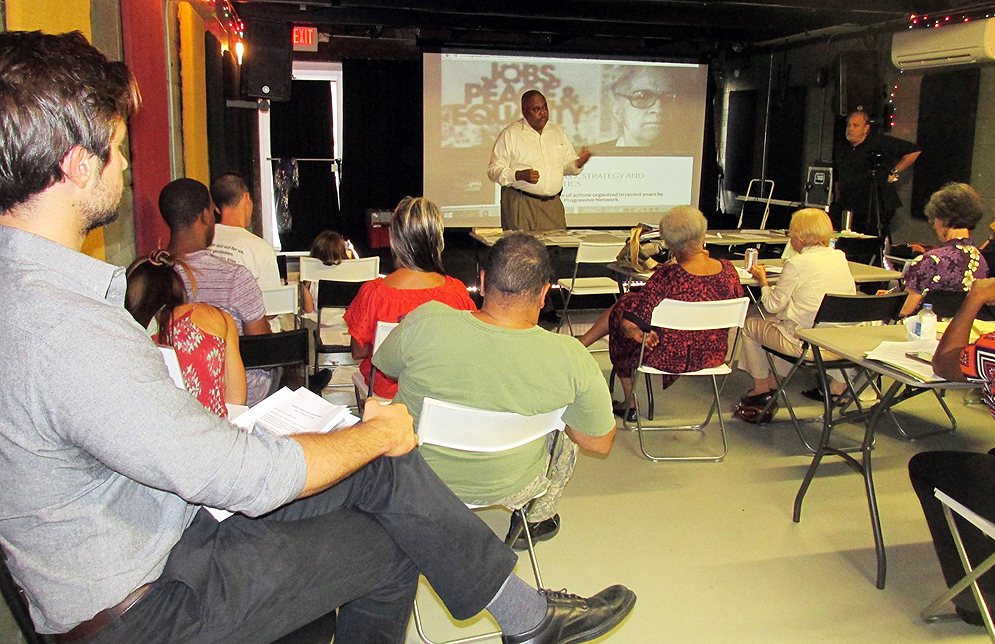
Grassroots activists from across South Carolina gathered in Columbia on Saturday for a full day of Census and Fair Maps workshop. It was the “soft” launch of a plan the SC Progressive Network and allies have been crafting for a long time that would empower voters to end gerrymandering in South Carolina while at the same time building a popular movement for social and political change.

The workshops trained a core group of activists to initiate the Fair Maps capaign models and recruit partner organizations ahead of the major launch in April.

Rep. Gilda Cobb-Hunter and Leroy Johnson, founder of Southern Echo, opened the morning session on the 2020 US Census by stressing the importance of getting a correct count in South Carolina and the inherent challenges of reaching certain populations. Federal US Census coordinator for SC Mary Peeler outlined how the 2020 numbers will affect voting and money allocated to the state. Florida-based Juanita Alvarex Mainster talked about outreach in Hispanic and migrant worker communities, and US Census geographer Wes Flack broke down how federal Census workers will coordinate with local governments and non-governmental organizations. Will Roberts, our State Political Cartographer in charge of drawing districts, reviewed where populations have changed, and how lines will move to accomodate changes.

Vince Matthews, Senior Policy Advisor, SC Progressive Network

Power Point presentations from the Census workshop are posted HERE.

After lunch, participants took a deep dive into our legislative package on redistricting and mapping a timeline for the grassroots campaign to get it passed. Rep. Cobb-Hunter and Sen. Mike Fanning, sponsors of the companion legislation, made the case for meaningful redisctricting while acknowledging how challenging it will be, given the stacked deck that is the General Assembly. Vince Matthews, senior policy advisor for the SC Progressive Network, compared our plan to other redistricting proposals that allow politicians to remain in charge of the process.

The legislation:

Rep. Gilda Cobb-Hunter

Network Co-Chair Kyle Criminger went over the state maps he created, showing how districts look now and how they could look if citizens were drawing the lines. The number of competitive state political districts could increase by 500% under a Citizens Redistricting Commission. The CRC ACT is the only redistricting bill that includes a mandate to make districts competitive.

See video clips from the workshops HERE.

The level of interest and engagement on Saturday gives us great hope for this campaign. Change will not happen overnight, but will come with a sustained and statewide effort to educate, agitate, and mobilize voters.

We invite organizations and individuals to join the Fair Maps Coalition. Wherever you live and whatever your skills, we need your help. To find out how, see the volunteer opportunities at the Fair Maps web site. We’ll be setting up working groups to take on various tasks. Let us know how you want to be involved. We will schedule monthly conference calls to answer questions from the field and to track our progress.

Keep this contact information handy.

This is an exciting initiative, and we are confident that with a sustained and serious effort we can change the balance of power in South Carolina to favor citizens over politicians.

Let’s do this!

Want to up your activist game? Apply for the spring session of the Modjeska Simkins School

The public is invited to apply for the spring session of the Modjeska Simkins School for Human Rights, which begins March 18 and runs through June 24. The school, a project of the SC Progressive Network, was launched in 2015 as a leadership institute for activists to learn a people’s history of South Carolina, hone their organizing skills, and help grow a movement for social justice in the Palmetto State. This will be the school’s fourth session.

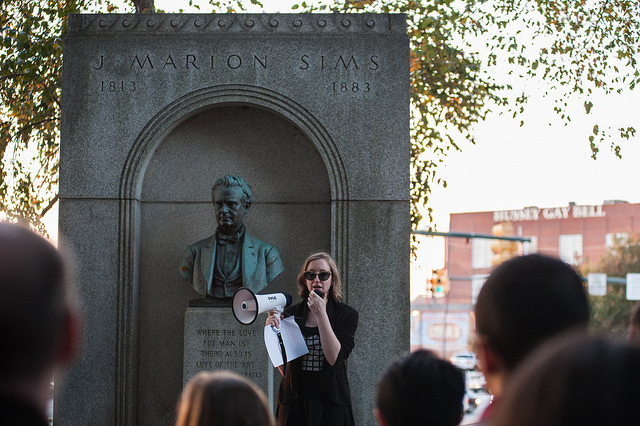
“The school is exceeding even our most hopeful expectations,” said Network Director Brett Bursey. “The students have been deeply engaged in class discussions, and graduates have gone on to do impressive things, from serving on the boards of nonprofits, to researching and crafting a campaign to end gerrymandering in South Carolina, to starting a podcast for young activists, to staging tours of the State House grounds and offering a more honest historical narrative about who the monuments memorialize, and when and why they were erected.”

One of the creators of the monument tours is USC’s Student Services Manager Dr. Sarah Keeling, who attended the Modjeska School in 2017. An activist with the Columbia group Standing Up For Racial Justice, Keeling said, “At the Modjeska School, I learned South Carolina history that I was never taught in school and how that history impacts the lives of South Carolinians today. The school gave me a solid foundation from which to build my organizing skills.”

Kyle Criminger, a graduate of the school’s inaugural class in 2015, now serves as a Network co-chair and is the lead organizer for the organization’s Fair Maps campaign to allow citizens rather than politicians to draw district maps. “The Modjeska School took us on a haunted, enthralling trek through South Carolina’s stolen and denied history, giving me a long view and a wide perspective on the problems here,” Criminger said. “The ongoing practicum I am working on with fellow graduates allows us to carry out a shared commitment to the values and principles that South Carolinians like Modjeska Simkins herself have held and lived by. That’s why I say that the School is a complete program and national model for community organizing.”

Graduates Daniel Deweese and Wayne Borders cofounded the New Legacy Project, the Network’s youth coordinating body, which meets twice a month in Columbia.
The school has attracted students of all ages, backgrounds, and interests. The youngest was Rose, the 10-year-old daughter of Graham Duncan, a historian at USC’s Caroliniana Library and Modjeska School faculty member, who helped run PowerPoint presentations. The oldest was 85-year-old Mary Bolden, a former Army officer and Vietnam War veteran.
Classes are held 6-8pm on alternate Monday evenings at the Network’s building at 2015 Marion St., downtown Columbia. The session also includes Sunday Socials, guest lectures on various historical and political topics that are free and open to the public.

Students of all ages, backgrounds, and interests are welcome to attend the Modjeska School. They must fill out an application, complete a brief telephone interview, and commit to attending all classes – barring emergencies or illness. This is a course for serious students, and includes lengthy reading assignments. The deadline to apply is March 1. Some scholarships are available.

Classes are held 6:30-8:30pm on alternate Monday evenings at the Network’s building at 2015 Marion St., downtown Columbia. Tuition is $210, which includes class materials and a copy of Howard Zinn’s A People’s History of the United States. The session also includes Sunday Socials, guest lectures on various historical and political topics that are free and open to the public.

Anyone interested in attending is asked to call the Network’s office at 803-808-3384 for an application. Visit the web site for the class schedule, more about the school, and a list of faculty and advisors.

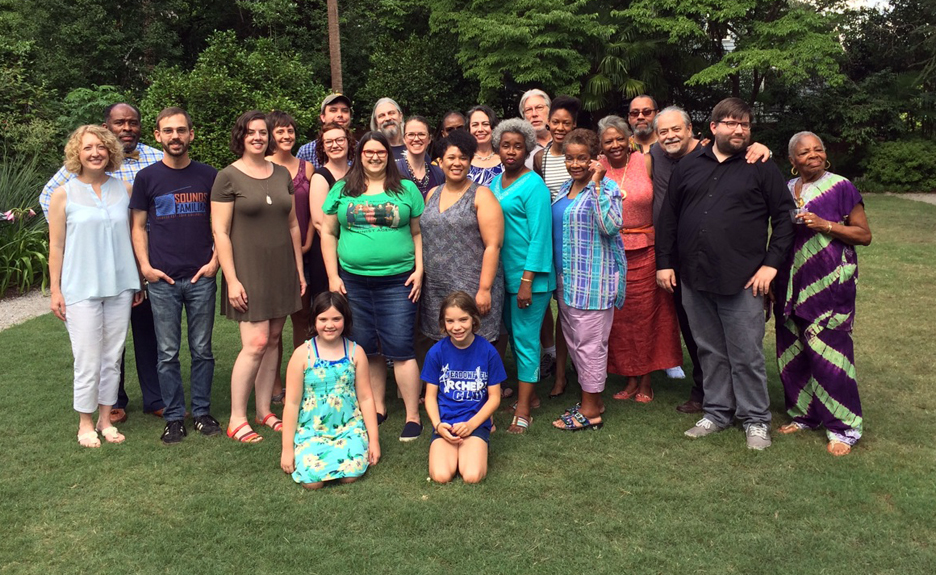
The graduating class of 2017