New Legacy Project launches podcast by and for SC’s young people

The SC New Legacy Project, the youth organizing body of the SC Progressive Network, has started a podcast to engage, educate, and mobilize young people in the Palmetto State. To date, they have taped three episodes, although the latest, on the group’s Monument Tour, has not yet been posted.

Although she is quick to share credit, the force behind the podcast is Vikki Perry, a Pamplico, SC, native and graduate of the Modjeska Simkins School of Human Rights, another Network project. She is rightfully excited about the podcast, and shared with us a little about how it came to be and where she hopes it willl go. [Note: for a primer on the New Legacy Project, listen to the last 45 minutes of this episode.]
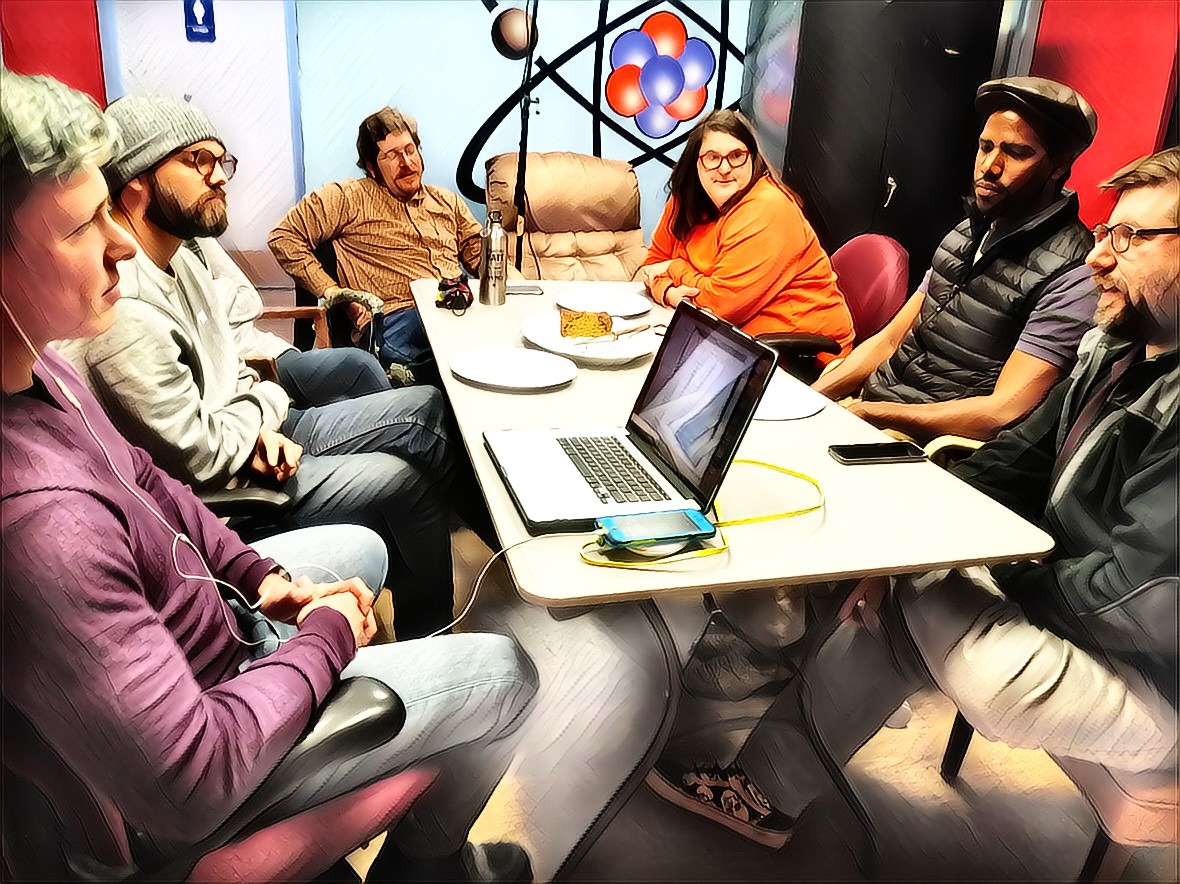
Chris McLauchlin, Chris Gardner, Dale Joyal, Vikki Perry, Wayne Borders, and Curt Shumate tape an episode of the South Carolina New Legacy Podcast. Photo by Danielle Dandridge.

•  •  •  •  •

First, the Network is impressed with the podcast, and we can’t wait to follow your progress. What was the genesis for it?

While the idea of a podcast has been around for a long time in NLP, we decided to start it right now for a few reasons.

  1. There is a lot of expertise and experience in the room at the SC Progressive Network/NLP. A podcast is a good way of sharing that information around our community. By virtue of location, our group is pretty Columbia-based. We want people outside the Columbia metro to know what is going on, too.

  1. In the last few years, local news coverage has dwindled to a trickle. National companies are buying local news outlets and there is a dearth of coverage of local issues. Everything is national, and in the age of Fox News and Sinclair Media, there is an agenda to a lot of that media coverage. We have an agenda, too, but we’re up front about it and we try to support it with facts and real stories about the people in our community.

  1. We want to build an apparatus for communication that fits into the 21st Century model. Podcasts are an easy entry point and add a sense of community. But maybe someday, we’ll move into videos or some other integrative format to add that same sense of community.

As for who is responsible for this, it is a collective effort. I remember sitting at the Modjeska House [where the group met before it was closed recently for renovation] and saying, “Guys, if you want to do a podcast, stay after the meeting for a little bit.” No one at the table moved. I was like “Okay, this is going to be a thing now.” So we’ve all worked together over the last several months to decide on a format and some topics. I’m really excited about where we’re going to go with this.

Briefly describe the podcast.

The South Carolina New Legacy Project is a South Carolina-focused political podcast that aims to educate, agitate, and organize in our local communities. It is a show that will feature deep dives into policy, local stories, and interviews with people who are making a difference on either a national stage or a local stage or both.

We plan to regularly feature a segment that we’ll call “Corrupting the Youth.” These will be intergenerational interviews where younger activists interview a more seasoned activist about their lives, their work, and how they see what is happening around the state and nation.

What audience are you hoping to reach?

Young progressives or young-at-heart progressives who want to be politically active in South Carolina and don’t know where to start. When you’re a progressive in South Carolina, you can feel isolated and somewhat powerless. For me, finding the progressive network has given me a sense of community and some of that power back. I want us to help foster that same sense of community and give people who can’t come to our meetings because they live in Myrtle Beach or Easley or somewhere else in the state.

We get lost in the cacophony of liberal groups in this state who maybe aren’t doing the same kind of work we’re doing on a local level. The podcast is a very literal way to be heard over the noise.

How often do you plan to record?

Currently, we plan to release an episode every two weeks, but ultimately, we’d like to do something on a weekly basis.

Who are your key collaborators on the project?

I have taken the role of cat herder, organizer, and learning to produce the podcast as I go. Chris Gardner has taken the role of our sound guy, and has composed the theme music that we’re going to use. Wayne Borders loves doing the intergenerational interviews so you’ll probably be hearing a lot of him.

But we have a large collective, and we’ll all be contributing as we go on depending on the topic. Curt, Janessa, Chris, Danielle (our photographer), Daniel, Omari, Dale, and we will pull in people from the broader collective of the Progressive Network as we need their expertise like Sarah Keeling and Kyle Criminger.

What can listeners look forward to in the coming sessions?

For some time now, the New Legacy Project has been working on something called The State of the Youth. We’ve been researching several main areas where the youth of South Carolina are impacted including health care, criminal justice, economics, education, and voting rights. You can definitely look forward to hearing more about that. Education will be coming up in the next few weeks.

But we have some fun topics that we’ll discuss as well like history, barbecue, movies set in South Carolina, colleges, and more.

Our next episode is going feature the Monuments Project and how it came out of the Modjeska School for Human Rights. Curt and I may also talk a little bit about one of the people who are memorialized on the State House lawn. You’ll need to listen to find out who!

Anything you want to add?

First, you can find us HERE and wherever you listen to your podcasts including iTunes, Spotify, Stitcher, and Soundcloud. Search for us under South Carolina New Legacy Podcast.

Second, we take suggestions for topics and stories. If you’ve got anything you want to hear about, we’ve probably got people who can discuss it. Tell us. You can find us on Facebook, Twitter, and Instagram. Our email address is scnewlegacyproject@gmail.com.

Look forward to hearing from you!
 

Election Protection Hotline goes live for midterms

The national election protection hotline is now available for voters to ask questions or to report problems while casting their ballot. Please keep this number handy as you head out to vote.

“This is the 10th year that this free, nonpartisan service has helped voters with problems at the polls,” said SC Progressive Network Director Brett Bursey. “We cover all of South Carolina, and we expect that the midterm elections will keep us busy.”

By calling the 1-866-OUR-VOTE hotline, voters can confirm their registration status, find their polling location, and information about proper identification at the polls.

“We encourage voters to call in and let us know of problems,” Bursey said. “This is the only real-time, statewide audit of the system, and it helps us identify and address systemic problems.”

We will be posting the hotline number in precincts across the state, and have yard signs to place in high-traffic areas. We need volunteers on Election Day who can be dispatched to polling places to help resolve or report problems in the field. If you would like to help, email network@scpronet.com. Include your location, phone number, and availability on Nov. 6.

Spanish language assistance is available at 1-888-Ve-Y-Vota (1-888-83-9-8682) — or veyvota.org. For more information, voters can access the Election Protection website at 866OurVote.org.


Election Commission mails nearly 1 million unregistered residents ahead of Oct. 17 deadline

The State Election Commission today began sending 950,000 South Carolina residents a postcard urging them to register by Oct. 17 in order to vote in the 2018 general election. Voter registration was extended due to Hurricane Florence in a court settlement initiated by the SC Progressive Network, the ACLU of SC, and the national Lawyers Committee for Civil Rights in anticipation of the storm’s impact.

The mailing was the result of South Carolina’s membership in the Electronic Registration Information Center (ERIC), a nonpartisan project started in 2012 funded by Pew Charitable Trust and operated by member states to use voter registration, motor vehicle, Census, and Social Security Administration data to improve the accuracy of voter rolls. The 950,000 unregistered South Carolinians is nearly 100,000 more than previous estimates.

South Carolina is the latest of 25 states – and only one of three in the South – to use the service to mail residents who are eligible but not registered to vote. The United States is one of the few advanced democracies to require citizens to register in order to vote. US voter turn ranks 31st of the world’s 34 developed nations.

“While the mailing was already planned, the timing was fortunate in that it allows us to directly notify unregistered citizens that the voter registration deadline has been extended to Oct. 17,” said SEC Executive Director Marci Andino. “We want every eligible person in South Carolina to have the opportunity to register by Oct. 17.”

The SC Progressive Network applauds the effort to expand the state’s voter rolls, which the organization has long advocated. The Network’s policy institute wrote, and the late Sen. Clementa Pinckney introduced, legislation for universal registration in 2007 (S-254 and H-3682). “This bill points out that voter registration in South Carolina has always been used to keep people from voting,” said Network Director Brett Bursey. “We plan to reintroduce legislation in the coming session that will add voter education and registration to the curriculum of high school seniors across the state.”

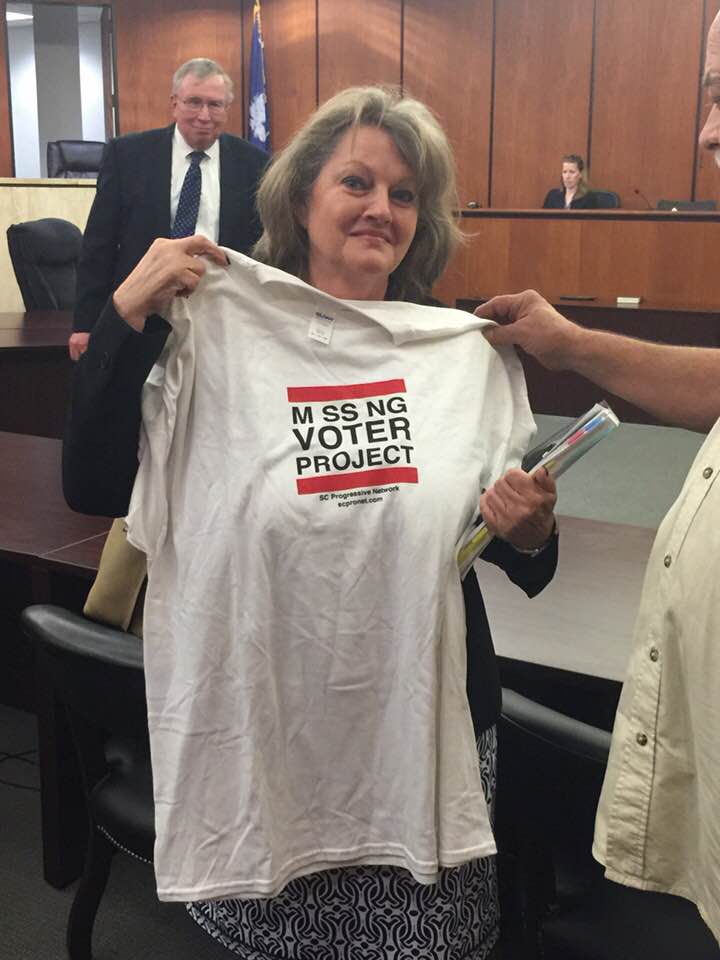
The Network’s nonpartisan Missing Voter Project was started in 2004 to educate and register SC residents who have been historically under-represented in the state’s public policy decisions. Volunteers across the state are trained to provide education and registration materials in targeted communities to engage the million-plus missing voters in South Carolina. For details, email network@scpronet.com or call 803-808-3384.

SEC Executive Director Marci Andino

Missing Voter Project enters final push ahead of Oct. 6 deadline

We need YOUR HELP in the final days our nonpartisan Missing Voter Project. Please volunteer for a shift before voter registration ends Oct. 6!
Ours is the only registration drive targeting South Carolinians who are being denied Medicaid, in a strategic effort to help educate and mobilize them ahead of the midterm elections.

No experience needed, as new volunteers will be paired with at least one trained volunteer.

Columbia Locations

  • Comet Bus Transit Station, 1780 Sumter St.: every day 7am–7pm
  • Harden Street Eau Claire Health Center, 1228 Harden St.: Check with Curt to schedule by calling 803-979-6779
  • Monticello Road Eau Claire Health Center, 4605 Monticello Rd.: Sept. 27-28; Oct. 1-5, 10am-4pm
  • Transitions, 2025 Main St.: Sept 27-28; Oct. 2 and Oct 4, 9-11am, 2-5pm
  • Harvest Hope Food Bank, 2220 Shop Rd.: Oct. 3, 9am-1pm

If you want an MVP t-shirt and volunteer gear, call or text Curt Shumate for a short briefing at 803-979-6779.

To volunteer, email your name and contact information to network@scpronet.com. Sign up for a shift (or several) by entering your name at location time(s) listed on the roster posted HERE.

Read more about our Missing Voter Project HERE.

Questions? Call our office at 803-808-3384.

Noted Charleston activist calls “History Denied” a must-read

Jim Campbell, a highly regarded human rights activist and recipient of the Congressional Medal of Honor, has been a gift to the SC Progressive Network since the group’s founding in 1996. The organization has benefited mightily from his years in the trenches – as a Marine and as a social justice warrior. (Campbell’s papers are housed at the Avery Research Center for African American History and Culture in Charleston.)

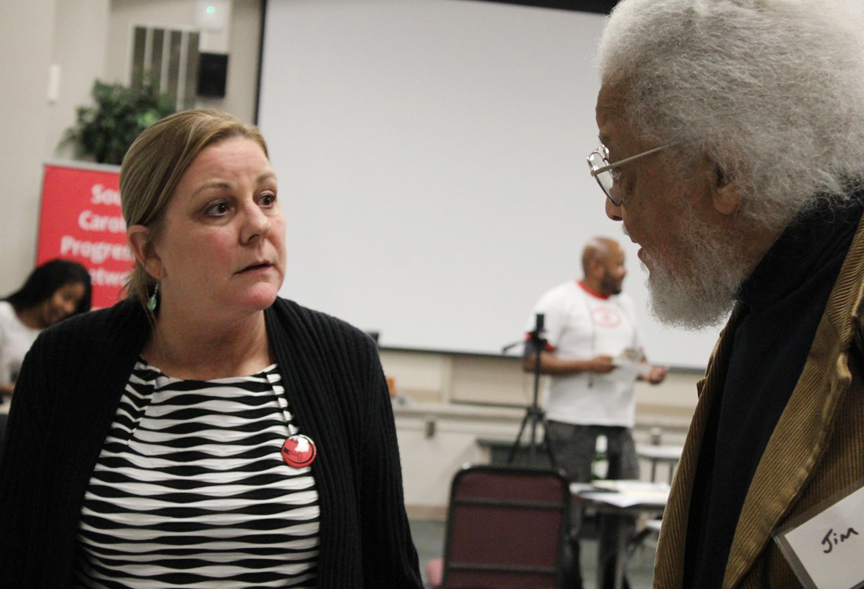
Becci Robbins and Jim Campbell at the SC Progressive Network’s 2016 fall conference.

We sent him a copy of our new booklet, knowing how familiar he is with the people and history it covers. In return, he copied us on an email he sent to his comrades across the country. His endorsement is a true honor.

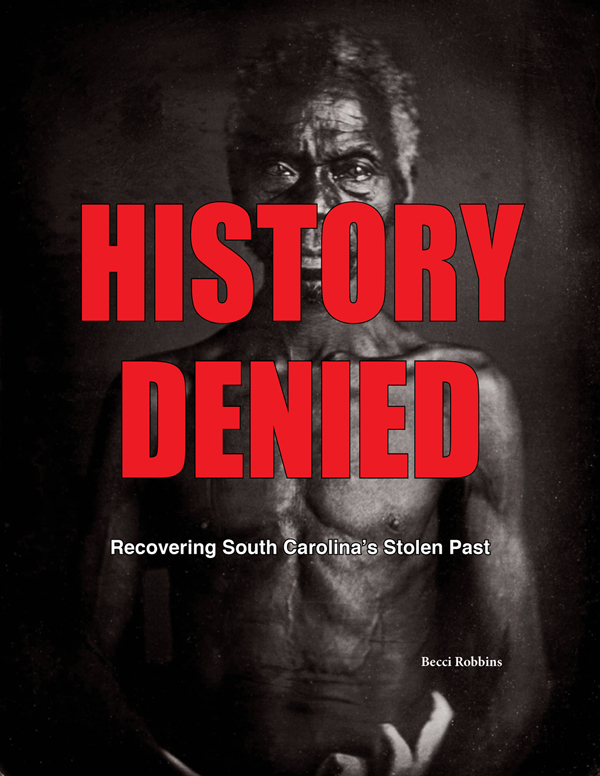
Campbell wrote, “I’ve just read a copy of the SC Progressive Network‘s recently published booklet, HISTORY DENIED: Recovering South Carolina’s Stolen Past by Becci Robbins. Its content is a substantive introduction to the Southern Negro Youth Congress (SNYC) and the vanguard radical labor organizing among interracial youth in the severely segregated South between 1937 and 1949. Specifically, this tells of a landmark Congress convened in Columbia, South Carolina in October of 1946. This event had in active participation such Freedom Movement notables as local South Carolina Youth Leaders in addition to Paul Robeson, Herbert Aptheker, Dorothy and Louis Burnham, Esther [Cooper] and Jim Jackson, Louise Patterson, Sallye Davis, Jack O’Dell, South Carolina’s Modjeska Simkins and the Congress’ keynote speaker, W.E.B. DuBois. His keynote speech, BEHOLD THE LAND, has been a ‘must read’ for all young activists ever since.

This landmark booklet is also a ‘must read’ for today’s activists as both struggle inspiration and primer on our long civil rights movement.”

The booklet was reviewed by Jeffrey Collins at the Associated Press.

Jim Campbell speaks at a Network retreat at Penn Center.

GET YOUR COPY OF HISTORY DENIED

Download the e-version of History Denied here. (You can also download three earlier booklets on three phenomenal SC women Modjeska Monteith Simkins, Harriet Hancock, and Sarah Leverette.)

Copies of History Denied are available at the Network’s office in the historic Modejska Simkins House, 2025 Marion St., downtown Columbia, SC. One copy is free; additional copies are $2.50 each. To order by mail, click here. To order bulk copies, call our office at 803-808-3384.

Public invited to July 23 launch of “History Denied: Recovering South Carolina’s Stolen Past”

Book Launch
Monday, July 23, 5:30-7pm
Seibels House and Garden
1601 Richland St., Columbia

Light eats  •  Cash bar
Booklets are FREE!

Join the SC Progressive Network in celebrating the recent publication of History Denied, Recovering South Carolina’s Stolen Past by Network Communications Director Becci Robbins.

“I learned so much on this project—not the least of which is how little I know,” Robbins said. “The more I dug and read, the angrier I got about my miseducation. It’s been unsettling to know how much history we’ve been denied, and calls into question everything we’ve been taught.”

History Denied is Robbins’ fourth booklet to be funded by the Richland County Conservation Commission. She previously published a trilogy to mark the achievements of three extraordinary South Carolina women: human rights activist Modjeska Monteith Simkins, gay rights advocate Harriet Hancock, and legal pioneer Sarah Leverette. Those booklets are available free at the Network’s office, and can be downloaded online. The History Denied booklet will be uploaded after the launch.

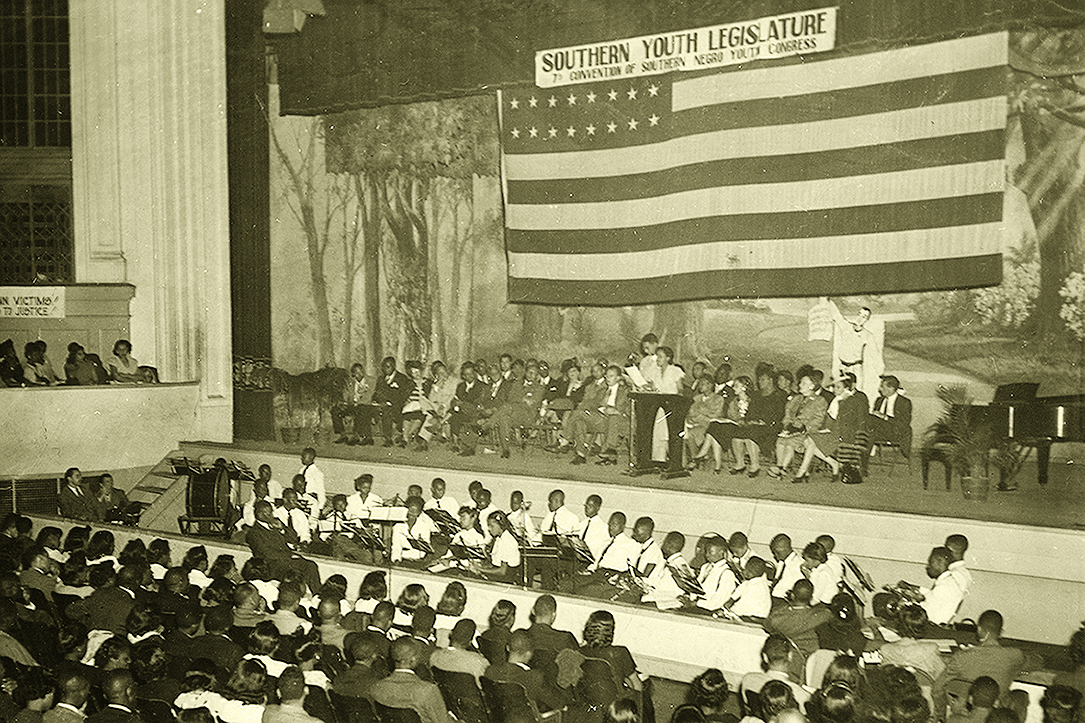
An unprecedented interracial crowd packs the Township Auditorium in Columbia for the Southern Negro Youth Congress’ 7th annual conference the weekend of Oct. 19, 1946.

“This is a cautionary tale. It centers on the Southern Negro Youth Congress (SNYC), a militant, interracial youth movement that thrived against all odds between 1937 and 1949 in the Jim Crow South. Its rise and fall—and the collective amnesia that followed—offers a timely warning about how history is made and unmade, and how that shapes our shared narrative.

While SNYC was based in Birmingham, AL, South Carolina activists played a key role in SNYC’s unlikely success. Early on, Columbia activist Modjeska Monteith Simkins served on its board, and was instrumental in bringing SNYC’s 7th annual conference to Columbia in October 1946.

The three-day event promised a glittering line-up of distinguished speakers—including keynote W.E.B. DuBois and internationally acclaimed Paul Robeson—as well as invited guests from around the world. The ambitious schedule included daytime workshops to hone the organizing skills of the young delegates.

It was an unprecedented gathering, yet one that has largely been forgotten. Only recently has scholarship on the radical human rights movement in the 1930s and ’40s emerged, enriching our understanding of the people who drove it and the critical ground they laid for those who came later.

SNYC is far from the only chapter of history to be whitewashed, distorted, or erased altogether. This booklet offers a few South Carolina examples: the first Memorial Day, celebrated in war-ruined Charleston after Confederates evacuated the city in 1865; the radically democratic experiment that was Reconstruction; the widespread practice of lynchings after Reconstruction’s end; and the conspiracy of silence that followed the 1934 killings of seven striking textile workers in Honea Path.

Becci Robbins

It is no accident that we don’t know our labor history or the darkest truths about the white supremacy built into South Carolina’s very constitution, and that denial carries lasting consequences. Ignorance comes with a heavy price.

This booklet is an attempt to broaden our view of the past, even if it hurts. These stories are painful, but they are also heroic. For every act of oppression, there have been acts of resistance by people willing to risk their very lives to stand for human decency and the promise upon which this country was built. Their struggles and triumphs deserve to be shared, their bravery celebrated, their work continued.

This volume is not a comprehensive telling of South Carolina’s forgotten resisters. The voices and contributions of women, workers, Native tribes, LGBTQ+ Americans, immigrants, and other marginalized communities also are missing or minimized in our textbooks and in the mainstream media. This is simply a reminder that what we’ve been taught has largely been dominated by money, war, and the experiences of white men of privilege. That cheats a whole lot of citizens from knowing that their ancestors played important roles in the making of this state and nation.

SNYC’s story lays bare the very best and worst of America. We’d be wise to know both.”

Allen University chooses Modjeska Simkins book for campus “read along”

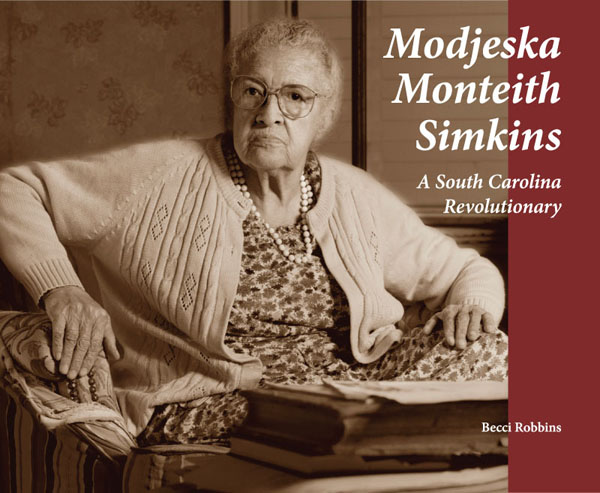
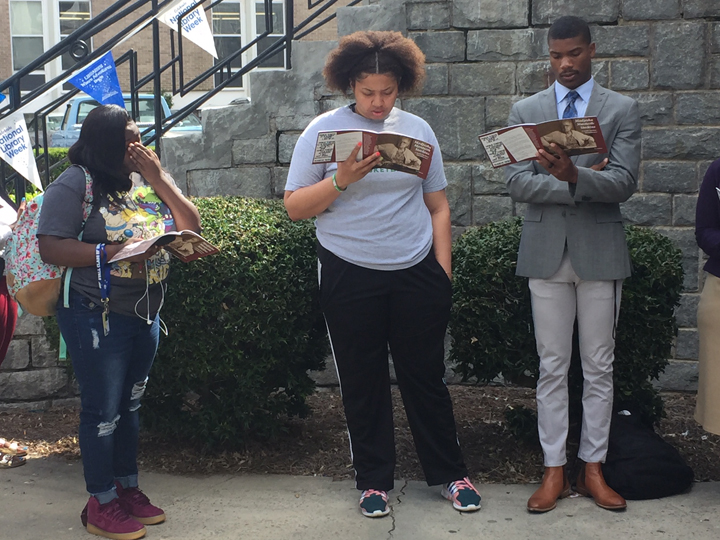
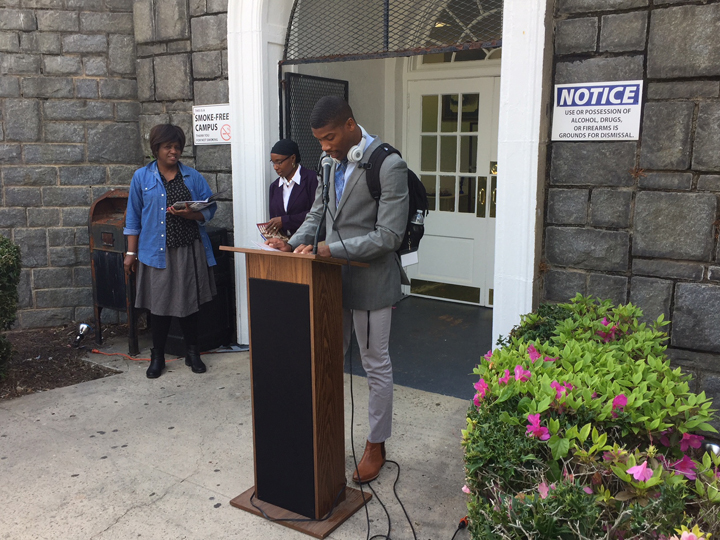
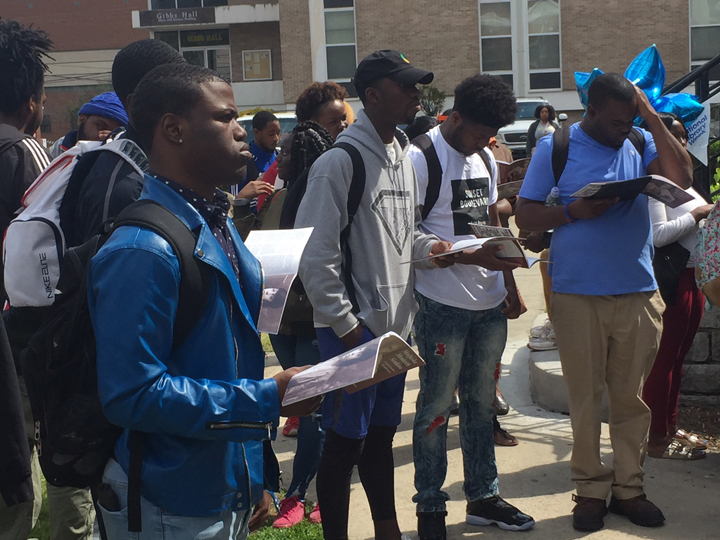
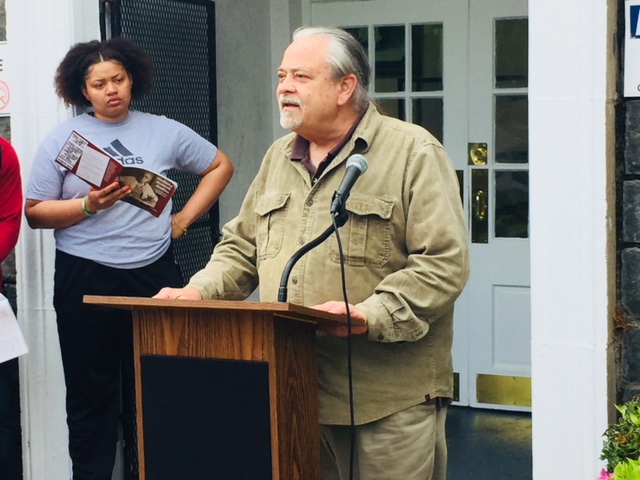
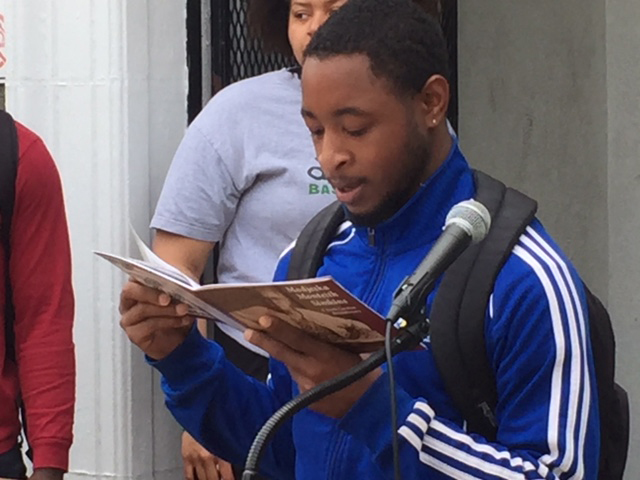
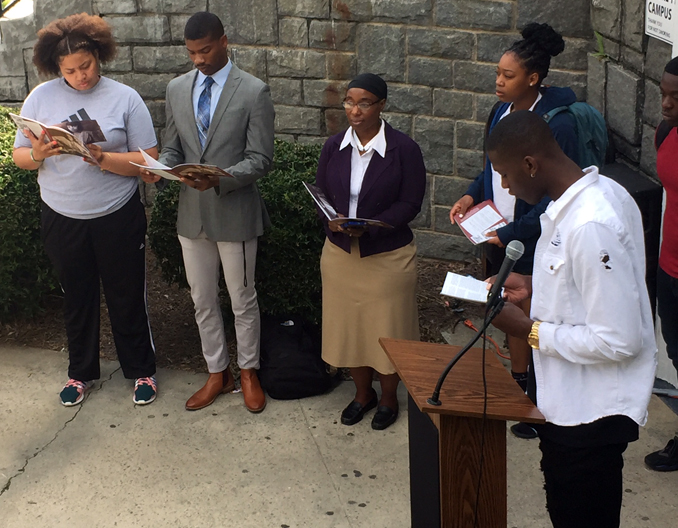
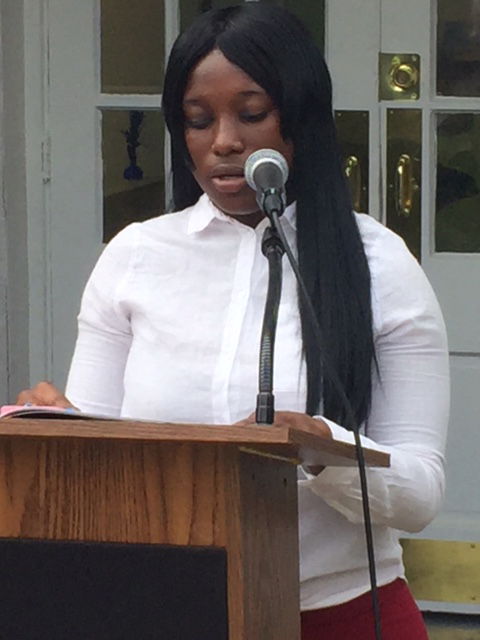
To celebrate Library Week, on April 11 students from Allen University took turns reading from a booklet about Modjeska Monteith Simkins that the SC Progressive Network published in 2014. Students led what they called a “read in,” and also held a campus-wide book presentation contest. Some 200 booklets were distributed free to students in the weeks leading up to the event.

“As an HBCU in Columbia, South Carolina, we chose Modjeska Monteith Simkins: A South Carolina Revolutionary because of the outstanding leadership qualities she demonstrated throughout her life,” wrote a university spokeswoman in a message inviting our participation.

Network Director Brett Bursey, who worked with Modjeska for 18 years, challenged the students to get involved in moving the state toward social, political, and economic justice.

“It was so gratifying to see students gather together to remember Modjeska’s extraordinary life,” said Becci Robbins, the Network’s communication director and booklet author. “She would have loved it.”

In its recent third printing, the booklet includes a new section on Modjeska’s involvement in the Southern Negro Youth Congress, which held a leadership training school at Allen University in 1947. You can download the booklet HERE.

Quinn sentence highlights need for voter restitution law

Former Rep. Rick Quinn on Monday was sentenced by Circuit Judge Carmen Mullen to probation, community service and fined $1,000 for misconduct in office. The Republican represented District 69 in Lexington County before he was indicted and suspended from the House in April.

Petitions requesting that Quinn pay the cost of the special election that will be required to replace him were presented to Judge Mullen before the sentencing hearing. According to State Election Commission spokesperson, Chris Whitmire, the estimated cost to Lexington County taxpayers to hold the special election is around $17,000. State taxpayers will be responsible for an additional $36,000.

The sentencing doesn’t sit well with those left to foot the bill.

“I’m a proud Republican,” said John Frierson, a longtime Lexington resident who voted for Quinn. “Mr. Quinn let all the voters in his district down. This is not a partisan issue; I don’t think it’s right that the victims should have to pay for the damage he has done.”

District 69 resident and Executive Director of the SC Progressive Network Brett Bursey submitted a petition to the court citing the state statute (17-25-322) that requires the court to consider restitution to the victims of criminal acts. “We’re disappointed that Judge Mullen didn’t see fit to apply the restitution statute to Mr. Quinn’s criminal conviction,” Bursey said, “but we understand the pressure judges face in sentencing legislators who elect them.”

The failure to seek restitution for the cost of replacing convicted legislators underscores the need for legislation introduced a year ago in the General Assembly. The Network’s Education Fund developed the policy that became S-533 prior to the indictments of Rep. Quinn and Sen. John Courson. The bill would require prosecutors to request the cost of special elections as restitution for convicted politicians who are removed from office.

“We are getting bipartisan support for requiring the prosecution to put restitution before the judge as part of the sentence,” Bursey said. “This insulates a  judge who may be up for re-election before the legislature from making the call herself.”

Money in SC Politics forum video

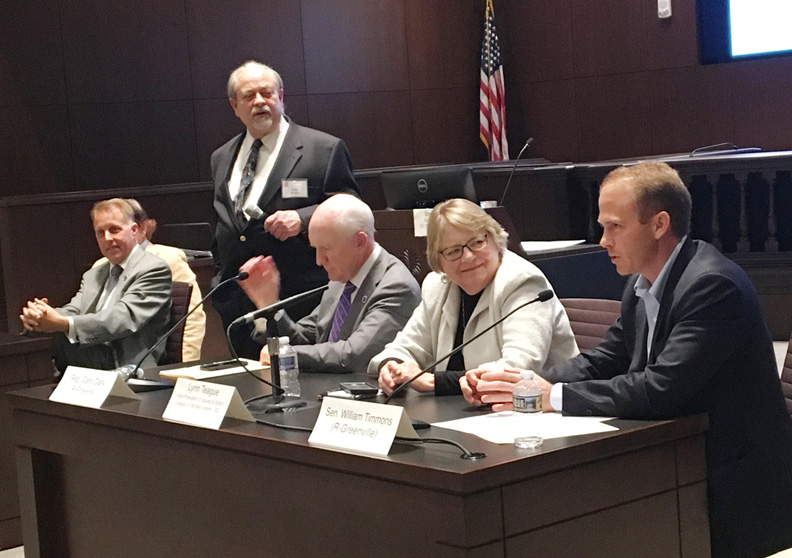
If you missed our roundtable at USC’s School of Law on Feb. 6, you can watch it here. Panelists included Lynn Teague, Vice President, League of Women Voters of SC; John Crangle, Govt. Relations Director, SC Progressive Network; Rep. Gilda Cobb-Hunter (D-Orangeburg); Sen. Mike Fanning (D-Fairfield); Rep. Gary Clary (R-Pickens); and Sen. William Timmons (R-Greenville). Marcurius Byrd with the American Constitution Society at USC law school opened the program, which was moderated by Network Director Brett Bursey.

To read about anti-corruption bills we are tracking and backing, click here.

See our photo album of the event on Flickr.

SC State House elections are nation’s least competitive

Quote

Lawmakers and advocates to pose solutions at Feb. 6 public forum in Columbia

South Carolina has the least competitive elections in the country, according to a recent study that concluded only 6 percent of legislative races in the Palmetto State offer voters a viable choice of candidates.

The National Institute on Money in State Politics used three measures to determine the competitiveness of state legislative races, gauging the monetary spread between winners and losers, the success rate of incumbents, and whether candidates had opposition. In 98 percent of legislative races, the winner spent at least twice what the loser did, representing the greatest money gap in the Institute’s 20 years of national surveys.

The study highlights the critical need for reforming the system. Toward that end, the SC Progressive Network has assembled a bipartisan panel of lawmakers and good-government advocates to discuss legislative remedies at a public forum Feb. 6, 7-9pm at the USC School of Law, 1525 Senate St. in Columbia. The Money in SC Politics roundtable will be live streamed at the SC Progressive Network’s web site. A reception will follow the panel discussion.

“It’s our mission to educate South Carolina citizens, including politicians, about the lack of competition in our elections and how that fuels corruption,” said Kyle Criminger, co-chair of the SC Progressive Network’s research and policy institute.

John Crangle, the Network’s director of government relations, has been monitoring State House ethics for 30 years. “It’s the worst I’ve ever seen it,” Crangle said. “I haven’t had representation in the Senate since last April because my senator was charged with embezzling campaign funds. If he’s found guilty, I’m going to have to pay both county and state taxes for a special election to replace him.”

Crangle’s senator, John Courson, is one of four legislators indicted on corruption charges who faced no major party competition in their last election. Sen. Mike Fanning has introduced a bill (S-533) to require politicians convicted of corruption to pay for the special election to replace them.

The political scandal prompted Attorney General Alan Wilson to recuse himself from the investigation. He has taken money from — and given money to — parties now accused of using campaign funds for personal gain. In 2014, Wilson raised over $800,000 in his race for re-election, exceeding legal limits. Wilson took the maximum contribution from SCANA, a corporation he now is being called on to investigate. His Democratic opponent that year raised only $19,000.

Rep. Gilda Cobb-Hunter will explain her bill (H-4498) to allow candidates for attorney general to get a grant to run for office if they refuse all private money, including their own. “Our top law enforcement officer shouldn’t take money from citizens and corporations that he or she may have to investigate,” she said.

Rep. Cobb-Hunter and Sen. Fanning will be joined on the panel by Rep. Gary Clary (R-Pickens), who has introduced a bill calling for an independent redistricting commission (H-4456) to promote competitive elections and reduce partisan gridlock. Sen. Bill Timmons (R-Greenville) will discuss legislation requiring candidates to release their tax returns (S-765), and a bill to increase funding for the state Ethics Commission.

Lynn Teague, with the League of Women Voters – SC, will also be on the panel. “We need to look at the common threads in our ethics problems, our need for redistricting, and utility reform,” she said, “because they are all rooted in common causes.”