We’re all better off when we’re all better off

Sen. Phil Leventis has introduced the “TRAC Recommendation Act” (S 1454) that eliminates or reduces many sales tax exemptions, a move supported by the SC Progressive Network, which has been working to promote fair taxation and sustainable budgets. “Our state’s not broke,” Leventis said at a May 1 press conference, “but we are teetering on the verge of moral bankruptcy in our failure to meet the needs of our citizens.”

Unlike the recommendation by the Republican-sponsored Tax Realignment Commission (TRAC) that called for using new revenue to further lower taxes, Leventis’ bill requires new revenue to be used to fund statutory obligations for education and local governments. The legislation would increase the state’s budget by nearly $1 billion next year.

Leventis noted that during his 32 years as a state senator, “I have been guided by the principle that government should invest in meeting the needs and aspirations of its citizens. This principle has been undermined by an ideology claiming that government is the cause of our problems, and accordingly, must be starved. A government unwilling to invest tax dollars in itself and its citizens is the real source of our problems. When businesses strive to be competitive, they do so by investing in their future. That is what we have to do today in South Carolina to insure a more prosperous future.”

We’re not broke; narrow political ideology has trumped statesmanship. The lack of political will to fairly reform our tax codes to meet our basic civic contracts for education and infrastructure leads our citizens to believe that “minimally adequate” is the best we can hope for.

Leventis was joined by representatives from the SC Progressive Network, a coalition of organizations that represents the interests of a majority of the state’s families who make less than $42,000 a year.

“We don’t expect the legislature to pass the bill this year, but it’s critical for the public to understand that a lot of money is being left on the table,” said Network director Brett Bursey. “It should be up to the taxpayers to decide if their money is best spent on education or on further reducing taxes to compete with Mexico.“

Of all the industrialized nations, only Chile and Mexico have a lower individual tax burden than the United States, according to the Organization for Economic Cooperation and Development. Among the 50 states, South Carolina is ranked 43rd in the nation in taxes as a percentage of income, and dead last in per-capita state taxes (National Tax Foundation).

“We’re all better off, when we’re all better off,” said Network Co-chair Virginia Sanders, citing a recent International Monetary Fund report on the correlation between income inequality and general prosperity.

Our state’s business-friendly climate is reflected in the Forbes ranking that puts South Carolina 5th in its “business friendly regulatory environment” but 44th in quality of life. Forbes ranks the quality of our labor supply at 22nd, far behind North Carolina (third) and Georgia (fourth). “The message this sends is that South Carolina, with its lax regulations and unskilled labor force, is a cheap place to do business — but you might not want to live here,” Bursey said.

The House budget cuts mandatory funding for education by $665 million and local government funds by $71 million. These spending levels are set by law, but EFA and local government funding obligations are ignored by budget provisos due to a presumed lack of revenue and lack of political will. These cuts means larger classes, fewer teachers, police and fire fighters, as well as deteriorating infrastructure, all of which combine to make our state less competitive.
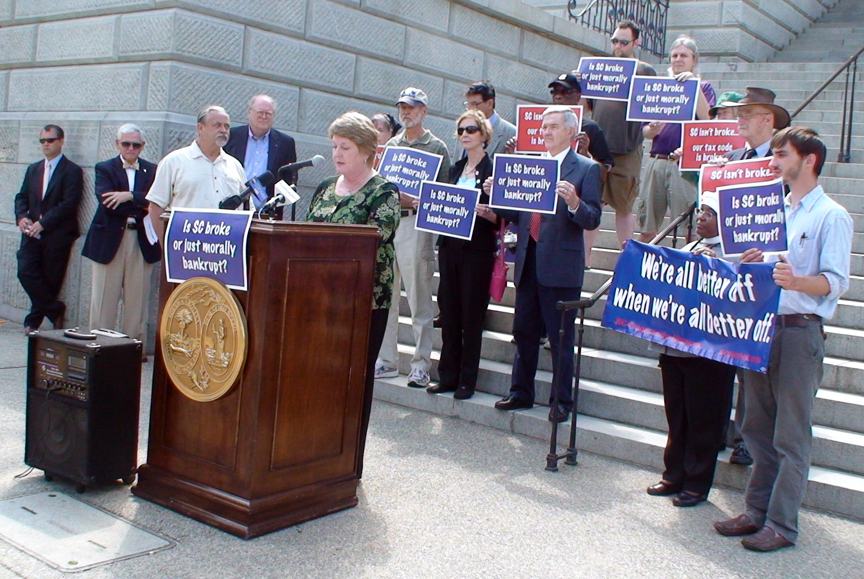

SC Education Association Jackie Hicks addresses the shortfall in education funds that could be helped by Leventis’ bill. See more photos from the press conference here.

The TRAC recommendations on sales taxes would raise nearly $1 billion next year and more in coming years. This is close to what we need to meet these mandatory spending levels, and more comprehensive tax reforms would meet and exceed them for years to come.

“The critical debate I hope to spark,” Leventis said, “is whether the role of our government is shaped by the special-interest groups who make the majority of campaign contributions, or by the citizens who pay the taxes. I believe that citizens are willing to pay fair and equitable taxes when they get their money’s worth. It’s called democracy.”

In this year’s House budget:
• The statutory funding level for the Education Finance Act was cut by $665 million, keeping our per-pupil funding at 1998 levels.
• The statutory funding for local governments’ support of police, fire and public services was cut $71 million.
• The revenue from the extra penny of sales tax for Act 388 was $129.5 million short of what was needed for education funding through sales tax, rather than property tax, requiring another raid on the General Fund.

The House budget shorted mandatory funding of these core public services by nearly $736 million. If you add the $129.5 million shifted from the General Fund, you come up with just about what the TRAC recommendations could recover through broad and fair sales tax reforms.

The TRAC Recommendations Act (S 1454) would:
• Raise the $300 “max tax” on cars, boats and planes and raise $61-$143 million annually as increased caps kick in.
• Tax food (not purchased with food stamps) at an effective rate of 2.41%, raising $251 million next year. 18.2% of the state’s population is receiving SNAP benefits and will pay no tax on food.
• Tax non Medicaid/Medicare medicine (with a $100 cap) and home utilities at an effective rate of 1.25%, raising $124 million next year. Those on Medicare or Medicaid (44% of the state’s children) will pay no tax on medicine.

Close campaign finance loopholes; end leadership PACs in SC House

In their ongoing efforts to reduce the corrupting influence of money in state politics, the SC Progressive Network and Common Cause SC, will hold a press conference April 18 at 5:30pm at the courtyard entrance to the Wilbur Smith Building at Gervais and Sumter to bring attention to the high-stakes game of pay-to-play politics.

House Speaker Bobby Harrell is hosting a fundraiser at 6pm for his political action committee, the Palmetto Leadership Council, on the building’s 20th floor. Membership in his PAC is $3,500.

“The Speaker’s leadership PAC allows wealthy donors to get around campaign contribution limits,” said John Crangle, Director of Common Cause SC. “It’s the most egregious example of pay-to play politics.”

Crangle’s group was instrumental in getting the state Senate to pass a rule last session banning leadership PACs. “We want to raise public awareness about how Speaker Harrell’s leadership PAC not only enhances corporate influence, but greatly leverages the Speaker’s power over the House,” Crangle said.

“Bobby Bucks” valued at the $3,500 cost of membership in Rep. Harrel’s PAC will be doled out to the public and those attending his fundraiser.

Text on the back of Bobby Buck: Money — rather than good ideas — fuels South Carolina’s politics. Ninety percent of the candidates who spend the most money win. An incumbent who spends the most money, has a 98 percent chance of being elected.

While state ethics laws limit campaign contributions to House races at $1000, a proliferation of political action committees (PACs) allow deep-pocket donors to get around the limit.

For example, the Palmetto Leadership Council is a PAC headed by the SC House Speaker Bobby Harrell. Membership in his Leadership PAC cost $3,500. Harrell says on his PAC’s web site, “We are building a unique coalition between leaders in the private sector and those of us engaged in public service.”

While Harrell, or a corporation like AT&T, can only make a $1000 donation to a House candidate, AT&T can make a $3,500 donation to Harrell’s Leadership PAC, which can then make another $1,000 donation to the same candidate.

Harrell’s PAC has raised nearly $1 million since its founding in 2004, with 98.7 percent going to Republican candidates (79 percent incumbents). More than 89 percent of the candidates backed by Harrell’s PAC won election.

Harrell’s largest donations were $100,000 checks written to the state Republican Party. The party can then make a $5,000 contribution to the same candidate that received the $1,000 maximum from Harrell’s PAC. It’s a way around campaign finance laws, and it’s legal.

Join the SC Progressive Network and Common Cause’s efforts to reduce the influence of money in politics. Tell Rep. Harrell and other House members to follow the state Senate’s lead and end House leadership PACs.

Information gathered from:
The National Institute on Money in State Politics
(enter Palmetto Leadership Council in the search block)

Palmetto Leadership Council

SC Progressive Network

Celebrating grassroots activism in South Carolina

The SC Progressive Network held its annual Thunder and Lightning Awards Celebration on Feb. 18 at The Big Apple in downtown Columbia. Congratulations to this year’s honorees!

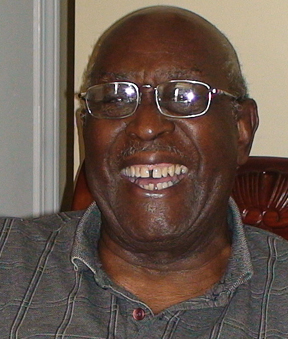
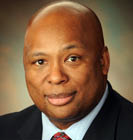
Larrie Butler

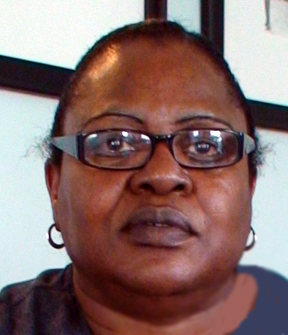
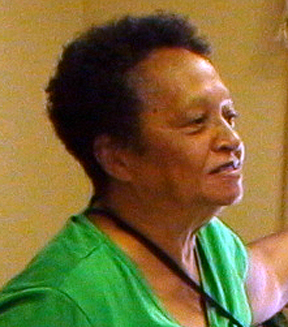
Virginia Sanders

Sen Gerald Malloy

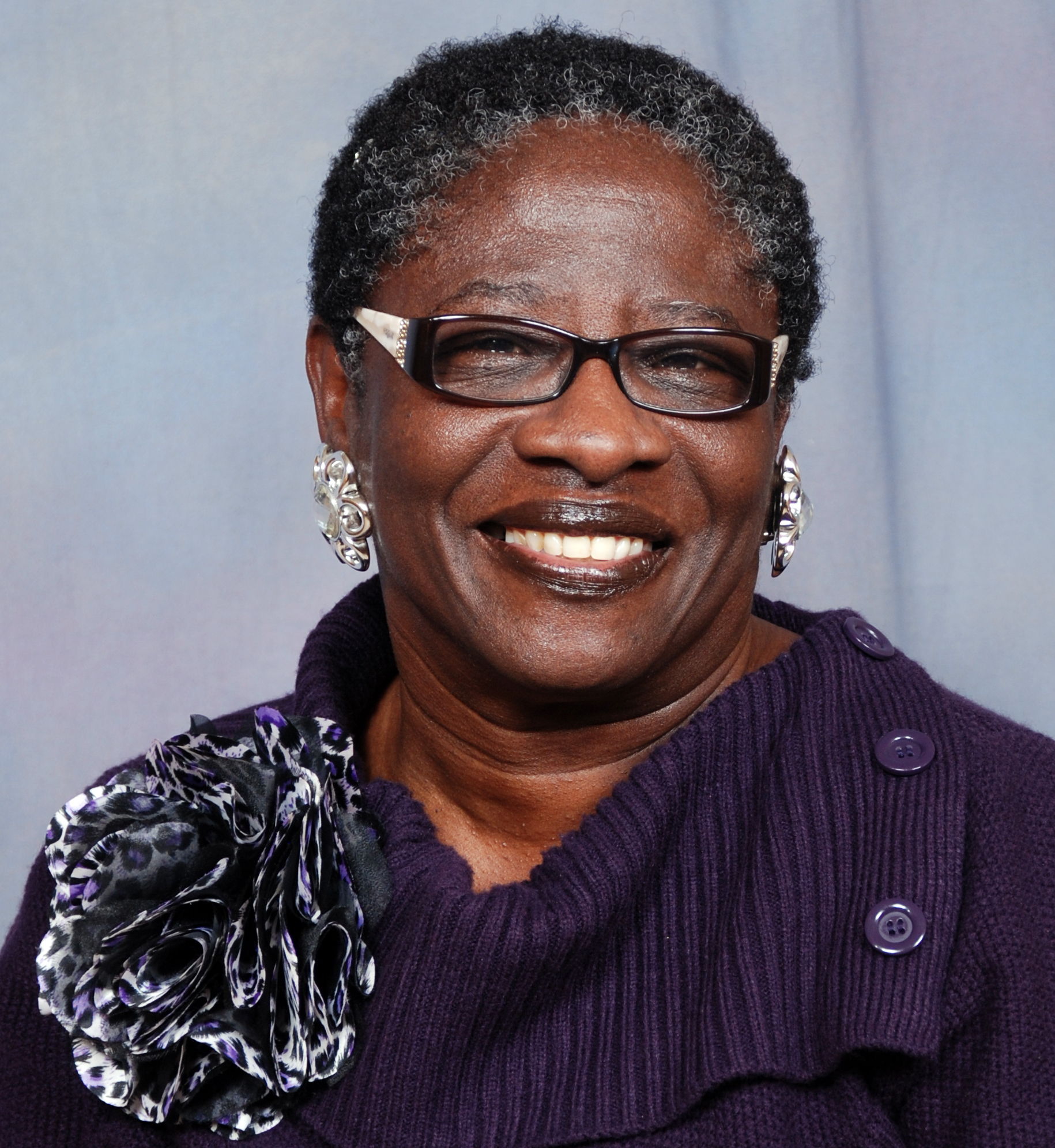
Dr. Brenda Williams

For more photos, see our photo album.

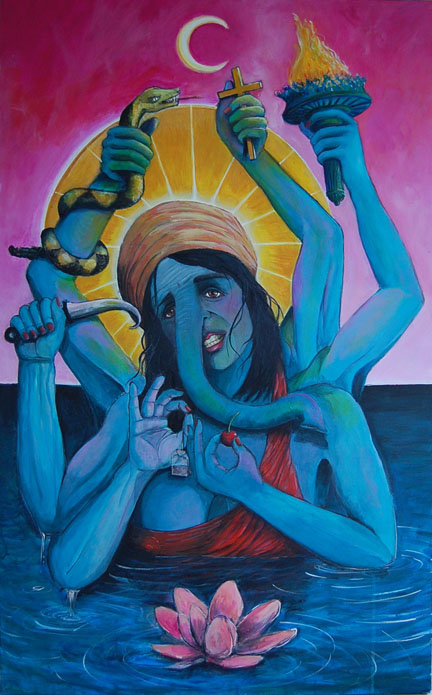
The tale of the infamous goddess Nimrata

Once upon a time there was an adorable little girl in Bamberg, SC, whose name was Nimrata Randhawa. The beautiful daughter of Indian immigrants from the Punjabi region, she was raised to follow the religious teaching of the Sikh religion from their native land. From her early years, Nimrata developed a profound interest for money and power. The story goes that by the age of 13 Nimrata was already in charge of the exotic coins of her family.

The transformation continued and by the time she reached adulthood she adapted her birth name to a more Americanized version and took her husband’s last name. Fearing public perception, Nimrata willed her skin to change and by the time she reached complete transformation, she claimed to the be officially white and of the Christian faith.

Nimrata, clearly, was not a little girl anymore; she turned into a very astute woman. The legend also tells how Nimrata used others’ powers to her own benefit, thus with the support of Sarah Queen of the Rattle Snakes, and King Mitt of Gold and Coldness, she was able to reach the summit of power in a rather hostile place.  And one day she became the first governor of the state where she lived. Thus, becoming the first Indian-American and woman to obtain such an honor.

The exotic Nimrata keeps changing during her constant evolution. She is quite conspicuous, especially since she enjoys sipping Tea at high-end venues especially in Paris, while opposing funding for the Arts and Culture. Needless to say, the Goddess does not enjoy public demonstrations, especially after sunset. Recently those who have seen Nimrata say that she is turning blue, and becoming more and more elephant like, which make her look amazingly like Ganesh, the adorable Indian God of obstacles, both good and bad. Although her looks are quite pachydermic she is considered the Goddess of the cherry crops.

Those who have seen her recently warn us about this exotic Goddess and her powers.  They say that Nimrata will keep changing to accomplish her goals.

Original painting by Columbia artist Alejandro Garcia Lemos, who donated the piece to the SC Progressive Network to auction at its Thunder & Lightning awards celebration Feb. 18. See details about the event here.

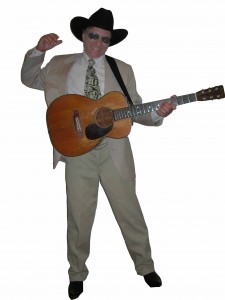
Don’t miss Dave Lippman in South Carolina!

Thrill to the post-corporate comic stylings of satirical songster Dave Lippman. The anti-war troubadour afflicts the complacent, takes the air out of the windbags of the week, and de-distorts history. On the extreme other hand Dave’s alter-ego, Wild Bill Bailout, the Bard of the Bankers, champions the beleaguered 1 percent in this hysterically funny, not-to-be-missed show.

Favorite tunes from this dynamic duo include Brother Can You Spare a Diamond, What the Frack?, I Hate Wal-Mart, Your Car is Disgusting, and many more endearing titles.

Charleston

Friday, Feb. 17, 6pm

Mad River Bar and Grille
32B North Market St.
FREE SHOW! Presented by Charleston Peace and the SC Progressive Network.

Columbia

Saturday, Feb. 18, 7pm
The Big Apple
1000 Hampton St.
Dave will headline the SC Progressive Network‘s annual Thunder & Lightning Awards Celebration. See details here.

See what people are saying about Dave:

“Laughing hysterically.” – Medea Benjamin

“Viciously funny” – Guardian

“God, that man can talk! I tell you, he’s good.  What a great writer!” – Utah Phillips

“The Dean felt that more harm than good would come from your visit.”? – student, Skidmore College

“He makes me laugh every single time.” – Holly Near

2012 Thunder & Lightning Awards Celebration

Honoring South Carolina’s outstanding agitators

Feb. 18, 7pm

The Big Apple
1000 Hampton, downtown Columbia

Silent auction.  Finger food.  Cash bar.

This year’s Thunder & Lightning honorees were instrumental in successfully blocking the voter photo ID law in South Carolina, a major victory that showed grassroots activism at its best.

HONOREES

Larrie Butler was born at home in Calhoun County in 1926 and never had a birth certificate. Mr. Butler exposed the governor’s lack of knowledge about the law by having sufficient photo ID to buy Sudafed and a plane ticket, but not to vote in South Carolina. He was featured in local, state and national news programs, and his story illustrated how the new law would prevent some people from voting. (See video the SC Progressive Network shot of him in his home.)

Delores Freelon, a Columbia resident, never had a first name on her birth certificate, so the SC DMV would not issue her a driver’s license — in spite of having a valid license from another state and plenty of other identification. Her story was picked up by the media. (See video the SC Progressive Network shot documenting her story.)

Sen. Gerald Malloy, a Darlington County attorney, took the point with the US Dept. of Justice, packaging our grassroots testimony into a clear, compelling case.

Virginia Sanders, a Richland County resident and SC Progressive Network co-chair, is being honored for her tireless dedication in raising public awareness about the ID law by working the radio call-in shows and organizing in Midlands communities. (See photos of her in action here.)

Dr. Brenda Williams and her husband, Joseph, have run a family medical practice in Sumter for nearly 30 years, where they have long been dedicated to promoting civil rights. Dr. Williams gathered scores of affidavits from area residents whose voting rights were threatened by the law. She was also featured in local, state and national news pieces about her work on the ID law.

••••••••

Dave Lippman

Dave Lippman will provide the evening’s entertainment. A satirical troubadour with an international reputation, Dave afflicts the complacent, takes the air out of windbags, and updates worn-out songs with brand-new parody. His alter-ego, Wild Bill Bailout, is the bard of the bankers. (For a taste of his work, check out this video.)

Tickets are $25 single/$40 couple. Price includes a year’s membership in the Network. Event proceeds will be used to further our work improving the quality of life and government in South Carolina.

You may pay at the door, but reservations are requested as space is limited. Call 803-808-3384 or RSVP on Facebook.

Make an online donation here.

•••••••••••

Those who profess to favor freedom and yet deprecate agitation are people who want crops without plowing the ground, rain without thunder and lightning. Power concedes nothing without demand and struggle. It never has and it never will.

Frederick Douglass

Tents at State House don’t merit emergency regs

Gov. Nikki Haley placed an “Emergency Regulation” on the Budget and Control Board’s Dec. 20 agenda in an effort to prohibit camping on the State House grounds. She will argue that camping on the lawn is an “imminent peril to public health, safety and or welfare.”

“While camping out at the State House may not be a constitutional right, the governor is going about changing the regulations in a wrong and dangerous way,” said Brett Bursey, director of the SC Progressive Network.

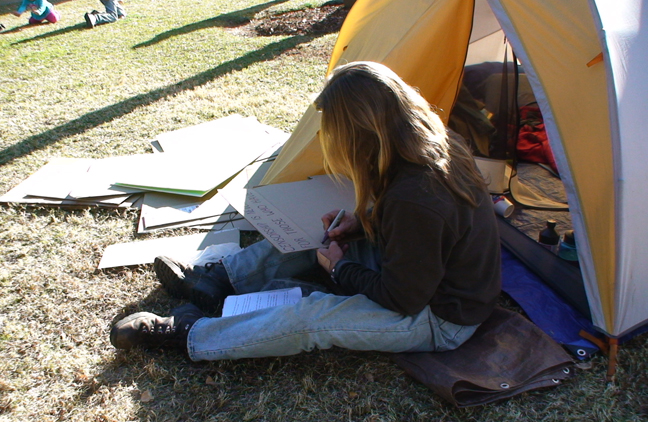
Occupy Columbia protester works on his sign Dec. 18 at State House.

The governor is proposing to use the emergency regulations clause to bypass the laws  (1-23-120) that require public notification, public hearings and legislative consideration for new regulations. The emergency regulations allow a state agency to have regulations approved immediately upon filing with the state Legislative Council. There is no public notice, no hearing and no legislative review of Emergency regulations.

“One would anticipate such an extreme measure to apply to plagues and natural disasters, not to tents on the State House grounds,” Bursey said.

Past emergency regulations have only been enacted by DHEC  for imminent health threats to a community, or considered by the Department of Public Safety during a hurricane evacuation.

“We have an established constitutional process to make new regulations that mandates notice and public hearings,” Bursey said. “Through this process people may decide that ‘free speech camping’ is not allowed on state property, but neither the governor nor the Budget and Control board has that emergency authority. If the emergency regulation can be used in this fashion, there would be nothing to prevent the Department of Agriculture from suspending immigration laws to prevent the ‘imminent peril’ of peaches rotting in the fields as a threat to public welfare, or SLED from declaring union pickets a threat to public safety.”

It’s clear that the governor is more concerned with appearances and politics than with our state’s laws. “She doesn’t want tents on the State House lawn when the legislature returns in January or during the Republican presidential primary Jan. 28. While the governor may find tents on the lawn tacky, they hardly constitute an imminent peril to public welfare. One could argue that the imminent peril is that our democracy has been occupied by monied interests, and the tents on her lawn are a legitimate response.”

The SC Progressive Network suggests that the Budget and Control Board move on to part (B) of the governor’s request, which is to draft regulations for the use of the State House grounds through the established process.

The federal court admonished the state at a Dec. 14 hearing that the GROW v. Campbell decision of 1989 required the state to establish regulations regarding First Amendment expression on state property. Those rules were never codified. (GROW had permission to put a sign on the State House grounds opposing sending the SC National Guard to Central America, at a time when federal troops were banned. The rules were changed – the day the sign was to go up – to prohibit all signs. The court issued a directed verdict of guilty against the state and governor for changing the rules in order to violate GROW’s First Amendment rights. Part of the settlement was the promulgation of new rules.)

Bursey was director of the Grass Roots Organizing Workshop (GROW) when the organization successfully sued Gov. Carroll Campbell over his suppression of free speech on the State House grounds. In  1994 GROW organized the founding of the SC Progressive Network.

“For the past 22 years there has been an operative policy that you don’t need permission to exercise free speech on state property,”  Bursey said. “With Occupy Columbia challenging the governor’s sense of decorum, it looks like we need to put the policy in writing.”